


Electrical Contractor in Melbourne, FL for Home Upgrades, Troubleshooting, and Backup Power
A detached shed can be much more useful when it has safe, dependable electrical service. Whether you use the building for storage, gardening, hobbies, equipment charging, a home office, or a small workshop, a properly planned installation can provide lighting, receptacles, and capacity for the equipment you actually intend to use.
For shed electrical installation in Melbourne, FL, the right approach depends on more than the size of the shed. An electrician needs to consider your home’s existing electrical capacity, the distance to the structure, the route across the property, outdoor moisture exposure, planned tools or appliances, and current local permitting requirements. Deltron Electric helps Melbourne and Space Coast property owners plan these details before equipment is purchased or trenching begins.
Yes—A Melbourne Electrician Can Add Power to a Shed or Small Workshop
In many cases, a Melbourne electrician can add power to a backyard shed, detached garage, storage building, or workshop. The finished installation may be fairly simple, such as one light and a few outlets for charging lawn equipment. It can also be more involved, with dedicated circuits, a small distribution panel, task lighting, ventilation equipment, and room for future tools.
The key is matching the electrical design to the building’s real purpose. A basic garden shed does not necessarily need the same system as a tool-ready workshop. Likewise, a detached garage used for a freezer, battery chargers, lighting, and hobby equipment may need a different plan than a storage-only structure.
Before approving a backyard shed electrical installation, a qualified electrician should evaluate the home and the detached building together. This helps avoid common problems such as overloaded circuits, insufficient outlet locations, weather-damaged exterior equipment, extension-cord dependence, or an installation that has no practical room for future needs.
Deltron Electric serves homeowners, rental-property owners, condo owners with applicable property approvals, and property managers throughout Melbourne and the Space Coast. For broader household repair and upgrade needs, review our Melbourne electrical services.
Start With How You Plan to Use the Building
The most helpful first question is simple: What will be plugged in and used inside or outside the shed? A list of intended equipment gives the electrician a starting point for evaluating circuits, feeder capacity, outlet placement, and whether a subpanel may be practical.
A Simple Storage or Garden Shed
A small storage shed may only need:
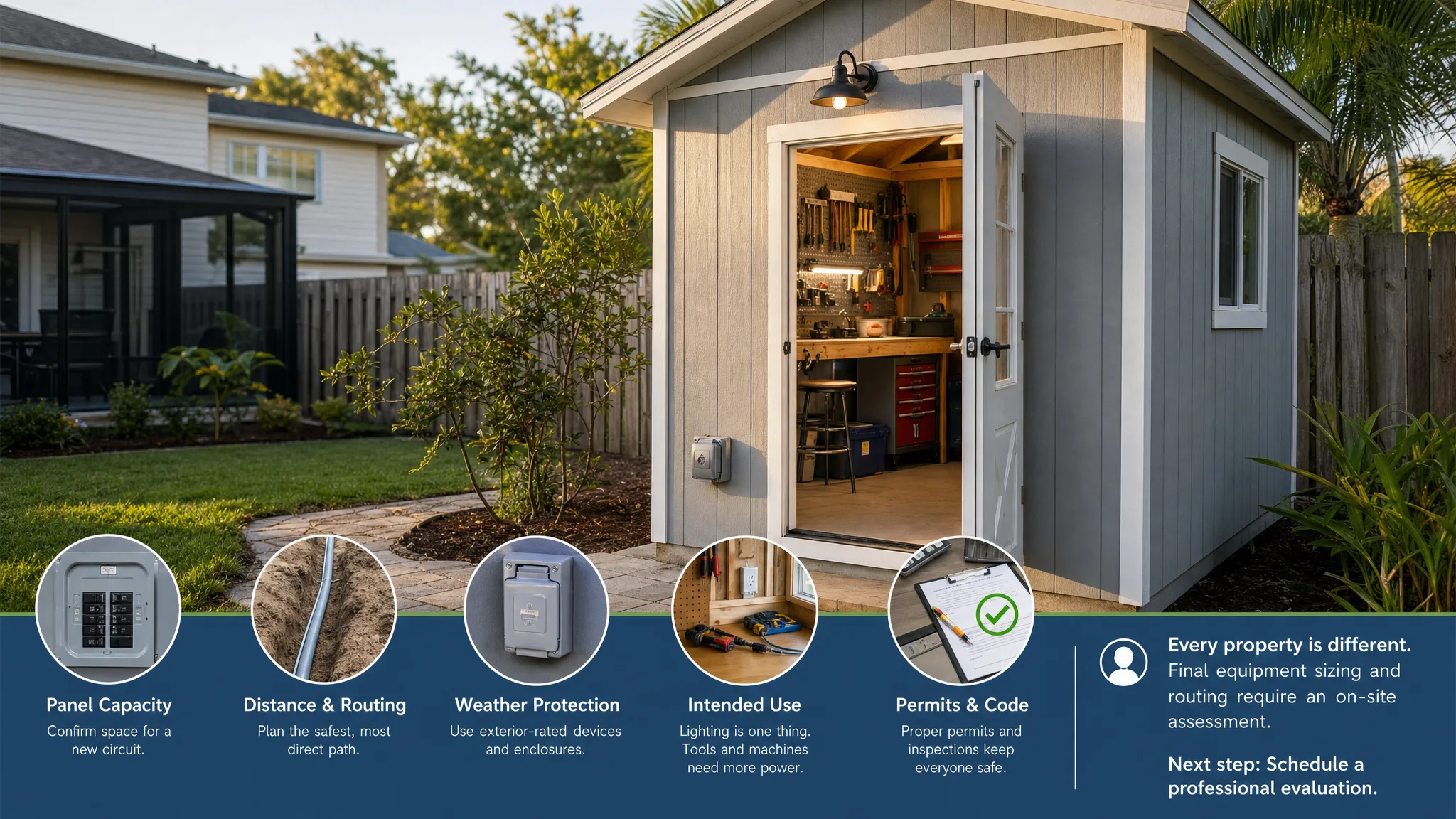
- An interior light at the entry and near shelving or a workbench
- A switch placed where it can be reached safely when entering
- One or more receptacles for chargers, a shop vacuum, or seasonal equipment
- An exterior light for access after dark
- A weather-protected outlet for occasional outdoor use
This is different from running a temporary cord from the house whenever a charger or tool is needed. Temporary extension cords are not a permanent electrical system and can create trip hazards, deteriorate in Florida heat and rain, or be damaged by lawn equipment and doors.
A Hobby Space or Small Workshop
A small workshop power installation needs more planning. In addition to general lighting and wall receptacles, the owner may expect to run equipment such as a bench tool, air compressor, dust collection device, work lights, battery charging station, small refrigerator, or window air-conditioning unit. Equipment may not all operate at the same time, but the anticipated use still matters.
During the planning visit, it is useful to identify:
- Tools, chargers, pumps, appliances, or electronics that will be used now
- Whether any equipment needs a dedicated circuit or a different voltage
- Where a workbench, tool station, refrigerator, or storage rack will be located
- Whether outdoor outlets are needed for landscape equipment or holiday lighting
- Whether the building may later become a more active workshop, studio, or office
- Whether the owner plans to add a future EV charger, upgraded appliances, pool equipment, or other loads at the main home
Planning for future load is especially important when a home already has major electrical demands. A shed project can be part of a larger home upgrade plan rather than an isolated installation. Read more about panel capacity for new appliances and future loads before assuming open spaces in a panel mean unlimited available power.
What Determines Whether Your Home Can Support Shed Power
Having an unused breaker position does not by itself confirm that the existing electrical system can support a detached structure. The home’s panel, service equipment, existing circuits, and expected loads all need to be reviewed.
An on-site assessment may consider the following:
- Main panel condition: The electrician looks for signs of age, corrosion, damage, overheating, or previous work that should be addressed before adding a new feeder.
- Available capacity: Existing large electrical loads can include air conditioning, electric water heating, cooking equipment, laundry appliances, pool equipment, and EV charging. The expected shed load must be considered alongside them.
- Electrical demand: A few LED lights and battery chargers place a different demand on the system than a workshop with several power tools or cooling equipment.
- Distance from house to building: A long run may affect conductor selection, routing decisions, material needs, and the practical scope of the work.
- Condition of the detached building: The wall construction, access for wiring, location of doors and work areas, and exposure to water all influence the installation approach.
- Future plans: It is often easier to plan appropriate capacity and pathways before landscaping, patios, fences, or finished interior walls make access more difficult.
Can an existing panel handle shed workshop lights and power tools? Sometimes, yes. But final equipment sizing and routing require an on-site assessment. A professional evaluation is the safer way to determine whether the project can be served from the current panel, whether panel work is advisable, or whether the home should be planned around wider electrical upgrades.
If you are evaluating an electrician for this work, visit Deltron Electric’s page for an electrician in Melbourne, FL to see the types of residential electrical concerns that may be addressed during a service visit.
How Power Is Safely Run From the House to a Detached Structure
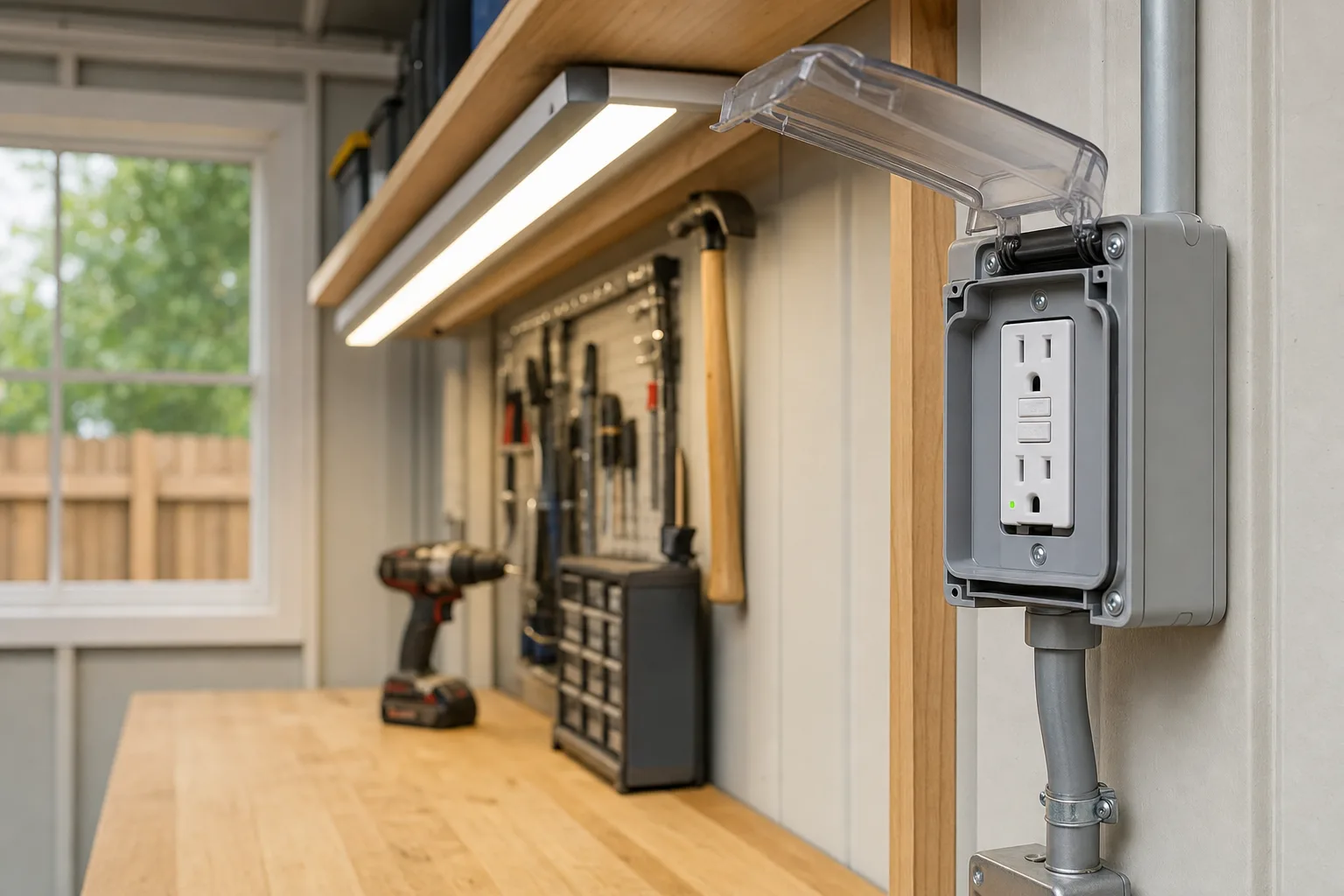
Power to a detached building is typically planned as a dedicated run from the home’s electrical system rather than by tapping into a random existing branch circuit. The route, equipment, protective measures, and connection method must suit the property and intended use.
Underground Feeder Considerations
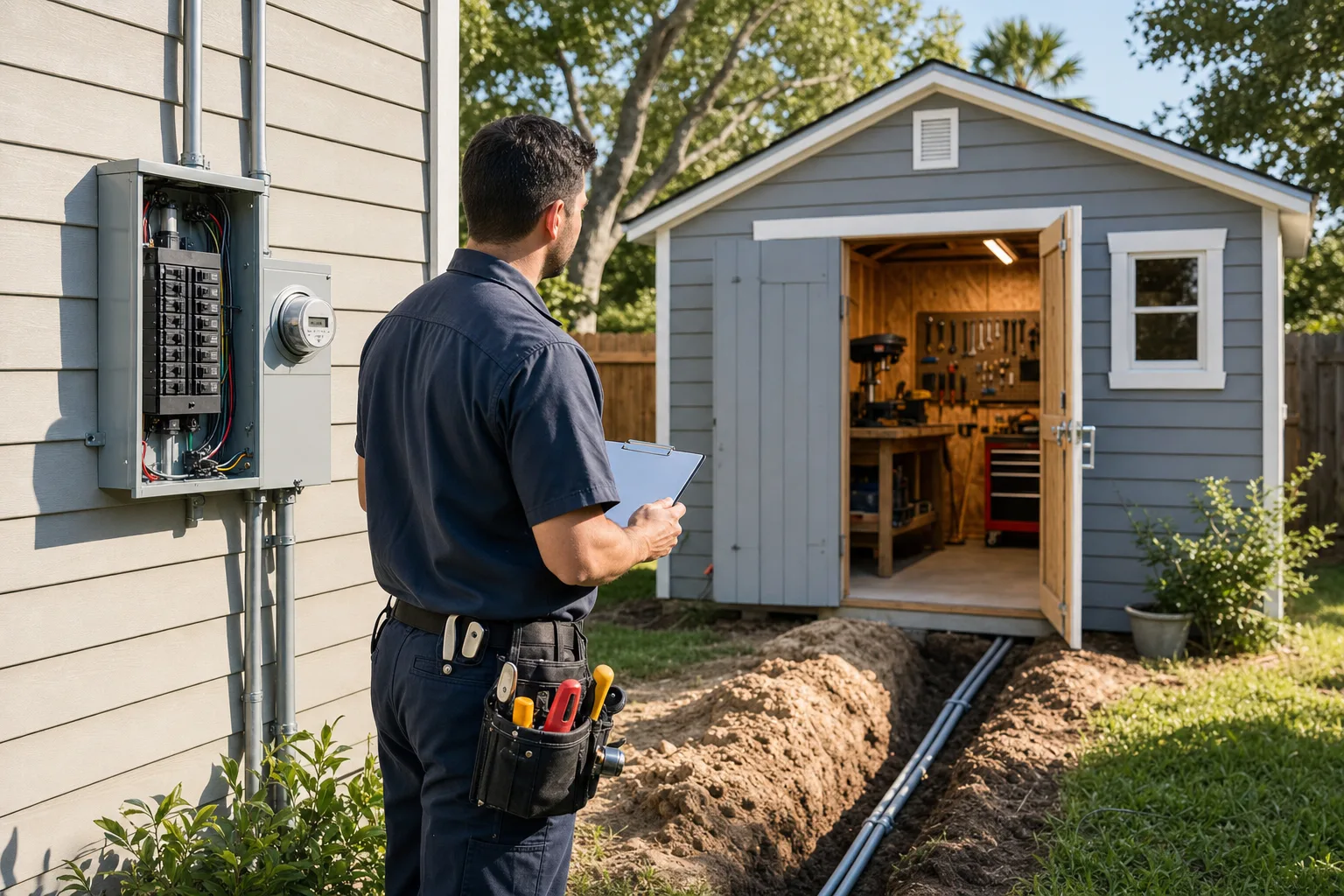
An underground feeder is often the preferred visual option for a backyard shed because it keeps the electrical run out of sight and away from normal activity. However, underground work requires careful site planning. The route may cross lawn areas, planting beds, driveways, walkways, irrigation lines, drainage areas, or future landscaping plans.
Before trenching, the installation should be coordinated around utility locating requirements, property access, existing underground systems, and the final location of the shed equipment. Required burial methods and depths can vary based on the wiring method, location, protection, and applicable rules. A homeowner should not rely on a universal online trench-depth recommendation for a Melbourne project.
In Florida, ground conditions and drainage deserve attention as well. Heavy rain, shifting soil, irrigation, and yard maintenance can affect the long-term environment around underground electrical pathways. Proper materials and installation practices matter.
Overhead Feed Considerations
An overhead feed may be considered when an underground route is impractical or when site conditions make a buried route more disruptive. It is not automatically the right answer for every property. The path must be evaluated for building clearances, access areas, trees, vehicle routes, pool areas, and local requirements.
Melbourne’s storms, wind, and weather exposure make careful outdoor equipment selection and secure installation especially important. An electrician can assess whether an overhead approach is feasible and appropriate for the structure rather than treating it as a one-size-fits-all solution.
Why Distance Changes the Scope
The farther the shed is from the house, the more important route planning becomes. Distance can affect labor, material quantity, access, potential voltage performance under load, and the need to coordinate trenching or restoration. A shed located a short distance from the panel with clear yard access is not the same project as a workshop at the back of a large lot beyond patios, mature landscaping, fences, or a pool deck.
This is one reason an accurate estimate should follow a site visit. The cost to add electricity to a detached shed in Melbourne depends on the building’s use, distance, route complexity, existing panel condition, necessary equipment, permit requirements, and restoration needs. Reliable pricing should be based on the actual property—not a generic online figure.
Outlets, Lighting, GFCI Protection, and Weather-Exposed Equipment
A practical shed installation should make normal use safer and more convenient. The goal is not simply to get one outlet working. It is to place electrical features where they reduce reliance on cords, support visibility, and fit the way the space will be used.
Lighting for Safe Access and Work
Good lighting can make a shed safer during early mornings, evening projects, and storm-season preparation. Interior lighting should illuminate entry points, storage aisles, and work surfaces. Task lighting may be useful over a workbench, tool area, or potting station. Exterior lighting can improve access around the shed door, gate, or path back to the home.
If lights flicker, dim heavily when a tool starts, fail after rain, or repeatedly trip a breaker, those are symptoms worth evaluating rather than ignoring. Deltron Electric also helps homeowners with lighting repair and installation throughout Melbourne, including recessed lighting, switches, and outdoor fixtures.
Receptacles Where They Are Actually Needed
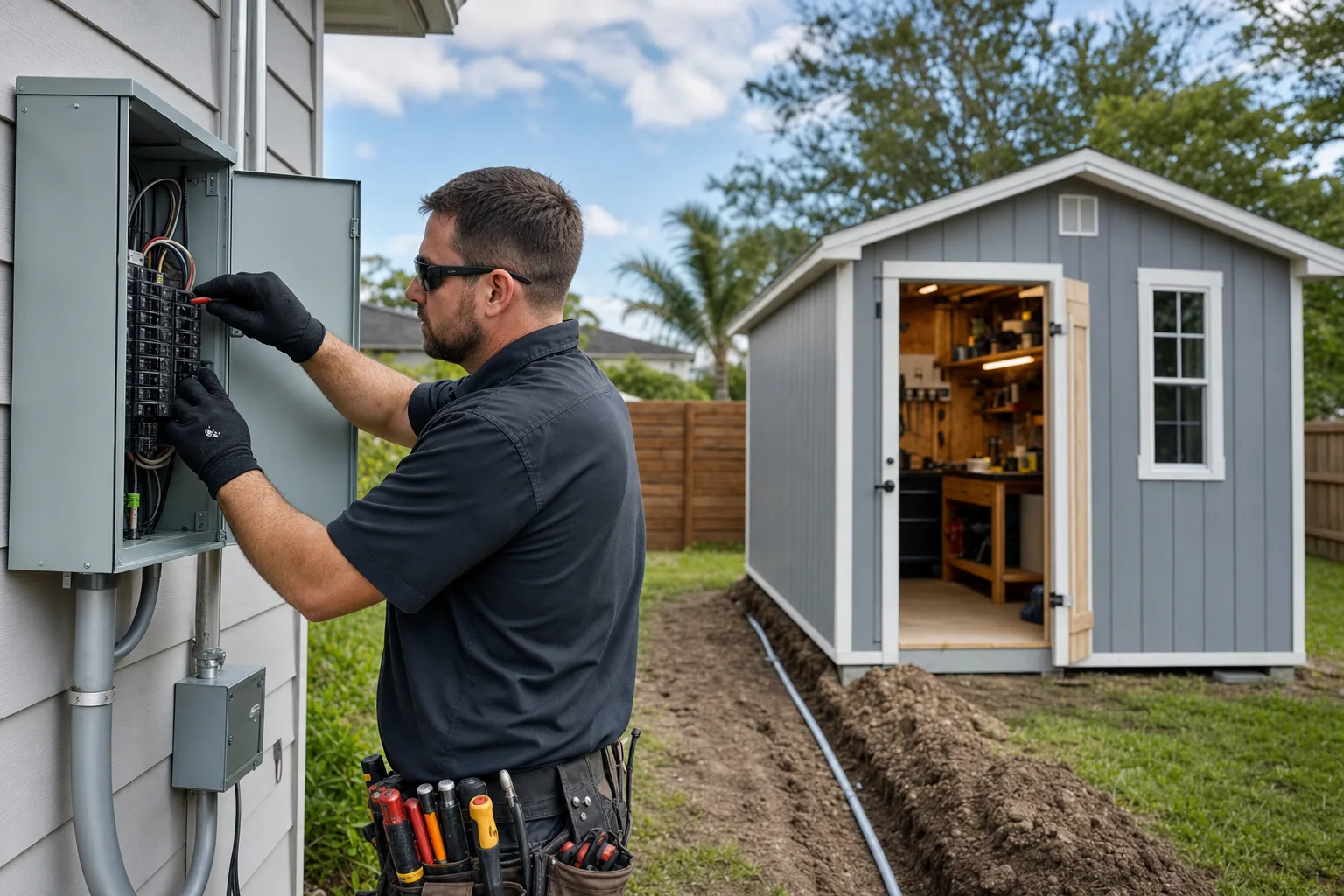
Outlet placement should reflect the floor plan. A receptacle near a workbench, another near the entry, and a properly located point for a charger or refrigerator can be more useful than a single outlet in an inconvenient corner. The electrician can discuss receptacle locations before walls are finished or shelving is installed.
Outdoor electrical outlet installation in Melbourne requires equipment suited to weather exposure. Covers, enclosures, fittings, and device selection should be appropriate for the conditions where they will be installed. This is particularly important around areas exposed to wind-driven rain, sprinkler spray, humidity, and direct sunlight.
GFCI Protection for Workshop Outlets
GFCI protection for workshop outlets is an important safety consideration, especially in locations where moisture, concrete floors, outdoor use, or grounded surfaces may increase shock risk. A GFCI device is designed to react to certain fault conditions, but repeated tripping is not a nuisance to defeat. It can indicate moisture intrusion, a damaged cord, a failing tool, an overloaded circuit, or a wiring concern that needs investigation.
Use caution if an outlet works only when the area is dry, trips after rain, feels warm, has discoloration, or shows damage around the cover. Florida’s humidity and storm exposure can accelerate wear on poorly protected outdoor equipment. For related information, see Deltron Electric’s discussion of Melbourne electrical upgrades and planning.
When a Shed Subpanel Makes Sense
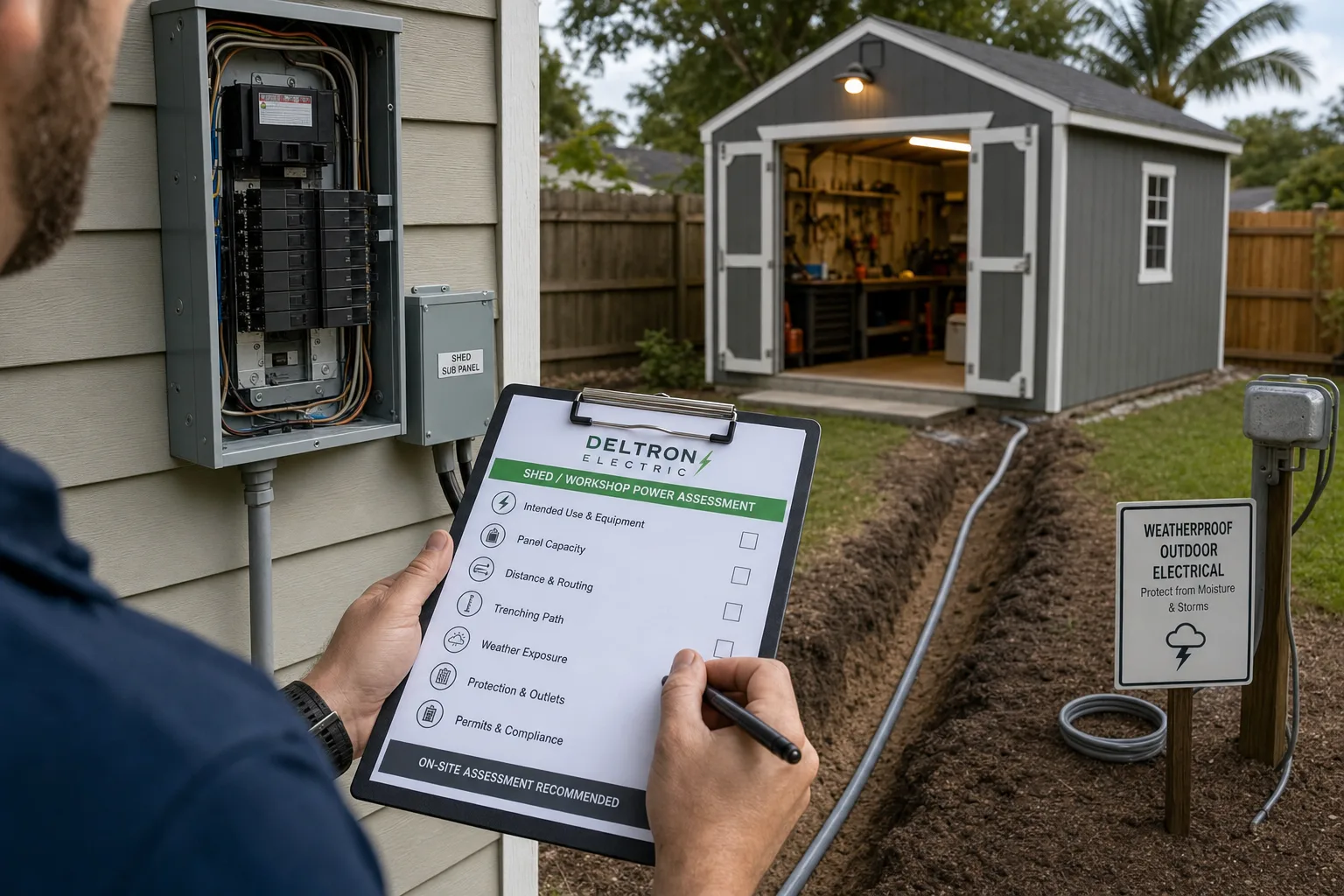
A shed subpanel installation may make sense when the detached building needs multiple circuits or when separating lighting, general-use receptacles, and equipment circuits would make the space easier and safer to use. It can also provide a more organized way to accommodate a growing workshop rather than trying to run every need from one circuit.
A subpanel is not automatically required for every shed. For a basic lighting-and-charger project, a simpler design may be appropriate. The right choice depends on the planned load, number of circuits, distance, future plans, and current electrical conditions at the house and shed. The installation must be evaluated and completed according to applicable requirements for detached structures, overcurrent protection, grounding, and disconnecting means.
Permits and Planning Considerations for Melbourne Shed Electrical Work
Do you need an electrical permit for a shed in Melbourne, FL? Electrical work supplying a detached structure commonly involves permitting and inspection requirements, but the exact answer depends on the property location, scope of work, and jurisdiction. Some properties associated with Melbourne mailing addresses may be governed by a different local authority, and owner or association requirements may also apply.
Before work begins, verify current rules with the appropriate authority, such as the City of Melbourne Building Division when the property is within its jurisdiction. Requirements can change, and the permitting office is the best source for current application, inspection, and jurisdiction details.
For rental homes and managed properties, the planning process should also account for owner authorization, tenant scheduling, access to the main panel, and documentation. Condo owners may need association approval for exterior changes, common-area access, or modifications that affect the building envelope or designated property area.
Thoughtful planning should happen before trenching begins. This helps prevent a trench from being placed where a future patio, fence post, irrigation change, drainage improvement, or landscaping project will create complications. It also allows the electrician to coordinate the safest feeder route with the property’s layout and the needs of the finished shed.
General electrical safety principles for outdoor wiring and GFCI protection are supported by resources from organizations such as the Electrical Safety Foundation International. Still, online guidance is not a substitute for a local assessment, current permit verification, or professional installation.
Frequently Asked Questions About Shed Electrical Installation in Melbourne
Do I need a permit to run electricity to a backyard shed in Melbourne, FL?
Often, electrical work that supplies a detached shed requires permits and inspections, but requirements depend on the scope and the jurisdiction governing the property. Confirm the current requirements before the project starts. Avoid unpermitted shed wiring; it can create safety concerns, complicate property transactions, and leave important work unverified.
Can my existing electrical panel handle a shed workshop, lights, and power tools?
Possibly, but only an assessment of the panel, existing household loads, equipment plans, and proposed feeder can answer that responsibly. A few LED lights and chargers are very different from active tool use, cooling equipment, or future expansion. Open breaker spaces are not a complete capacity evaluation.
How much does it cost to add electricity to a detached shed in Melbourne?
There is no universal price because each property is different. The scope can change based on the distance from the house, underground versus overhead route, access for trenching, panel condition, quantity of outlets and lights, need for a subpanel, weather-rated equipment, permit needs, and finishing or restoration work. An on-site visit provides the most useful basis for a project-specific estimate.
Can an electrician install a subpanel in a backyard shed?
Yes, when the building’s electrical needs and the home’s capacity support that design. A subpanel can be useful for a workshop with several circuits, but it must be planned correctly for the detached structure and installed in accordance with applicable requirements. It is not necessary for every basic shed project.
What electrical features should a small Florida workshop have for safety?
Common features may include well-placed lighting, adequate receptacles, suitable GFCI protection, appropriately rated outdoor equipment, correct circuit protection, and a layout that reduces dependence on extension cords. The best configuration depends on the space, tools, moisture exposure, and how the owner intends to use the workshop.
When to Schedule a Shed Electrical Assessment
The best time to schedule an assessment is before buying a subpanel, selecting equipment, pouring a slab, closing walls, installing built-in benches, or starting trenching. An early visit can identify the available panel capacity, the safest feeder route, the likely outlet and lighting locations, weather-exposure needs, and the practical scope of the project.
Schedule promptly if you already have a shed circuit that trips repeatedly, outlets that fail after rain, flickering lights, damaged exterior covers, or wiring that appears improvised. Treat burning odors, hot outlets or switches, sparks, buzzing from electrical equipment, and repeated breaker trips as urgent concerns. Stop using the affected equipment or circuit when it can be done safely and request professional electrical service.
For a detached garage, backyard shed, hobby room, storage building, or small workshop in Melbourne, Deltron Electric can evaluate the installation based on your actual property and intended equipment—not a generic template. Call (833) 335-8766 to request electrical installation help in Melbourne and schedule an assessment before purchasing equipment or beginning trenching. The visit can evaluate panel capacity, the safest feeder route, outlet and lighting needs, and the practical scope of your shed power installation.