


What an Electrician Checks Before Adding a 240-Volt Circuit for a New Appliance in Palm Bay
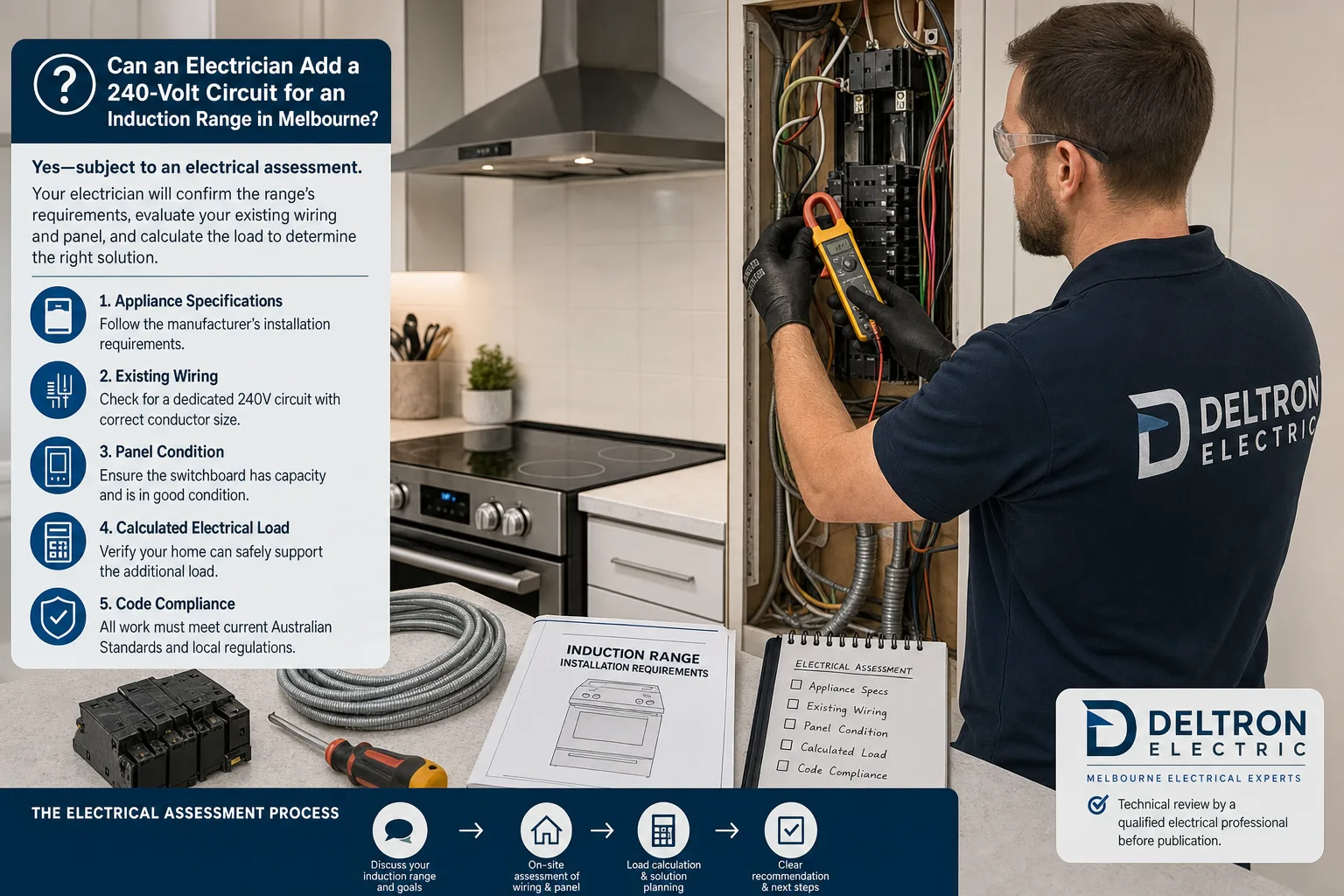
Yes—an electrician can often add a circuit for a residential induction range, subject to an electrical assessment. The important question is whether your home needs a new circuit at all, an upgrade to an existing range connection, or additional panel work. Induction cooking does not automatically require electrical panel replacement.
For homeowners in Palm Bay and neighboring Melbourne, the decision starts with the selected appliance’s installation instructions, the existing wiring, and the home’s available electrical capacity. Condo owners and rental property managers also need to consider building access, approvals, and scheduling before appliance delivery.
Can an Electrician Add a 240-Volt Circuit for an Induction Range?
In many homes, installing a 240-volt dedicated circuit is a practical project. A dedicated circuit supplies the range rather than sharing power with countertop appliances or unrelated outlets. The electrician determines the correct circuit from the manufacturer’s instructions and applicable electrical requirements—not simply from the fact that the range uses induction.
A pre-installation assessment generally answers five questions:
- What voltage, circuit rating, and connection method does this exact range require?
- Can an existing range circuit meet those requirements safely?
- Does the panel have suitable breaker space and adequate electrical capacity?
- Can the required wiring reach the kitchen through a practical, code-compliant route?
- What permits, inspections, and property approvals apply?
For example, replacing an electric range in a Melbourne single-family home may involve checking and reusing a suitable circuit. Replacing a gas range may require a new circuit from the panel because the existing kitchen connection supplies only the gas appliance’s ignition and controls. A condo installation may involve a unit panel, a feeder from shared electrical equipment, and access restrictions that do not exist in a detached house.
Deltron Electric’s Melbourne electrician services include electrical troubleshooting and home upgrades that help establish which of these situations applies before the appliance arrives.
Can You Reuse the Existing Electric Range Circuit?
Possibly, but the old range working on that circuit is not proof that the new induction range can use it. Appliance requirements differ, and the old installation may contain worn components or wiring limitations that were not obvious during everyday use.
The electrician checks the complete circuit, including the breaker, conductors, grounding arrangement, receptacle or junction box, and accessible terminations. A matching plug is only one part of compatibility.
When is reuse a reasonable possibility?
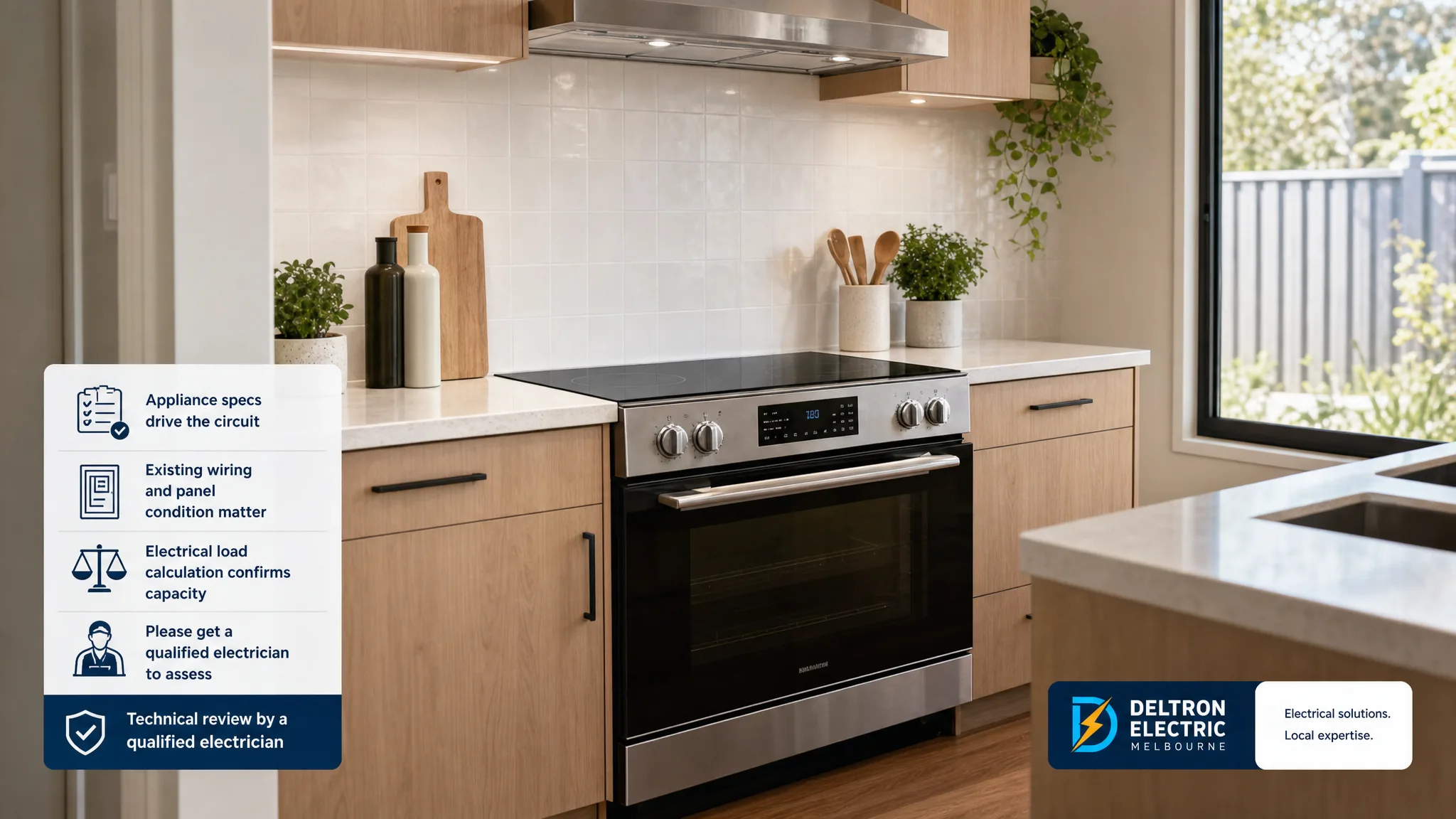
Reuse may be appropriate when the existing circuit meets the new range’s manufacturer instructions, its wiring and connections are in serviceable condition, and the installation satisfies applicable requirements. The electrician also checks whether the connection location allows the range to slide into place without pinching its cord or interfering with required clearances.
An electric range circuit upgrade may still be necessary if the new appliance requires a different circuit rating, the wiring lacks a required conductor, or the existing receptacle is damaged. Relocating the range during a remodel can also change the scope, even when the original circuit was adequate in its former location.
Can an existing three-prong range outlet be used?
Sometimes an existing three-wire installation can remain, but this requires a specific assessment. Limited provisions can permit qualifying existing range circuits to use a legacy grounding arrangement. Whether that applies depends on the actual installation, the manufacturer’s instructions, and the authority having jurisdiction.
A new residential range circuit generally provides separate neutral and equipment-grounding conductors along with the two ungrounded conductors. Many full-size induction ranges need a neutral for internal components, so the electrician must verify more than the availability of 240 volts.
Do not use a plug adapter or change the appliance’s bonding arrangement to make a connection fit. A qualified electrician should determine whether the existing installation qualifies for continued use or whether a new four-wire circuit is needed. Replacing only the receptacle does not create a missing grounding or neutral conductor.
What if the current range is gas?
The ordinary 120-volt outlet serving a gas range usually cannot supply a full-size induction range. Its presence behind the appliance should not be mistaken for a suitable range circuit. Plan for an assessment of the route from the electrical panel to the kitchen.
If gas service must be disconnected or capped, arrange that work with an appropriately qualified provider. Electrical work and gas-line work are separate parts of the conversion.
What Appliance Requirements and Wiring Details Must Be Checked?
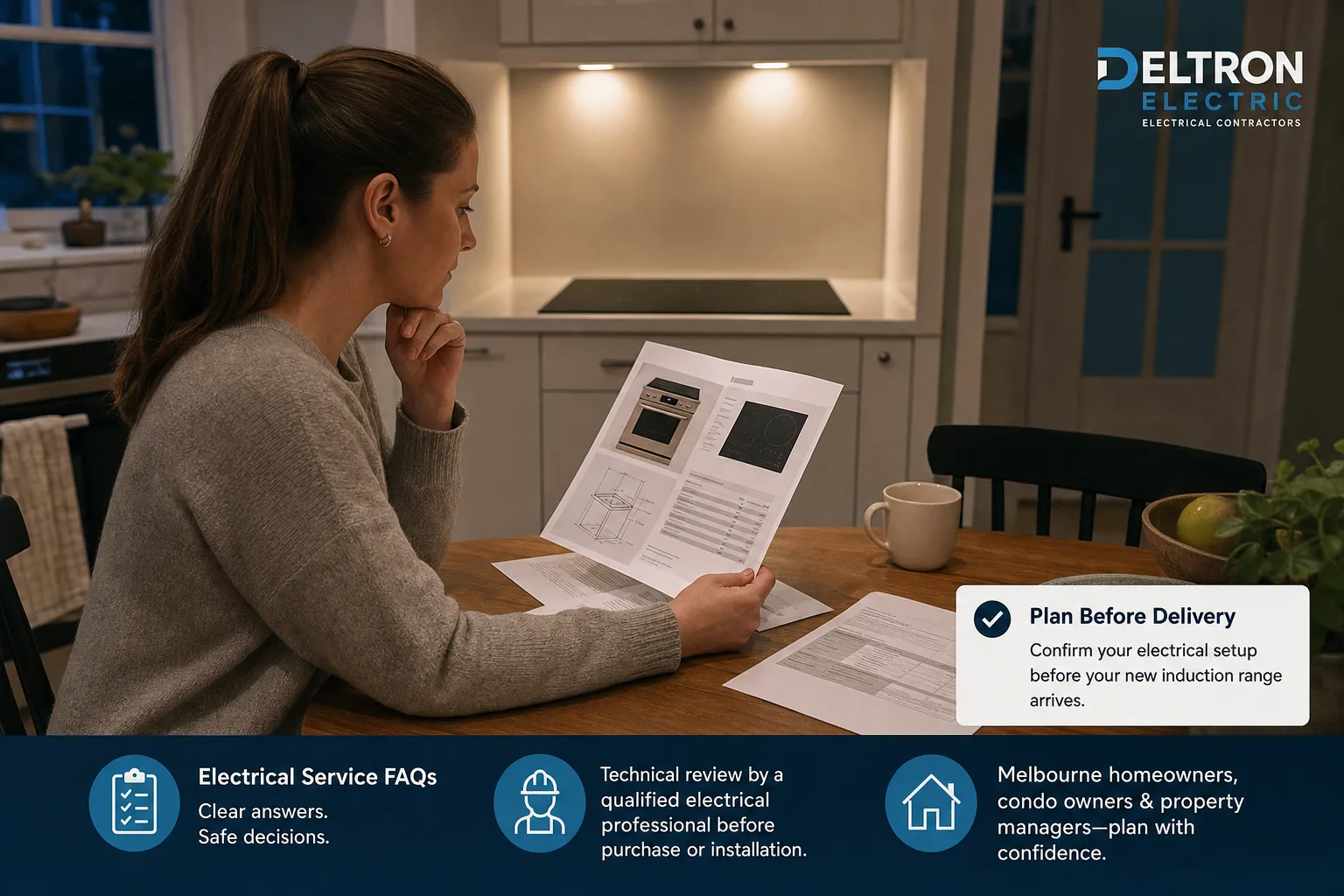
The model-specific installation manual is the starting point for induction range electrical requirements. A retailer’s summary or a manual for a similar-looking appliance may leave out important connection details. Obtain the installation instructions for the exact model, preferably before committing to delivery.
Voltage, circuit rating, and breaker requirements
The electrician compares the appliance nameplate and instructions with the building’s electrical supply. This is especially relevant in multifamily buildings, where the available supply may differ from a typical single-family home. If the building supplies 208 volts rather than 240 volts, the range must be rated for that supply, and its published performance may differ.
There is no single circuit amperage that should be assigned to every induction range. The electrician selects the circuit and overcurrent protection using the appliance’s listed requirements and applicable code provisions. The breaker must also be a type permitted for the panel—not merely a breaker that physically fits.
Conductors, grounding, and installation conditions
Conductor suitability depends on more than appearance. The assessment considers conductor size and material, insulation and wiring method, terminal ratings, route conditions, and the required neutral and grounding arrangement. Existing aluminum conductors, for example, require compatible equipment and proper terminations; their presence should be evaluated rather than ignored.
Installing a larger breaker is not a safe substitute for checking the wiring. A breaker change is appropriate only when the entire circuit and connected equipment are suitable for it.
Receptacle versus hardwired connection
The installation manual establishes whether a cord-and-plug connection, hardwired connection, or either method is permitted. Where a receptacle is used, its configuration and rating must suit the installation. The cord, strain relief, box, and connection location also matter.
The electrician checks the appliance’s specified connection area so the range can sit correctly between the cabinets. An outlet that projects into the wrong location can prevent a slide-in appliance from fitting, even when its electrical rating is correct.
Ground-fault circuit-interrupter protection must also be evaluated under the code and local requirements applicable to the work. Do not assume a range is exempt simply because it operates at 240 volts. If protection is required, it must be incorporated into the installation rather than bypassed to address tripping.
Does Your Panel Need Replacement or Just a New Circuit?
Adding an induction range does not automatically mean you need a new electrical panel or increased service capacity. Panel condition, breaker availability, and calculated load are separate questions. An electrician should explain which one is driving any proposed upgrade.
Why does an electrical panel load calculation matter?
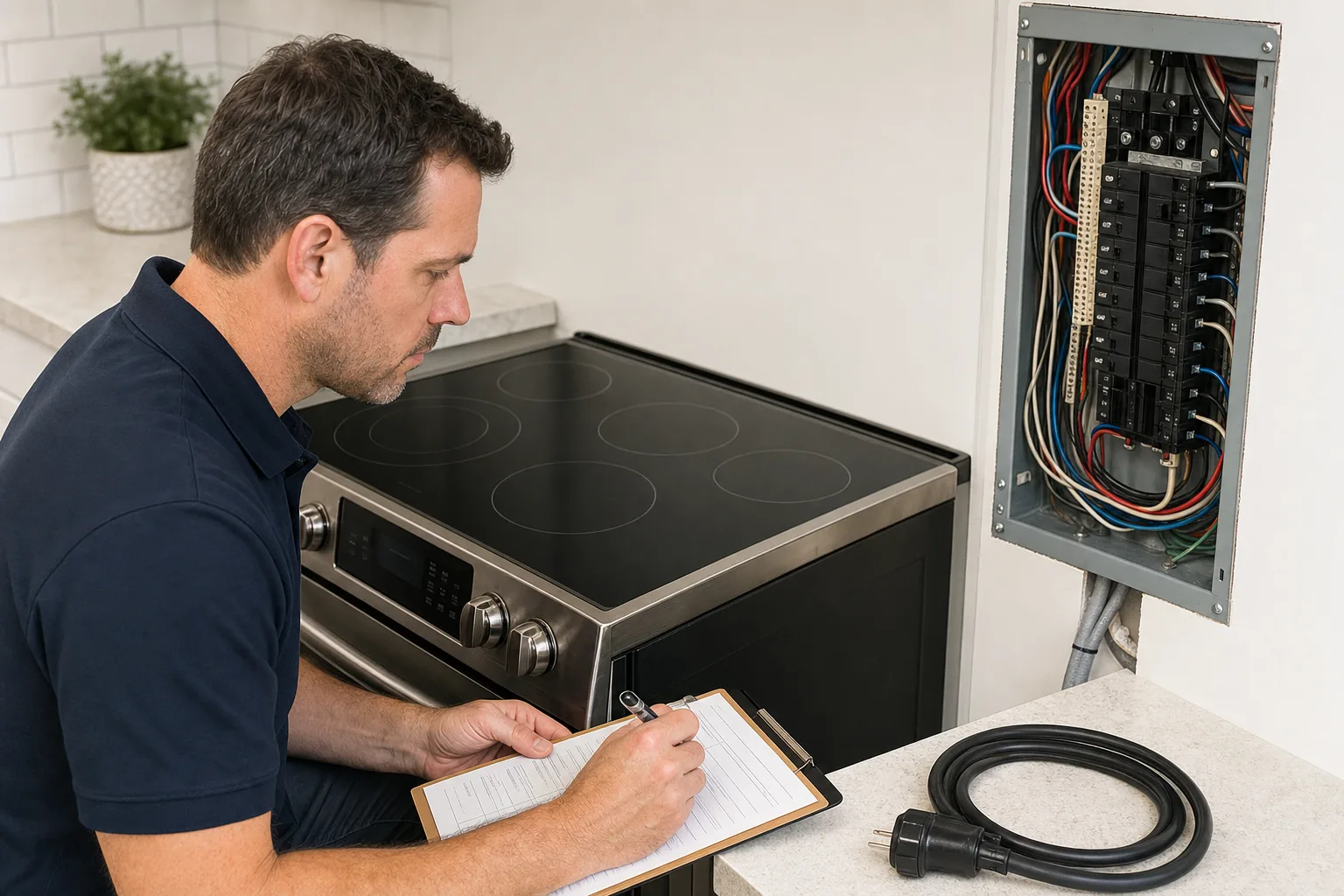
An electrical panel load calculation evaluates the home’s electrical demand using the applicable calculation method. It accounts for existing loads and the proposed change, including whether an electric cooking appliance is being replaced or an electrical cooking load is being added.
The calculation is not simply the sum of all breaker handle ratings. Nor can adequate capacity be established by noting that the panel has an empty slot or that the main breaker has never tripped.
Replacing one electric range with another may have a different effect on calculated demand than converting from gas. That distinction helps the electrician determine whether the existing service and any applicable feeder can support the new installation.
What is the difference between panel replacement and a service upgrade?
- A new branch circuit adds the wiring and protection needed for the appliance when the existing electrical equipment can support it.
- Panel replacement replaces the distribution equipment, potentially addressing damaged components, unsuitable equipment, or circuit-space limitations.
- A service-capacity upgrade increases the capacity available to the property and may involve service conductors, meter equipment, utility coordination, and other work.
A larger panel enclosure does not automatically provide more electrical power. Likewise, replacing a panel while retaining the same service rating does not, by itself, increase service capacity. In a condo, the capacity of the feeder serving the unit may be just as important as the unit panel.
When might panel work be justified?
Panel work may be necessary when equipment is damaged, has corrosion or overheating concerns, cannot accept the required listed breaker, or lacks a compliant way to accommodate the circuit. Additional distribution equipment can sometimes address circuit-space limitations, but it does not solve inadequate supply capacity.
If an assessment identifies panel concerns, ask for an explanation separating safety repairs from capacity changes. Homeowners comparing electrical panel replacement in Melbourne with a simpler circuit installation should receive that distinction in the scope of work. Deltron Electric also provides information about electrical panel replacement in nearby Palm Bay.
Burning odors, crackling, visible discoloration, or repeated breaker trips should be treated as warning signs, not as reasons to install a larger breaker. Stop using affected equipment and arrange professional evaluation. Do not remove panel covers to investigate.
What Permits, Inspections, and Condo Approvals May Apply in Melbourne?
Expect a new range circuit to require an electrical permit and inspection, with the exact process confirmed for the property address. Panel replacement or service changes can involve additional requirements. A simple appliance exchange on an unchanged, compliant connection may be treated differently from installing or extending a circuit.
A Melbourne mailing address does not necessarily establish that the City of Melbourne is the permitting authority. Properties in Melbourne, West Melbourne, Palm Bay, and unincorporated Brevard County can fall under different departments. The contractor should confirm the jurisdiction before finalizing permit assumptions.
Official starting points include the building and permitting information available through the City of Melbourne, City of Palm Bay, and Brevard County. The Florida Building Commission provides statewide code resources. The applicable code edition, local procedures, and project-specific inspection requirements should be confirmed with the responsible department rather than assumed from a general online article.
Does a condo association need to approve the work?
Possibly. Ask management about approval requirements before scheduling installation, particularly when the wiring route involves common walls, shared electrical rooms, structural assemblies, or building-owned equipment.
Associations may require contractor documentation, approved work hours, elevator reservations, or advance notice of an outage. Penetrations through fire-rated assemblies require appropriate treatment. Association permission does not replace a required electrical permit, and a permit does not replace association approval.
Rental property owners should also coordinate tenant access, the expected cooking interruption, and responsibility for appliance delivery and final connection. If concealed wiring needs inspection, the inspection must be coordinated before affected work is covered.
What Changes the Installation Cost, Timing, and Wall Access?
The route and condition of the electrical system often affect the project more than the appliance’s purchase price. Two similar induction ranges can have very different installation scopes in different Melbourne homes.
- Existing circuit suitability: Reusing a verified, compliant circuit is different from replacing wiring back to the panel.
- Panel location: A panel near the kitchen may offer a simpler route than one across the house.
- Attic and wall access: Open framing or accessible attic space may reduce disruption. Finished ceilings, masonry, and limited access can complicate routing.
- Panel condition and capacity: Repairs, replacement, feeder changes, or service work add distinct tasks.
- Kitchen layout: Moving the range to an island or another wall may require a substantially different wiring path.
- Permit and inspection coordination: Required approvals and inspection stages influence scheduling.
- Condo access and utility coordination: Shared equipment access, association rules, or utility involvement can introduce additional scheduling dependencies.
A useful written scope identifies whether the work includes permits, the circuit and breaker, the receptacle or hardwired connection, appliance connection, and required testing. It should also clarify who handles wall patching, painting, cabinetry changes, gas disconnection, and appliance positioning.
If you are also moving outlets or switches during a Melbourne kitchen remodel, discuss those changes during the same planning visit. Coordinating access before finishes are installed can help avoid reopening completed surfaces.
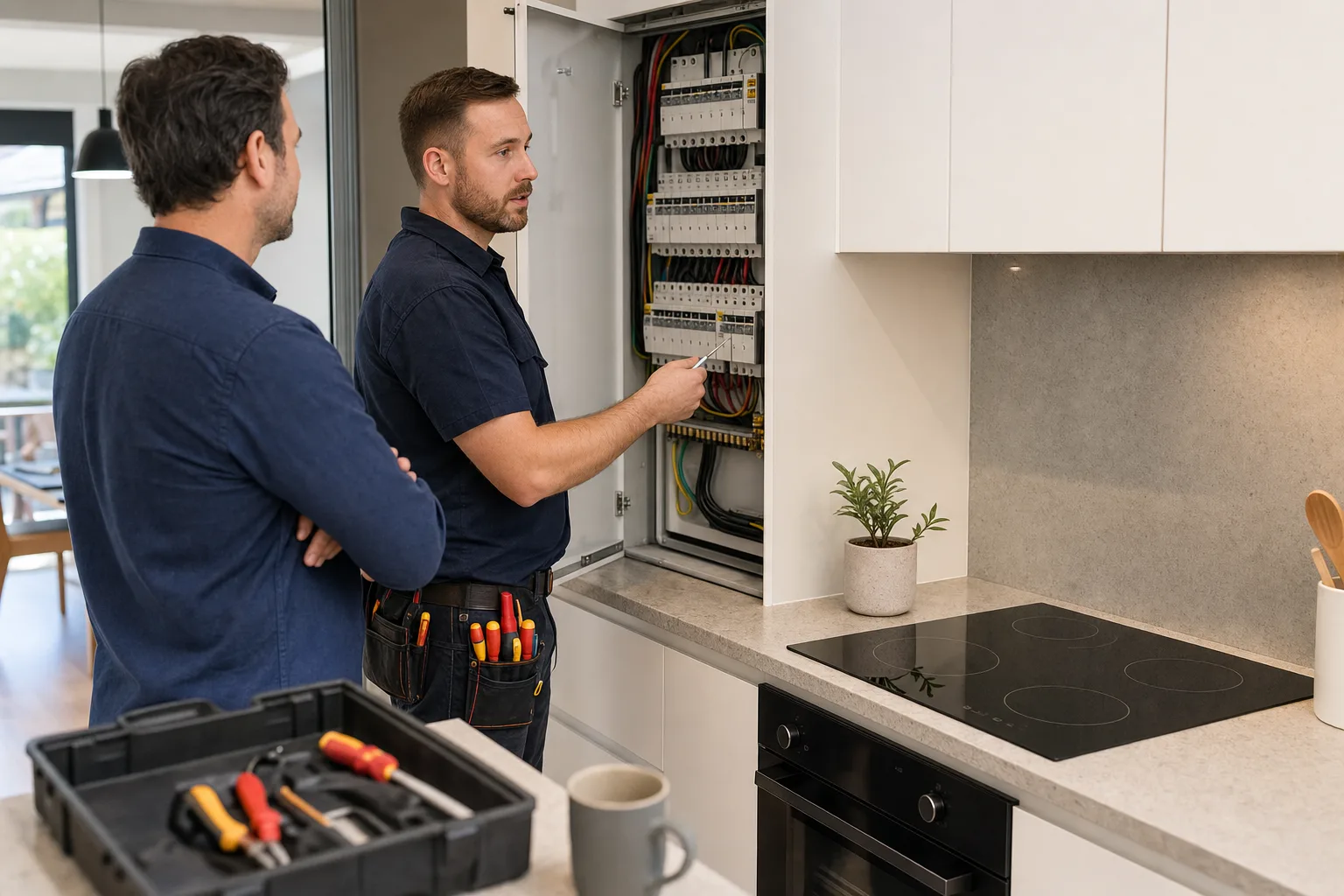
Should you schedule an electrician before appliance delivery?
Yes, ideally after choosing a model but before the delivery date is fixed. That gives the electrician the actual installation requirements while leaving time to address wiring, permits, or panel issues.
A delivery crew may not be authorized or equipped to modify the household electrical system. Even when delivery includes appliance hookup, that generally assumes a suitable connection is already available. Confirm those terms instead of discovering the limitation with the old range removed.
For induction range circuit installation in Melbourne, a practical sequence is to select the model, assess the electrical system, confirm approvals and scope, complete the required work and inspections, and coordinate final appliance connection. Exact timing depends on what the assessment reveals.
What Should You Share With Deltron Electric Before a Service Visit?
You do not need to diagnose the circuit yourself. A few readily available details can make the initial conversation more useful:
- The range model number and its installation manual, if available.
- Your current appliance type: gas, conventional electric, or induction.
- What you already know about the connection: three-prong, four-prong, hardwired, or unknown.
- The property address and building type: single-family home, condo, or rental unit.
- The general panel location and any known electrical problems.
- Whether the range is staying in place or moving during a remodel.
- The delivery target and any association or tenant access restrictions.
If the connection is hidden, leave it hidden until it can be accessed safely. Do not pull out a heavy range, disconnect a gas line, or remove a panel cover to gather information. Existing paperwork and safely accessible labels can help with planning, but photos alone cannot establish conductor condition, load capacity, or overall circuit compliance.
The service visit should establish a practical next step: reuse the verified circuit, correct the existing connection, install a new dedicated circuit, or address a specific panel or service limitation. An explanation tied to your selected model is more useful than a blanket claim that every induction range requires a panel upgrade.
Not sure whether your existing range circuit and panel can support the induction model you chose? Contact Deltron Electric at (833) 335-8766 with the model number and what you know about your current range connection. Then schedule a service visit to determine the practical next step before delivery or kitchen work locks in your timeline.