


What Does an Electrical Troubleshooting Visit in Deltona Usually Include?
A home office often starts in a spare bedroom, dining room, or den that was never designed around computers, multiple monitors, chargers, printers, networking equipment, and other everyday devices. If the only available receptacle is behind a desk, cords cross a walkway, or several devices depend on one power strip, adding properly placed outlets can make the room safer and more functional.
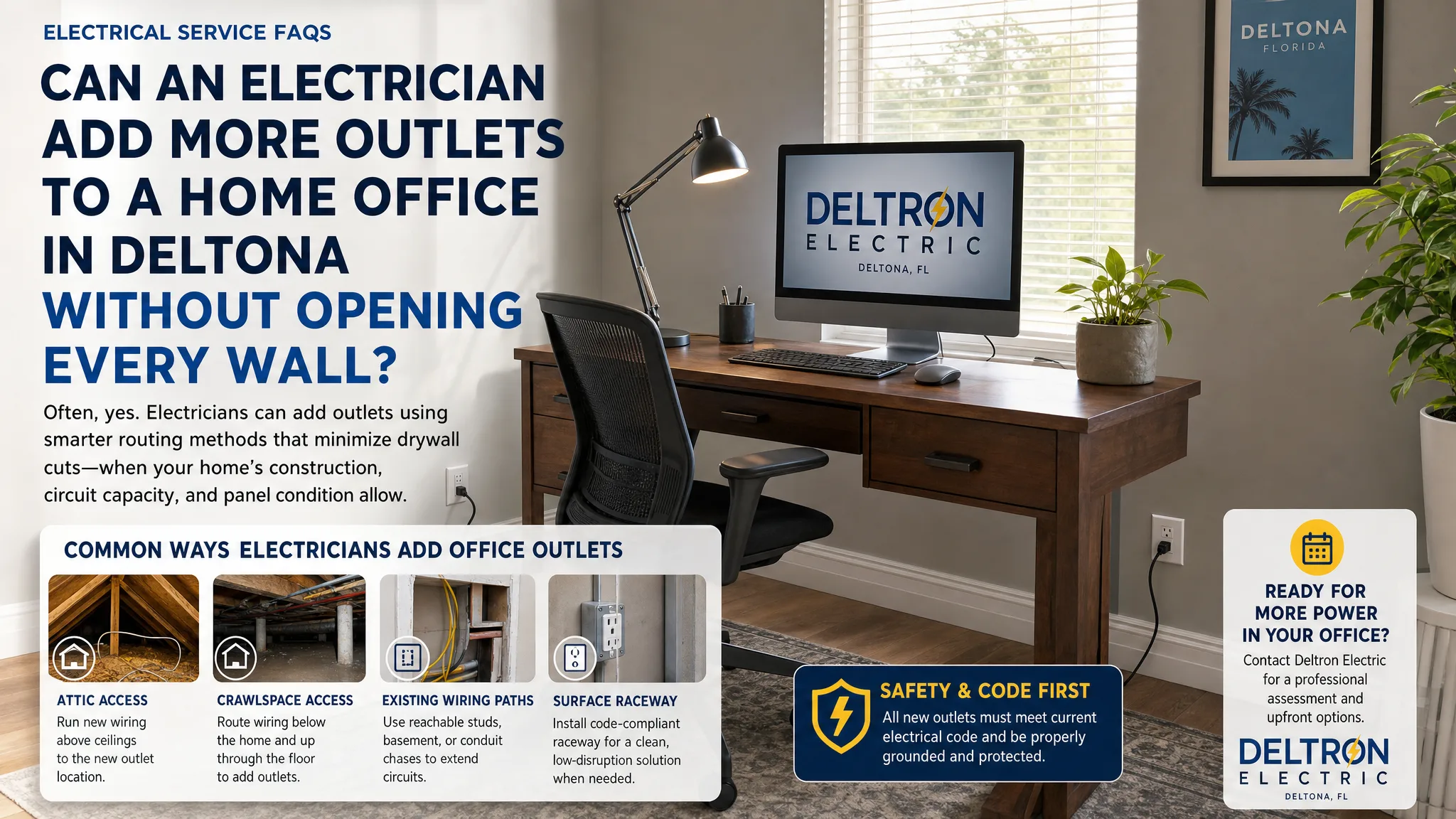
For many Deltona homeowners, the first concern is understandable: will an electrician need to open every wall to add power where it is needed? Often, the answer is no. Attic access, crawlspace access, nearby wiring paths, and surface raceway can sometimes allow for a permanent outlet addition with limited drywall disruption. Still, no electrician should promise a no-cut installation before inspecting the home, because construction details, circuit loading, panel condition, and the desired outlet location all affect the practical plan.
An electrical troubleshooting visit gives you a site-specific answer before you commit to a project or continue relying on extension cords as a long-term solution. The visit can identify the existing circuit, evaluate potential wiring routes, review the electrical panel, and explain the least disruptive compliant way to power your office.
Can an Electrician Add Outlets Without Opening Every Wall?
In many finished homes, an electrician can add outlets without opening every wall. The best route may come from above the office, below it, through an adjacent accessible area, or along a surface-mounted pathway designed for permanent wiring. The available options depend on the layout and construction of your particular Deltona home.
For example, an office directly below an accessible attic may allow an electrician to evaluate a route down through the wall cavity to a new receptacle location. If the room is above an accessible crawlspace or lower-level area, a route from below may be possible instead. In some situations, a nearby outlet or accessible wiring location can help determine whether extending an existing circuit is appropriate.
The key word is “appropriate.” A nearby outlet is not automatically a suitable source for additional office equipment. Before adding outlets, an electrician should determine what circuit serves the existing outlet, what else is on that circuit, and whether the circuit is suitable for the added demand.
During electrical diagnostics and repair in Deltona, the practical questions include:
- Where should the new outlets be located for the desk, printer, chargers, and other equipment?
- What is above, below, and behind the desired outlet wall?
- Are attic, crawlspace, adjacent-room, or existing wiring paths accessible?
- Would a concealed route require limited drywall access, or is surface raceway a better choice?
- Can the office use an existing circuit safely, or should it have a dedicated circuit?
- Does the panel have suitable breaker space, capacity, and condition for the proposed work?
A careful assessment can often identify a clean, practical route with minimal impact to finished surfaces. However, if framing, fire blocking, concrete block construction, insulation, plumbing, or other obstacles prevent safe routing, small targeted openings may be necessary. The goal is not to avoid every opening at all costs; it is to install permanent wiring safely and responsibly while limiting unnecessary disruption.
How Electricians Find Less Disruptive Wiring Routes
When homeowners ask about add outlets to home office Deltona options, the routing path is one of the first things to evaluate. An electrician looks at the room as part of the whole electrical system, not just as a wall with an outlet. Access points, framing direction, the location of the panel, and the circuit plan can all affect the scope.
Attic Access Above the Office
Attic access can be especially helpful when a home office is on the upper floor or directly below accessible attic space. An electrician may be able to evaluate a pathway through the ceiling area and into the wall cavity where the new receptacle is needed.
This option can reduce the amount of finished-wall access required, but it is not a universal solution. Framing members, insulation, HVAC equipment, plumbing pipes, existing cables, and blocking inside the wall can limit where wiring can be routed. A wall that appears simple from inside the room may have obstacles that are only apparent after the accessible areas are inspected.
Crawlspace or Lower-Level Access
Some homes have accessible space below the office. Where conditions allow, an electrician may evaluate a route through the floor structure and up into the appropriate wall cavity. Floor framing, insulation, moisture conditions, existing utilities, and the location of the desired outlet all affect whether this is a practical method.
As with attic access, access from below can reduce wall repair but does not eliminate the need for careful planning. The wiring still needs a safe, protected, code-compliant route and proper connections at every point.
Existing Wiring Paths and Adjacent Accessible Areas
An existing outlet, switch, closet, utility area, or adjacent room may offer useful access for evaluating a new outlet location. This does not mean the electrician will simply connect to the nearest receptacle. The existing circuit must be identified and evaluated first.
A circuit that appears lightly used may also serve lighting, nearby bedrooms, outdoor receptacles, garage equipment, or other loads that are not obvious from the office. Electrical troubleshooting in Deltona should include checking those conditions before deciding whether an existing circuit can reasonably be extended.
Surface Raceway Outlet Installation
If a concealed route is blocked or would require more wall opening than you prefer, a surface raceway outlet installation may be worth discussing. Surface raceway is a protective pathway installed along a wall or other suitable surface to contain permanent wiring and deliver power where it is needed.
For a home office, surface raceway can be a practical alternative to loose cords running behind furniture or across the floor. It may be especially useful where there is no attic or crawlspace access, where wall construction limits concealed routing, or where the desk layout needs power along a particular wall.

Surface raceway is not the right fit for every room or every homeowner’s design preference. Its appearance, route, location, and suitability should be reviewed as part of the on-site assessment. When it is appropriate, it can provide a cleaner permanent solution than using extension cords as substitute wiring.
When Some Drywall Access May Still Be Necessary
Limited drywall access may be necessary when there is no usable path from above or below, when structural framing blocks the route, or when a new dedicated circuit must travel a substantial distance from the panel to the office. It may also be necessary to make secure connections, route wiring correctly, or address an existing issue found during diagnosis.
That does not automatically mean large sections of the room need to be opened. A well-planned installation may use small, targeted access points selected to complete the route correctly. The actual number, size, and location of any openings depend on the home’s framing and the final wiring plan.
Conditions that may make wall access more likely include:
- An office on a lower level without usable attic or crawlspace access.
- Concrete block, masonry, or other construction that restricts concealed wiring paths.
- Interior walls with framing obstacles, fire blocking, or utilities in the cavity.
- A requested outlet location far from the panel or from a feasible source circuit.
- A need for a new dedicated circuit rather than an extension of an existing circuit.
- Existing wiring concerns that must be corrected before new outlets are added.
An honest scope discussion is part of a quality electrical diagnosis. Rather than making a broad promise that no drywall work will be needed, the electrician should explain the routing options, likely access needs, limitations discovered at the property, and the safest route for the installation.
Why Home Office Circuit Capacity Matters
Adding more receptacles does not automatically create more available electrical capacity. Outlets are access points on a circuit, and the circuit must be able to support the equipment connected to it. This is why a circuit review should happen before an outlet installation in Deltona is planned.
Modern home offices may include desktop computers, monitors, docking stations, printers, routers, modem equipment, speakers, chargers, task lighting, and battery backup equipment. Those loads should be considered together, along with whatever else is already on the circuit.
Portable appliances can change the calculation quickly. A space heater, portable air conditioner, or other high-demand equipment should not be treated like a phone charger or desk lamp. If breakers trip when office equipment is used, lights flicker when a device starts, or an outlet feels warm, the issue deserves professional evaluation before more equipment is added.
Dedicated Circuit Versus Extending an Existing Circuit
Not every office needs a dedicated circuit. A properly evaluated existing general-use circuit may be suitable for a modest office setup. However, a dedicated circuit may be the more reliable and practical choice when the office has substantial equipment, the existing circuit serves multiple rooms, or the current circuit already experiences tripping or heavy use.
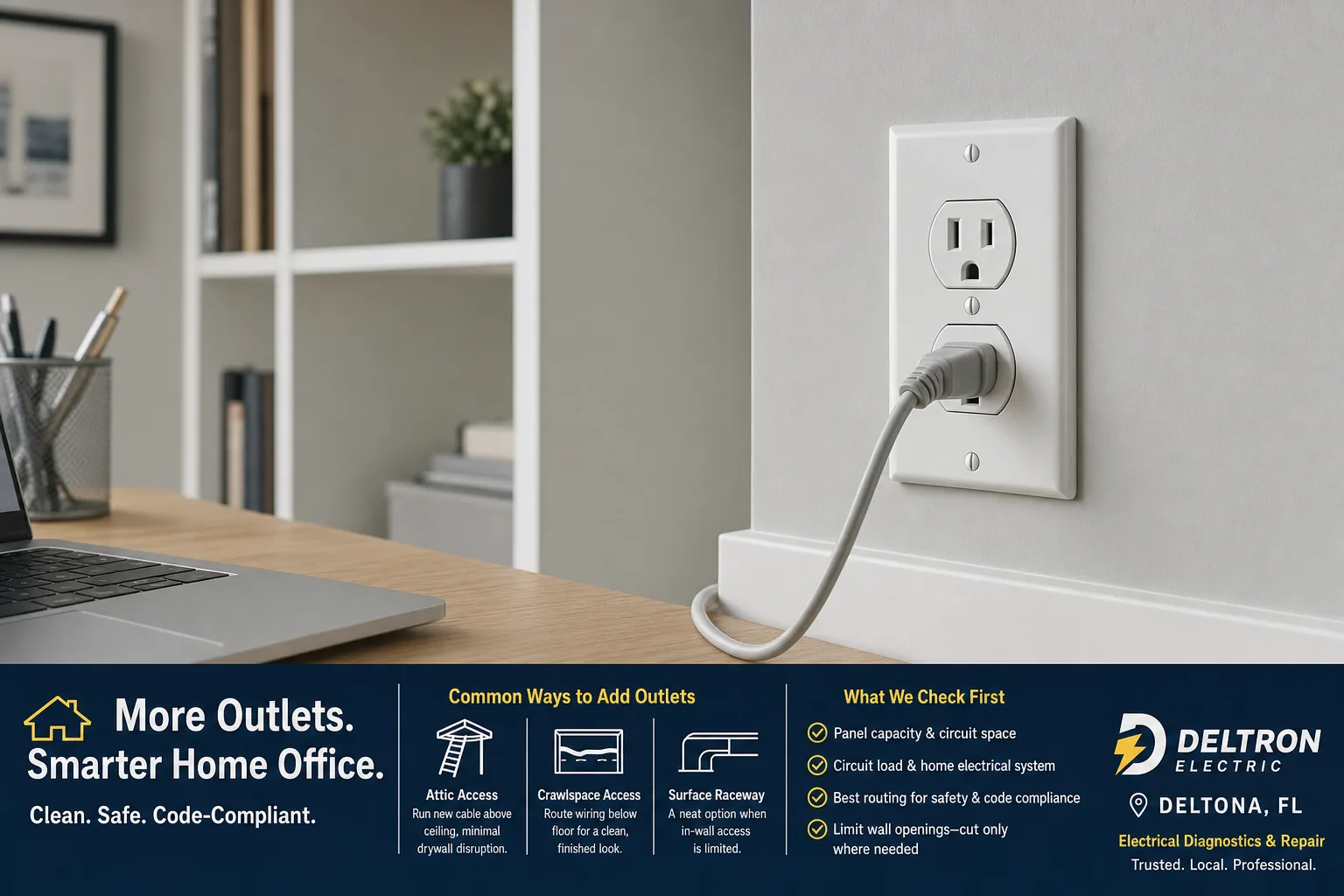
A dedicated circuit can separate office equipment from unrelated household loads, reducing the chance that another device elsewhere in the home interrupts work in the office. The decision should be based on the actual circuit loading and the planned equipment, not simply on the number of outlets you want installed.
If an EV charger is installed nearby, such as in an attached garage or carport, it should also be part of the overall electrical capacity conversation. EV charging is a separate, meaningful load and should not be casually grouped with office outlet planning. An electrician should account for the home’s larger electrical demand when evaluating panel capacity and future additions.
Schedule electrical troubleshooting promptly if you notice:
- Breakers that trip during normal office use.
- Warm, discolored, loose, damaged, or unreliable outlets.
- Lights that dim or flicker when equipment starts.
- Crackling sounds, burning smells, or visible damage near an outlet.
- Frequent dependence on multiple power strips because there are too few outlets.
- Buzzing or unusual sounds from the electrical panel.
A panel should not normally buzz, hum, or crackle. If yours is making noise, review why an electrical panel is buzzing and arrange an evaluation rather than attempting a panel repair yourself.
When an Electrical Panel Replacement May Be Part of the Plan
Most home office outlet projects do not require a panel replacement. Still, a panel review is important when a new dedicated circuit may be needed. The electrician must determine whether the panel has appropriate room for additional breakers, whether the electrical system can support the anticipated load, and whether the existing equipment is in suitable condition for the planned work.
An electrical panel capacity check may lead to a larger recommendation when:
- There is no practical room in the panel for the circuit you need.
- The home’s existing load leaves limited capacity for additional equipment.
- The panel or related equipment has condition concerns that should be addressed.
- The home is adding several significant loads, such as EV charging, generator equipment, or expanded office equipment.
- Past alterations have made the system difficult to assess or organize safely.
A panel upgrade is not an automatic answer to every outlet request. It should be recommended only when the panel’s space, condition, or capacity makes it appropriate for the planned electrical work. If panel work is necessary, Deltron Electric can explain options for electrical panel replacement in Deltona or electrical panel installation in Deltona.
What Happens During a Deltona Electrical Troubleshooting Visit
An electrical troubleshooting visit is more than a quick look at the closest outlet. For a home office power concern, the purpose is to identify what is causing the inconvenience or potential safety issue and determine the most practical permanent solution for the property.
Discussion of Your Office Setup
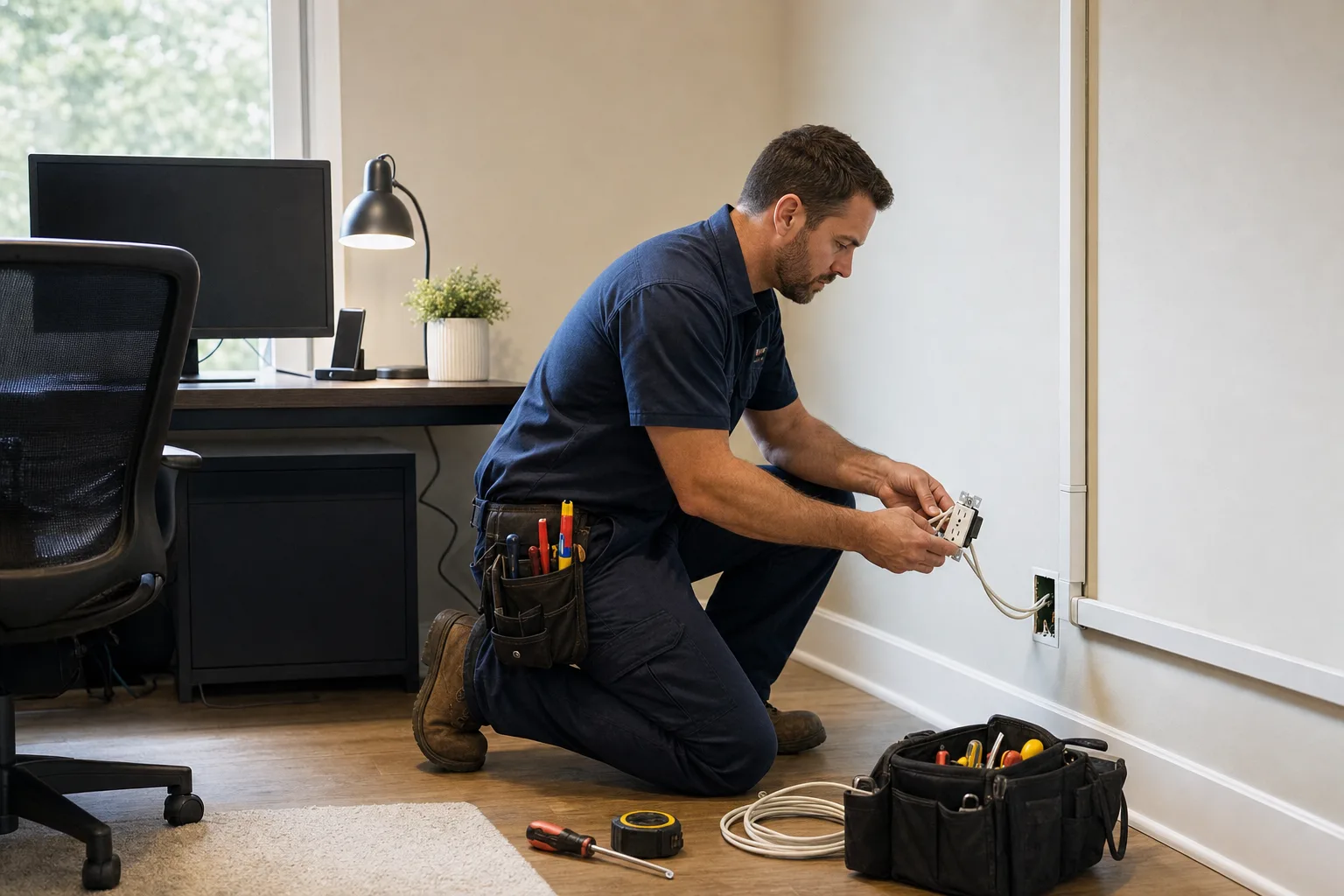
The electrician will need to understand how the room is used. Show where the desk, computers, monitors, printer, chargers, router, and other equipment are located. Point out the outlets you currently use, where cords run, and any issues you have noticed, such as tripped breakers, loose plugs, flickering lights, or outlets that stop working.
Inspection of Existing Outlets and Circuits
The assessment may include checking existing receptacles, identifying which circuit serves them, and looking for apparent signs of wear, damage, poor connections, or overloading. This helps determine whether the outlet-placement problem is separate from a larger circuit or panel issue.
Review of Potential Wiring Routes
Where accessible, the electrician can review attic, crawlspace, adjacent-area, existing-circuit, panel, and surface-raceway options. This is when the construction of your Deltona home becomes central to the recommendation. It helps answer whether a concealed route is practical, whether limited drywall access is likely, or whether surface raceway is a better fit.
Panel Condition and Capacity Review
When a new circuit or meaningful added load is being considered, the panel needs review. The electrician can explain whether extending an existing circuit appears appropriate or whether a dedicated circuit would better support the office. If the panel has limitations, those should be explained before the outlet project moves forward.
Scope, Permit, and Next-Step Discussion
Adding outlets is regulated electrical work. Permit and inspection requirements can depend on the property, the scope of work, and the authority with jurisdiction. Deltona homeowners should confirm current requirements for their specific property and project with the applicable local building and permitting authority and their electrician before work begins.
Electrical installations must follow locally adopted requirements based on the NFPA 70 National Electrical Code framework. Because applicable requirements and permitting processes can change, a site assessment is more useful than relying on general online advice for a specific installation plan.
Safer Alternatives to Extension Cords and Overloaded Power Strips
A quality surge protector can be useful for sensitive office electronics, but it does not replace properly placed permanent outlets or add circuit capacity. Extension cords can be useful for short-term temporary needs, but they are not intended to serve as permanent wiring for a daily workspace.
A safer long-term office setup may include:

- Permanent wall outlets located near the desk and equipment.
- A dedicated circuit when the circuit assessment supports that recommendation.
- Replacement of damaged, loose, warm, or unreliable receptacles.
- Appropriate surge protection for computers and other sensitive electronics.
- Surface raceway where concealed wiring would be unnecessarily disruptive.
- A desk and furniture layout that does not require cords to cross walking paths.
Avoid daisy-chaining power strips, running cords under rugs, using damaged extension cords, or treating a power strip as a way to increase a circuit’s capacity. The U.S. Consumer Product Safety Commission’s electrical safety guidance also advises against overloaded outlets and damaged electrical cords.
Frequently Asked Questions About Outlet Installation in Deltona
Can an electrician add outlets in a finished home office without cutting into every wall?
Often, yes. Attic access, crawlspace access, nearby accessible areas, existing wiring paths, and surface raceway can sometimes reduce the need for drywall work. However, the home’s construction, framing, desired outlet location, and electrical plan determine what is possible. An on-site assessment is the reliable way to identify the least disruptive option.
What options are available if there is no attic or crawlspace access above the office?
Possible approaches may include routing through an adjacent accessible area, planning limited drywall access, or using surface raceway where appropriate. The best method depends on the wall construction, the distance to a suitable circuit or panel, the desired outlet placement, and the office’s electrical load.
Will my home office need a dedicated circuit for computers, monitors, printers, or an EV charger nearby?
Not every home office needs a dedicated circuit. The decision depends on what the existing circuit serves, the load from office equipment, and the home’s overall electrical demand. An EV charger is a substantial separate load and should be included in the panel and capacity assessment, even when it is located outside the office.
How do I know whether my electrical panel has room for additional outlets?
Available breaker spaces alone do not provide the full answer. An electrician should review breaker space, panel condition, circuit loading, and the system’s capacity for the anticipated additional load. That evaluation determines whether a new circuit can be added or whether panel work should be considered first.
Do I need a permit to add outlets in Deltona?
Permit and inspection requirements depend on the property, work scope, and local jurisdiction. Confirm current requirements for your Deltona property before work begins. A professional diagnosis helps define the proposed installation clearly so that permit questions can be addressed accurately.
Get a Direct Answer About Powering Your Home Office
If you need more convenient home office electrical outlets, do not assume extensive wall repair is unavoidable. At the same time, do not assume a nearby outlet can safely support more devices just because it is physically close to the desk. A professional assessment can clarify both the routing and electrical-capacity questions before work is planned.
Would you like a site-specific answer about routing options, circuit capacity, panel limitations, and the least disruptive way to power your Deltona office? Call Deltron Electric at (833) 335-8766 or schedule an electrical diagnosis or service to discuss the practical next step for your home.