


Dedicated Circuit Installation in Merritt Island for a Garage Refrigerator or Freezer
A garage refrigerator or freezer can be a convenient part of a Merritt Island home, condo storage area, or rental property—but it needs dependable power. If the appliance shares a circuit with garage lights, door openers, power tools, outdoor equipment, or other outlets, a dedicated circuit may be the practical answer. An electrician can evaluate the existing wiring, panel capacity, outlet condition, and appliance requirements to determine whether a separate circuit is appropriate.
For Florida garages, reliability is especially important. High temperatures, humidity, moisture exposure near exterior walls, and heavier seasonal use can put more demand on both appliances and electrical equipment. A recurring breaker trip is not something to dismiss as normal, particularly when it leaves a refrigerator or freezer without power.
Can an Electrician Install a Dedicated Circuit for a Garage Refrigerator or Freezer?
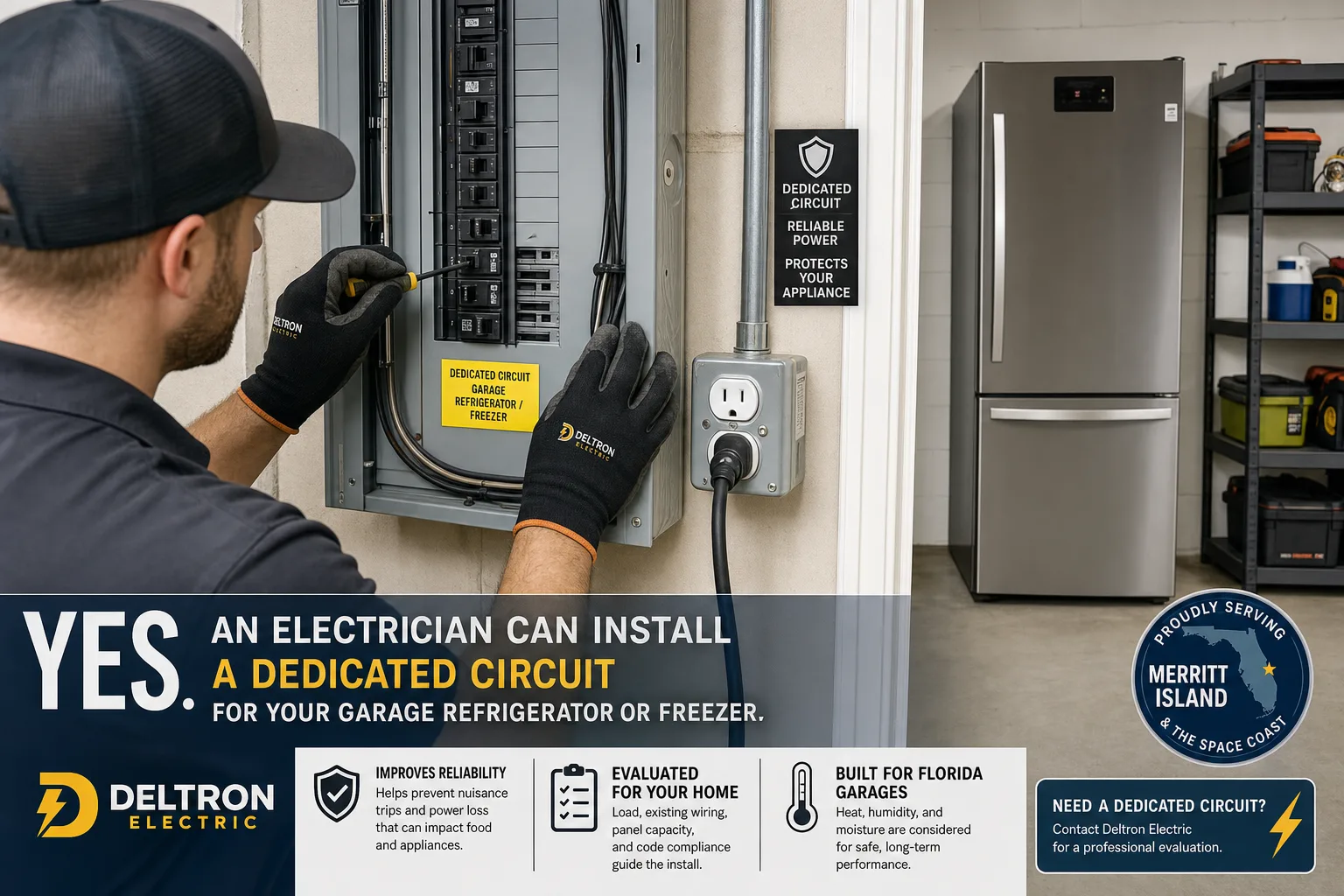
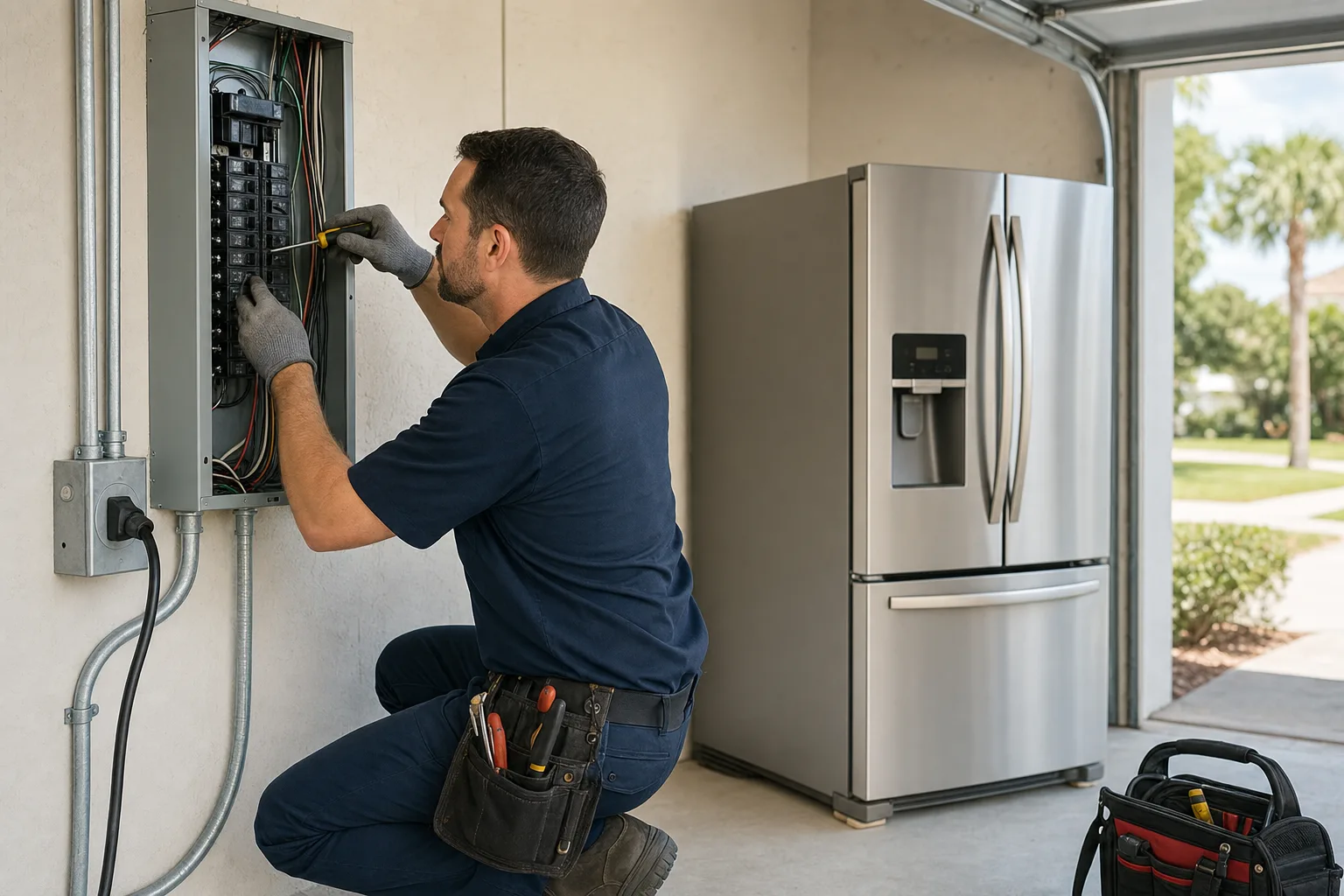
Yes. A licensed electrician can install a dedicated branch circuit for a garage refrigerator or freezer when the appliance, existing circuit load, wiring condition, and panel capacity support that plan. A dedicated circuit supplies one intended appliance or load without sharing the circuit with the usual mix of garage outlets, lighting, chargers, door openers, and plug-in tools.
That separation can reduce avoidable interruptions. For example, if a refrigerator loses power whenever someone runs a shop vacuum, pressure washer, air compressor, or circular saw from another garage outlet, the issue may be an overloaded shared circuit rather than a refrigerator problem. A new circuit can give the appliance its own properly protected power source while allowing the electrician to correct any unsafe or worn outlet connections found along the way.
A dedicated circuit is not automatically required for every garage refrigerator or freezer. Some appliances operate reliably on an existing circuit that has adequate capacity and no problematic shared loads. The right decision comes from an on-site assessment—not from choosing a breaker size by assumption or simply adding a larger breaker.
Circuit size and overcurrent protection must be matched to the equipment and existing wiring. An electrician reviews the appliance rating information, the condition and size of the conductors, the receptacle type, and the circuit’s other connected loads before making a recommendation.
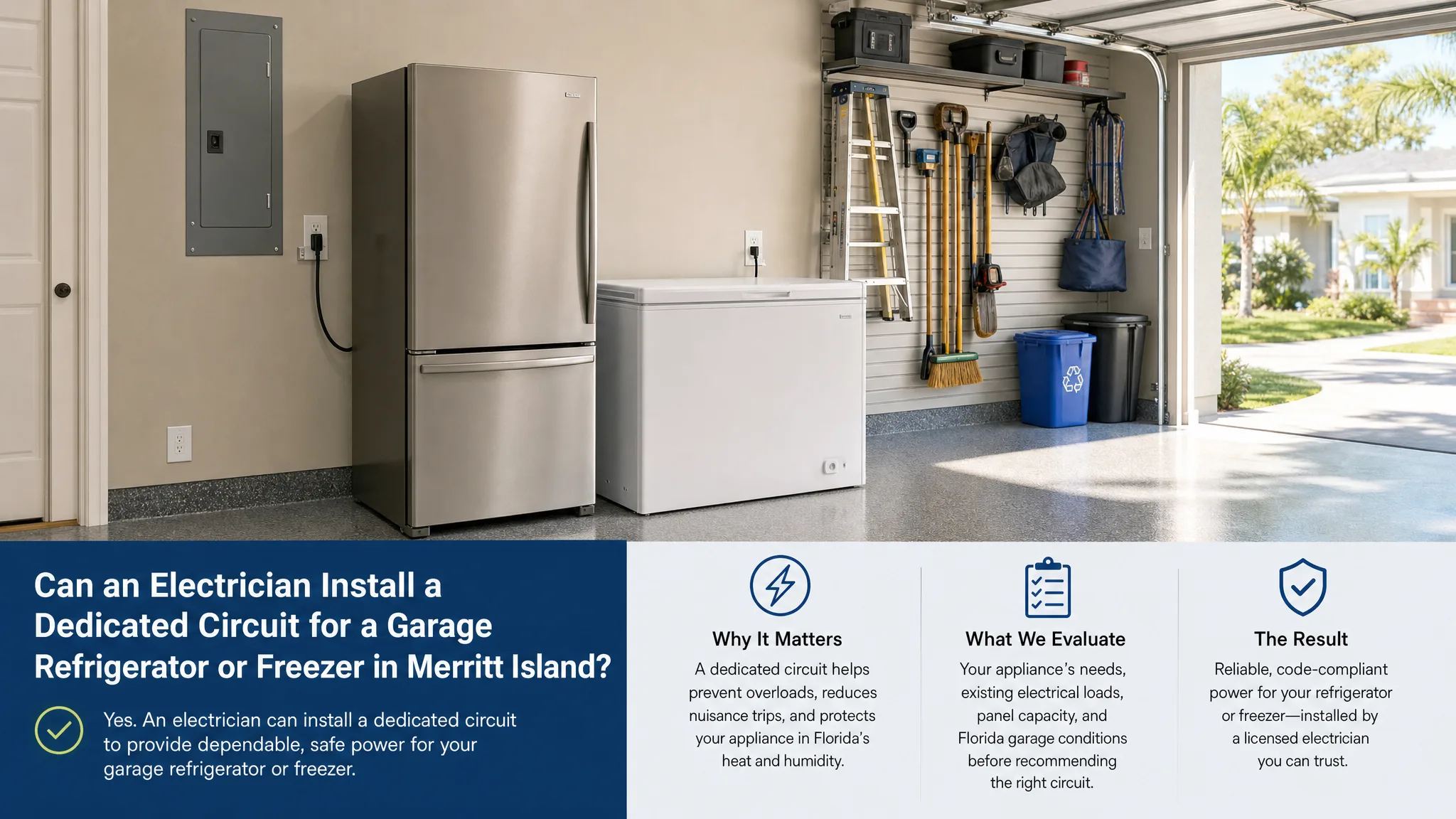
Why a Garage Refrigerator or Freezer May Need Separate Power
Refrigerators and freezers do not draw the same amount of power every second. Their compressors cycle on and off, and startup can create a temporary increase in electrical demand. On a lightly loaded, healthy circuit, that may not be a concern. On a shared garage circuit already serving a door opener, lighting, battery chargers, tools, outdoor receptacles, or another appliance, the combined demand may cause a breaker to trip.
A garage refrigerator dedicated circuit can be advisable when:
- The appliance shares power with equipment that is regularly used in the garage.
- A breaker trips when the refrigerator or freezer compressor starts while another load is running.
- The garage contains both a refrigerator and a chest freezer.
- There are frequent temporary loads, such as holiday lighting, power tools, chargers, or cleaning equipment.
- The refrigerator outlet is part of a long chain of garage or exterior receptacles.
- A property owner wants to reduce the chances that a tripped general-use circuit interrupts appliance power.
- A rental-property owner or property manager needs a clear, maintainable solution for a garage appliance supplied with power.
Garage heat matters, too. Merritt Island garages can become very warm, especially during long sunny periods. Heat can make refrigeration equipment work harder and cycle more often. While an electrician does not diagnose the cooling system itself, the added runtime can expose a marginal electrical circuit that might otherwise seem fine.
It is also useful to distinguish a recurring electrical pattern from a single event. One trip after a high-demand tool was used on the same circuit may be a nuisance trip caused by a temporary overload. Repeated trips during ordinary refrigerator or freezer operation, repeated GFCI resets, or power loss with no obvious added load deserve professional troubleshooting.
Signs the Existing Garage Circuit Should Be Evaluated
A breaker that trips once is not always proof that a dedicated circuit is needed. However, recurring symptoms are meaningful clues that the garage circuit, outlet, appliance, or panel should be inspected.
Recurring overload symptoms
Consider scheduling an evaluation when you notice any of the following:
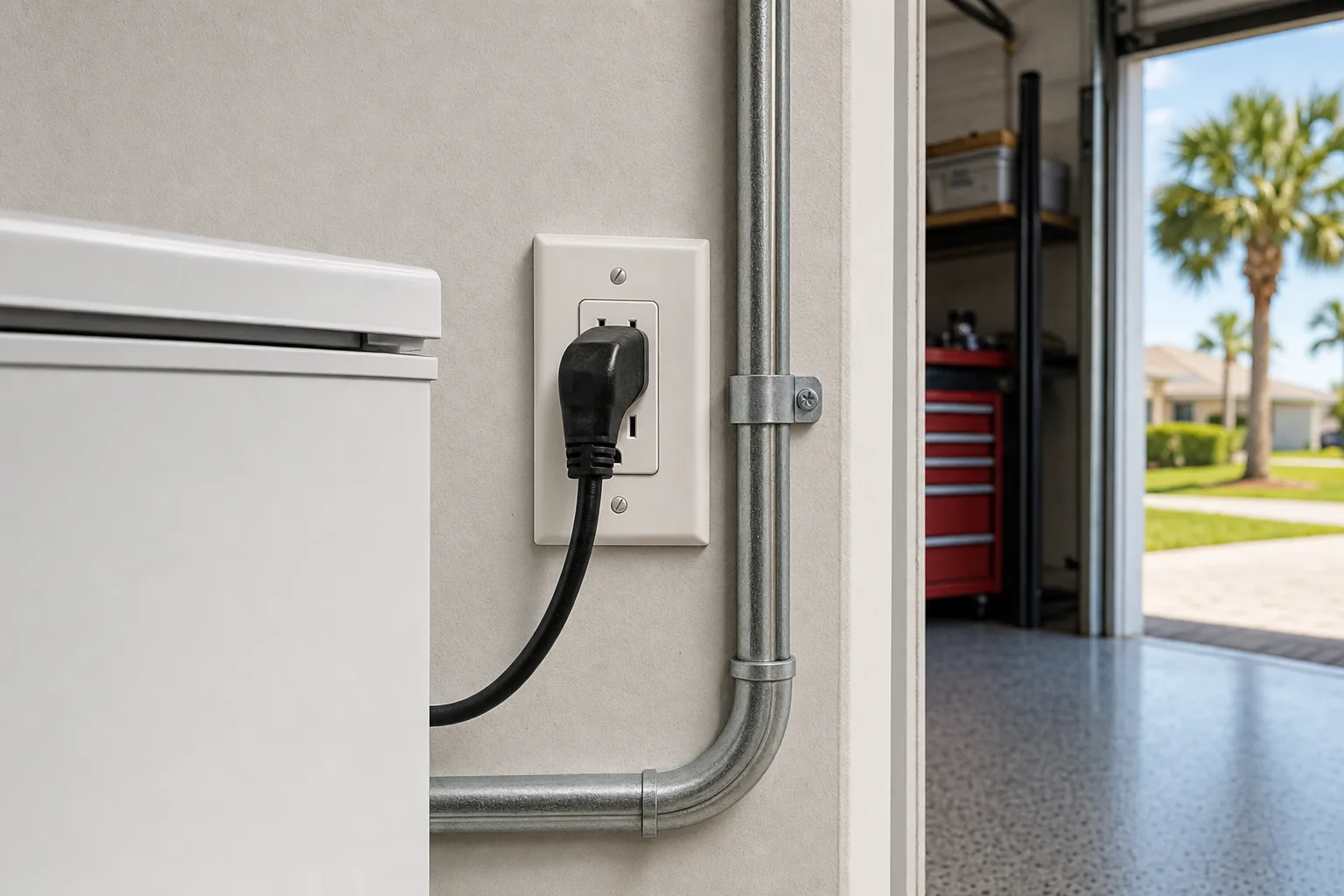
- The garage outlet keeps tripping when the refrigerator, freezer, garage door opener, or tools are in use.
- The breaker trips repeatedly after being reset.
- Garage lights dim noticeably when the refrigerator starts or the garage door opens.
- The refrigerator or freezer loses power when another device is plugged into the garage.
- An extension cord or power strip is being used as a long-term solution for a refrigerator or freezer.
- A receptacle feels loose, does not hold the plug firmly, or has intermittent power.
- The appliance plug or outlet feels warm, smells unusual, shows discoloration, or makes buzzing sounds.
Brief dimming can sometimes occur when a motor starts, but persistent or pronounced changes should not be ignored. Read more about garage lights dim when the door opens in Merritt Island and the electrical conditions that can contribute to that symptom.
Heat, burning odor, darkened plastic, crackling, buzzing, or repeated breaker trips are higher-priority warning signs. Unplug the appliance if it can be done safely without handling a hot or damaged connection, avoid continued resetting, and arrange prompt professional evaluation. These symptoms can point to a poor connection, damaged receptacle, overloaded circuit, wiring issue, or equipment fault.
What an Electrician Checks Before Installing a Dedicated Circuit
Dedicated circuit installation in Merritt Island starts with diagnosis and planning. The goal is not simply to add another outlet. It is to determine why the existing setup is unreliable and identify a safe route for a properly protected new circuit.
During an on-site visit, an electrician may evaluate:
- The appliance information: The refrigerator or freezer nameplate and manufacturer instructions can identify electrical requirements and any placement or receptacle guidance.
- The existing outlet: The receptacle’s condition, mounting, grip on the plug, signs of heat, correct grounding, and suitability for the garage environment are important.
- The current circuit: The electrician identifies what else is served by the breaker. Garage lighting, exterior outlets, a door opener, and nearby interior receptacles may be connected in ways that are not obvious to the homeowner.
- The breaker and panel: The panel is checked for available space, appropriate equipment condition, labeling, and whether the home’s electrical service has capacity for the added load.
- The wiring route: Access through the garage attic, ceiling, walls, panel location, and existing pathways affects the installation approach.
- Protection requirements: Garage receptacles commonly involve ground-fault protection considerations. The electrician determines the compliant, practical arrangement for the specific location and existing electrical system.
This assessment is also a good time to discuss other planned loads. A second freezer, workshop tools, a new water heater, induction cooking equipment, or a future EV charger can change the broader capacity picture. Deltron Electric can help with electrical capacity planning for a new appliance so individual upgrades fit the household’s longer-term electrical needs.
What Dedicated Circuit Installation in a Merritt Island Garage May Involve
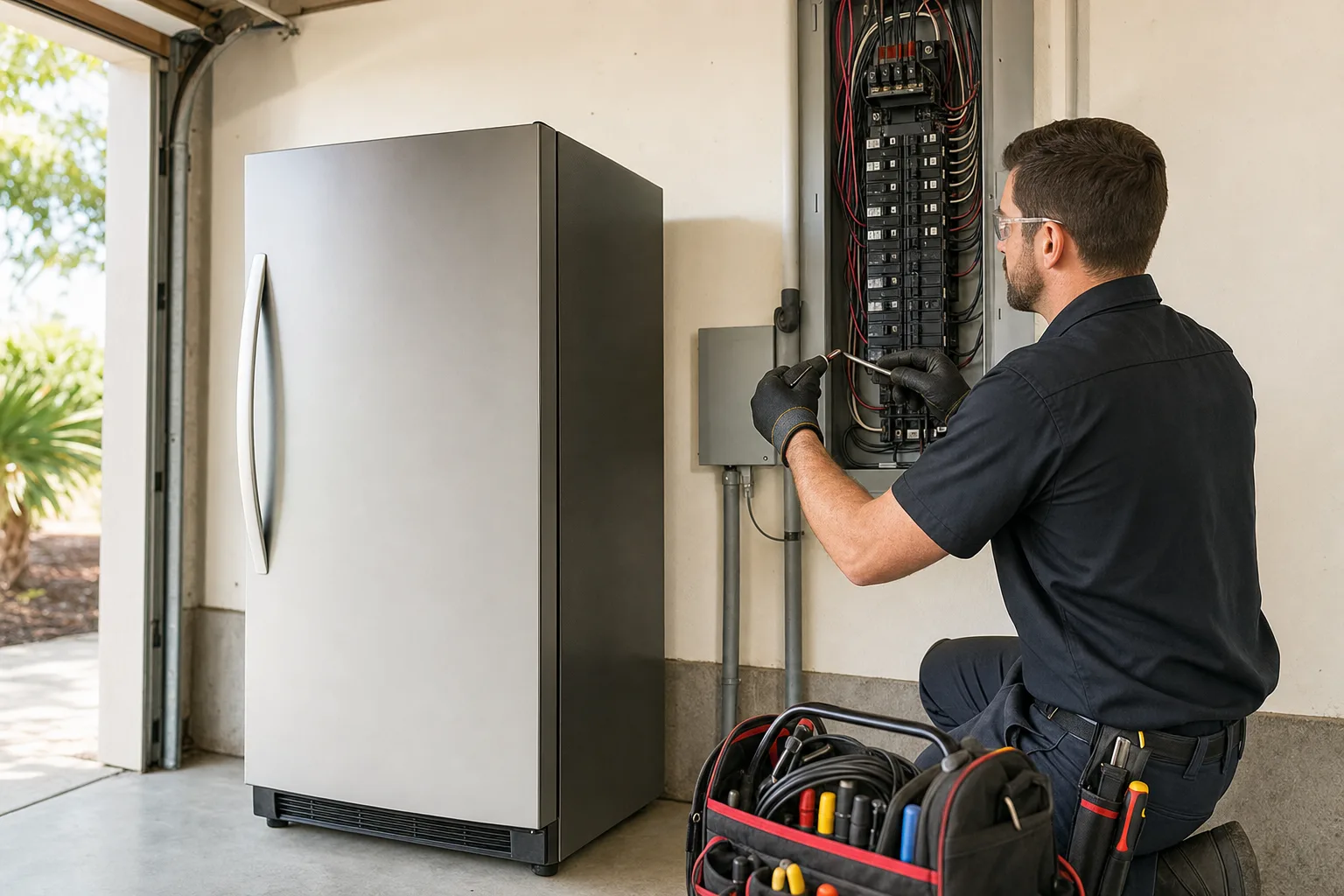
Once the plan is established, the electrician installs a new branch circuit from the panel to a properly located receptacle for the refrigerator or freezer. The exact scope varies by home layout, panel condition, route access, and local requirements.
A typical installation may include a correctly selected breaker, properly sized wiring, a receptacle box and outlet, required grounding and protective measures, secure cable routing, labeling, and testing. The new receptacle should be positioned where the appliance cord reaches without being stretched, pinched behind equipment, run across walkways, or dependent on a power strip.
Will walls or ceiling drywall need to be opened?
Not always. In many Merritt Island garages, access through an attic, unfinished garage areas, accessible ceiling space, surface-mounted raceway where appropriate, or an existing route can reduce the need for extensive drywall opening. In other homes, especially where the panel is distant from the garage or access is limited, selective opening and repair may be part of the scope.
An electrician should explain the proposed route before work begins. For condos and managed properties, access rules, association requirements, ownership boundaries, and coordination with the property manager can also affect scheduling and installation options.
Permit and access factors
Electrical work may be subject to permitting and inspection requirements based on the property location, jurisdiction, and scope of work. Merritt Island property owners should have the current local requirements confirmed for their specific address and project. Panel access, attic access, locked utility areas, tenant scheduling, and approval procedures for rental or association-managed properties can all affect the overall plan.
When Panel Capacity, GFCI Protection, or Outlet Condition Can Affect the Plan
A full panel does not automatically prevent a new dedicated circuit, but it does mean the electrician needs to evaluate options carefully. The panel may need capacity assessment, circuit reorganization where appropriate, replacement of unsuitable equipment, or a broader upgrade recommendation. The correct solution depends on the panel and the home’s calculated and anticipated loads—not merely whether there appears to be an open space.
Similarly, the question of GFCI protection should be addressed as part of the installation rather than bypassed because a refrigerator or freezer is involved. Garages are exposed to conditions that make shock protection important, including concrete floors, humidity, exterior-adjacent walls, and occasional wet or damp activity. If a GFCI device trips repeatedly, the answer is to identify the cause. It could involve appliance leakage, moisture, a damaged cord, a deteriorated receptacle, a wiring concern, or a device issue.
Outlet condition is equally important. A refrigerator plug should fit securely. A loose or worn outlet can create resistance and heat at the connection, even if the breaker does not trip. Deltron Electric can inspect concerns involving outlet, switch, and GFCI installation and repair, including garage receptacles affected by wear, moisture, or unreliable operation.
Frequently Asked Questions About Garage Freezer Electrical Circuits
Does a garage refrigerator or freezer always need a dedicated circuit?
No. Some appliances can operate properly on an existing circuit if that circuit has sufficient capacity, suitable protection, sound wiring, and no troublesome shared loads. A dedicated circuit is often a smart reliability upgrade when trips recur, multiple garage loads share one circuit, or the appliance is important enough that avoiding shared-circuit interruptions is a priority.
Why does my garage refrigerator trip the breaker when other tools or the garage door opener run?
The circuit may be overloaded when the refrigerator compressor and another motor-driven or high-demand device operate at the same time. A weak outlet, poor connection, appliance fault, or breaker issue can also contribute. Because repeated trips can indicate more than simple overload, an electrician should identify the actual cause before a circuit is altered.
Can an electrician add a dedicated circuit if my electrical panel is full?
Possibly. The electrician first evaluates the panel’s condition, available capacity, equipment compatibility, and the home’s present and planned electrical loads. Some panels need a different approach before another circuit can be added. This is why electrical capacity for garage appliances should be evaluated at the panel, not guessed from a quick look at the breaker directory.
Will a new dedicated circuit require opening garage walls or ceiling drywall?
It depends on the route from the panel to the new outlet. Accessible attic or garage spaces may allow a cleaner route with little or no drywall opening. Limited access, finished surfaces, and panel distance can require more work. A site visit gives the clearest answer.
What should I do if the refrigerator outlet feels warm, looks discolored, or repeatedly loses power?
Treat these as potential electrical hazards. Do not keep resetting a breaker or rely on a power strip to work around the problem. If it is safe to do so, discontinue use of the affected outlet and have it inspected promptly. Warm plugs, discoloration, odor, buzzing, and repeated power loss may indicate a failing connection or another condition that needs repair.
When to Schedule a Professional Electrical Visit
Schedule a visit when a garage refrigerator or freezer shares a busy circuit, the breaker trips more than once, the outlet is loose or warm, garage lights flicker or dim, or you are adding another major garage appliance. A professional assessment is also worthwhile before purchasing a freezer for a rental property, converting garage space into a workshop, or planning a future EV charger that may compete for panel capacity.
For Merritt Island homeowners, condo owners, rental-property owners, and property managers, a dedicated circuit can be a straightforward improvement when the existing setup is overloaded or unreliable. The value is in a plan based on the appliance, wiring, outlet condition, panel capacity, and realistic garage use—not a one-size-fits-all breaker choice.
If you are seeing trips, warm plugs, flickering garage lights, or uncertainty about panel capacity, would you like a direct on-site answer about whether a dedicated circuit is the practical next step? Call Deltron Electric at (833) 335-8766 to discuss troubleshooting and a dedicated-circuit installation recommendation for your Merritt Island garage.