


Garage Lights Dim When the Door Opens in Merritt Island: What It May Mean
If your garage lights briefly dim when the garage door opens, the change may be caused by the motor’s startup demand. A short, subtle dip can happen as the opener begins lifting a heavy door. However, lights that noticeably flicker, repeatedly lose brightness, stay dim while the opener runs, or dim elsewhere in the home deserve closer attention.
For Merritt Island homeowners, this is often a useful early warning that a garage circuit, electrical connection, panel component, or the opener itself needs evaluation. It does not automatically mean there is a dangerous defect, but repeated voltage changes should not be ignored. A practical electrical diagnosis can identify whether the concern is isolated to the garage or connected to a broader wiring or electrical-service issue.
Is It Normal for Garage Lights to Dim When the Door Opens?
A very brief and minor light dim when a garage door opener first starts can be normal. The opener motor needs extra electrical current for a moment to overcome the door’s resting weight and begin moving the mechanism. If the lights share the same branch circuit, that temporary demand can create a small, nearly instantaneous change in brightness.
The important distinction is how noticeable, how long, and how often the dimming occurs. A small momentary change that happens only as the door starts, with no other symptoms, is usually less concerning than pronounced or recurring dimming. Lights should not significantly fade, pulse repeatedly, or remain weak during the entire door cycle.
Schedule electrical diagnostics and repair when any of the following applies:
- The garage lights dim substantially rather than just momentarily.
- The lights flicker several times as the door travels.
- The brightness change is getting worse or occurring more frequently.
- Lights in nearby rooms, throughout the house, or exterior fixtures dim too.
- The opener hesitates, strains, stops, makes unusual sounds, or trips a breaker.
- The issue occurs when other loads start, such as a refrigerator, air compressor, microwave, pool equipment, or EV charger.
A garage door opener electrical problem can overlap with mechanical door problems, but it is not possible to determine the cause remotely from dimming alone. The goal of an electrical visit is to test the electrical side safely while helping you understand whether the opener, its circuit, a connection, or the panel warrants repair.
What the Garage Door Opener Is Doing When It Starts
A garage door opener uses a motor to move the door through its travel cycle. Like many motor-driven appliances, it draws more current at startup than it needs once it is already moving. That startup demand is expected to a degree. It can be more noticeable when the door is heavier, binding, poorly balanced, or encountering resistance.
Lighting can reveal this demand because lamps respond quickly to small changes in available voltage. Incandescent-style bulbs may visibly dip in brightness. Some LED lamps may respond as a quick flicker, a short brightness change, or a more noticeable pulse depending on the bulb and driver design.
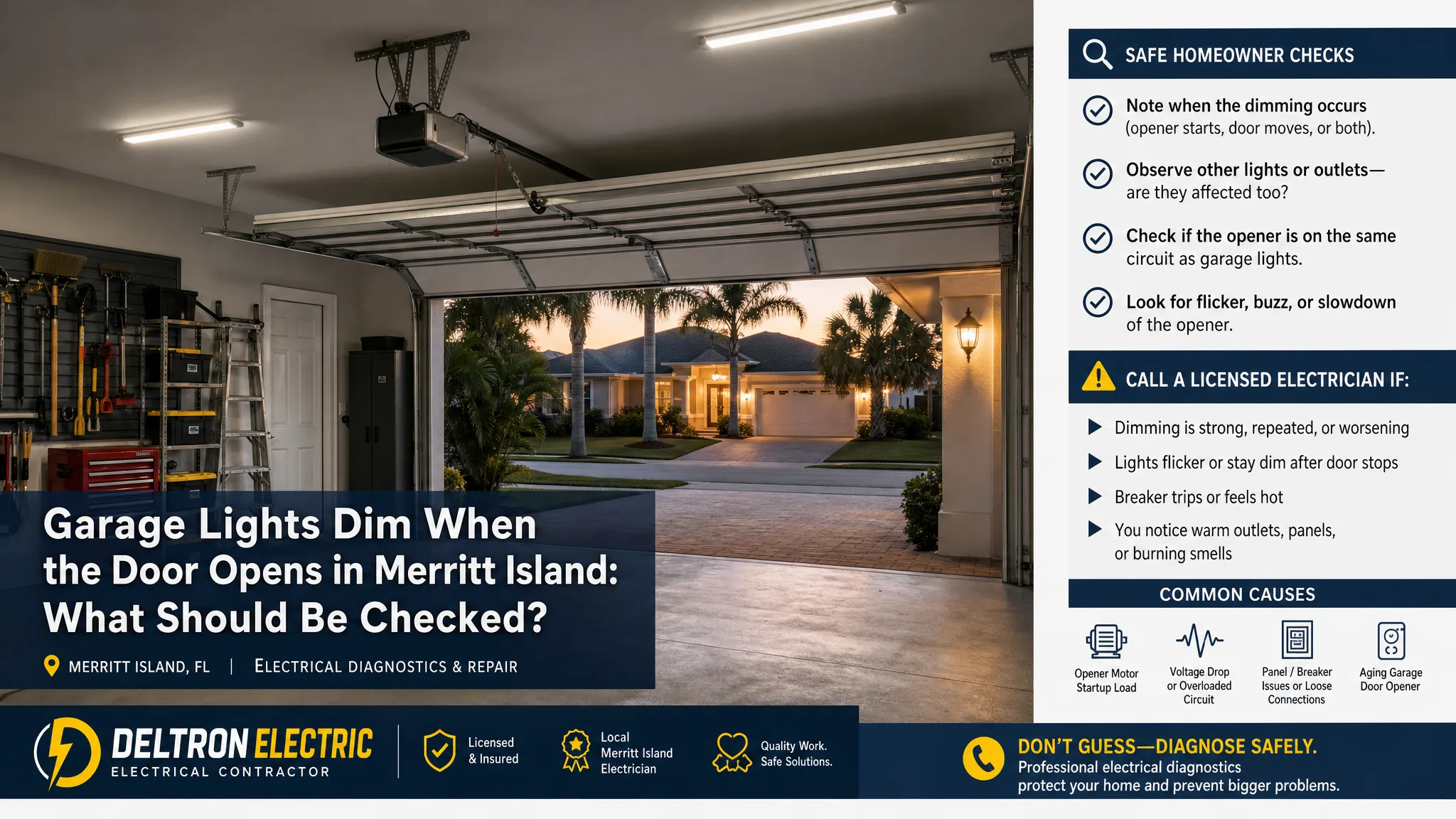
That does not mean the light fixture is necessarily defective. It also does not prove the opener is bad. The symptom is simply a clue that helps narrow the investigation.
In an ideal setup, the circuit supplying the garage and the connections serving it can handle the normal operating load without a pronounced lighting disturbance. If the circuit is heavily shared, undersized for the actual load, or affected by a weak connection, the garage door opener’s normal startup demand can make the issue visible.
Why the Same Symptom Can Have Different Causes
Two Merritt Island homes can show similar light dimming for completely different reasons. One may have a garage circuit with several plugged-in tools, a refrigerator, battery chargers, and lighting. Another may have a loose connection at a receptacle, switch, junction box, panel, or service component. A third may have an opener motor that is working harder because of an equipment or door-system issue.
This is why a qualified electrician begins with testing and inspection rather than assuming that a new opener, new bulbs, or a new breaker will solve the problem.
Common Reasons Garage Lights Dim or Flicker
When garage lights dim when the door opens in Merritt Island, the cause may be minor, or it may point to an issue that should be corrected. Common possibilities include the following.
A Shared or Overloaded Garage Circuit
Garage lighting and receptacles are often used for more than lights and the door opener. Homeowners may plug in freezers, refrigerators, power tools, compressors, chargers, landscape equipment, holiday lighting, or other equipment. When several loads run from the same circuit, the opener’s startup draw can be enough to produce noticeable dimming.
In some cases, the solution involves correcting an inappropriate circuit arrangement, reducing excessive load on the circuit, or providing a properly designed dedicated circuit where appropriate. An electrician should assess the existing wiring and applicable electrical requirements before changes are made.
Voltage Drop Along the Garage Circuit
Voltage drop describes a reduction in voltage available at the equipment due to resistance along the electrical path. Long wire runs, circuit loading, conductor condition, or connection problems can make the effect more apparent. A garage at the far end of a circuit or connected through multiple boxes may be more likely to show symptoms when a motor starts.
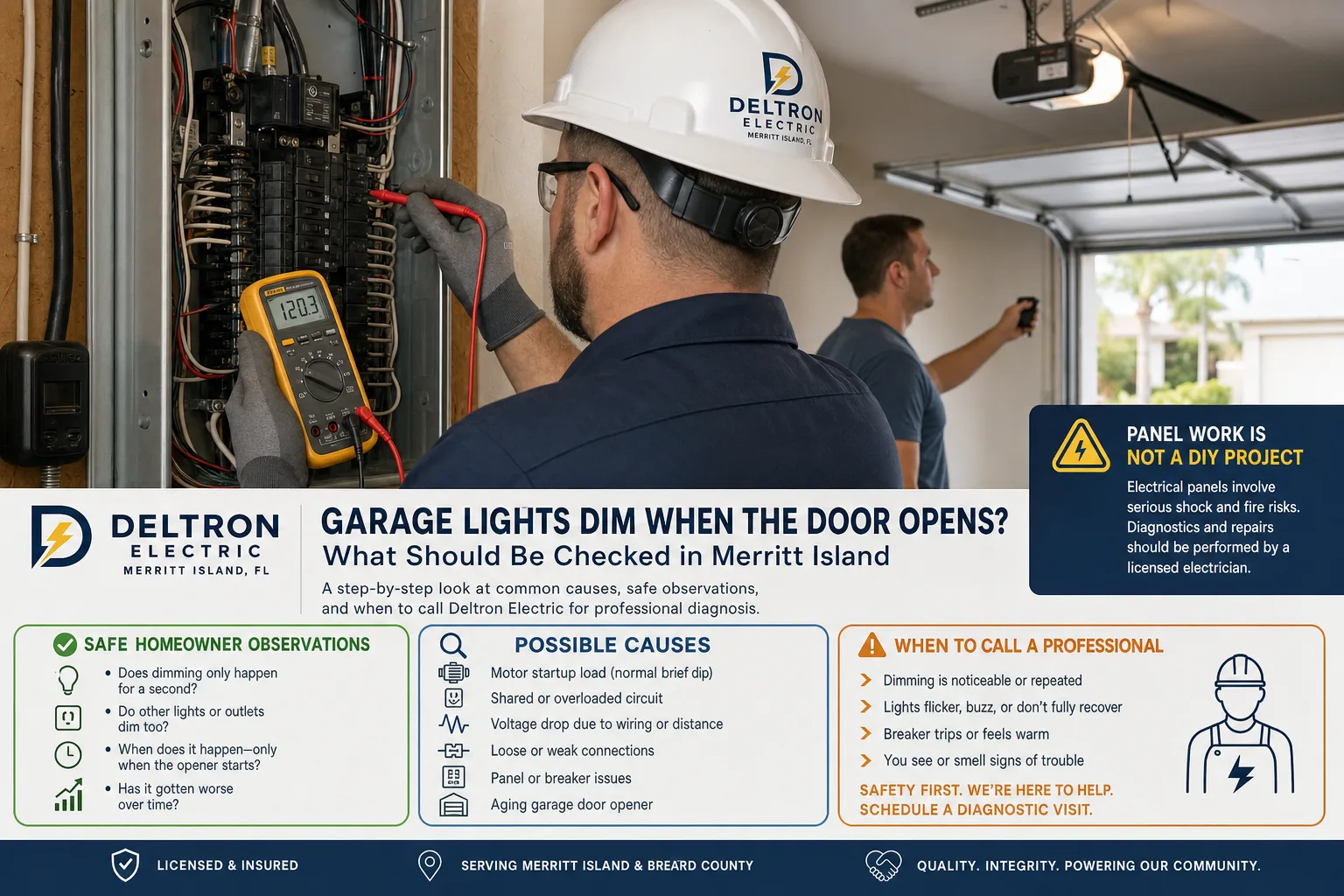
Voltage drop is not a diagnosis by itself. It is a condition an electrician can measure and trace. The source may be a branch-circuit issue, a connection issue, a panel concern, or a load that is exceeding what the circuit should routinely handle.
Loose or Deteriorated Electrical Connections
Loose electrical connection signs can include intermittent flickering, lights changing brightness when appliances run, buzzing, heat, a burning odor, or devices that work inconsistently. Connections can loosen or deteriorate over time for several reasons, including normal heating and cooling cycles, vibration, previous alterations, age, or corrosion.
Connections inside boxes, at receptacles, switches, light fixtures, the electrical panel, or electrical service equipment should not be opened or tightened by a homeowner. A poor connection can create heat and may worsen under load. Professional testing is the safer way to locate the source.
An Aging or Strained Garage Door Opener
An opener that is aging, malfunctioning, or working against a door with mechanical resistance may draw differently than it did when new. This is a reason to have the door and opener evaluated by an appropriate garage door professional when there are movement, balance, track, spring, or operational concerns.
At the same time, the electrical circuit still needs to be checked if lights dim sharply, flicker repeatedly, or other electrical symptoms are present. Replacing an opener without understanding the electrical condition could leave the real cause unresolved.
Panel or Service-Level Concerns
If lights beyond the garage dim when the door starts, the concern may extend beyond one garage circuit. An electrician may need to evaluate the panel, breaker connections, feeder conductors, grounding and bonding conditions, or service-side components within the scope of the visit.
Panel noise is another reason to act promptly. Read more about why an electrical panel may buzz and why a panel should not be ignored when it makes unusual sounds. Depending on the findings, homeowners may also need to discuss electrical panel replacement options rather than repeatedly addressing individual circuit symptoms.
Warning Signs That Need Prompt Electrical Attention
Do not wait to see whether a potentially hazardous electrical symptom goes away if you notice heat, odor, noise, or visible damage. Shut off use of the affected equipment when it is safe to do so, avoid touching hot electrical components, and arrange prompt professional help.
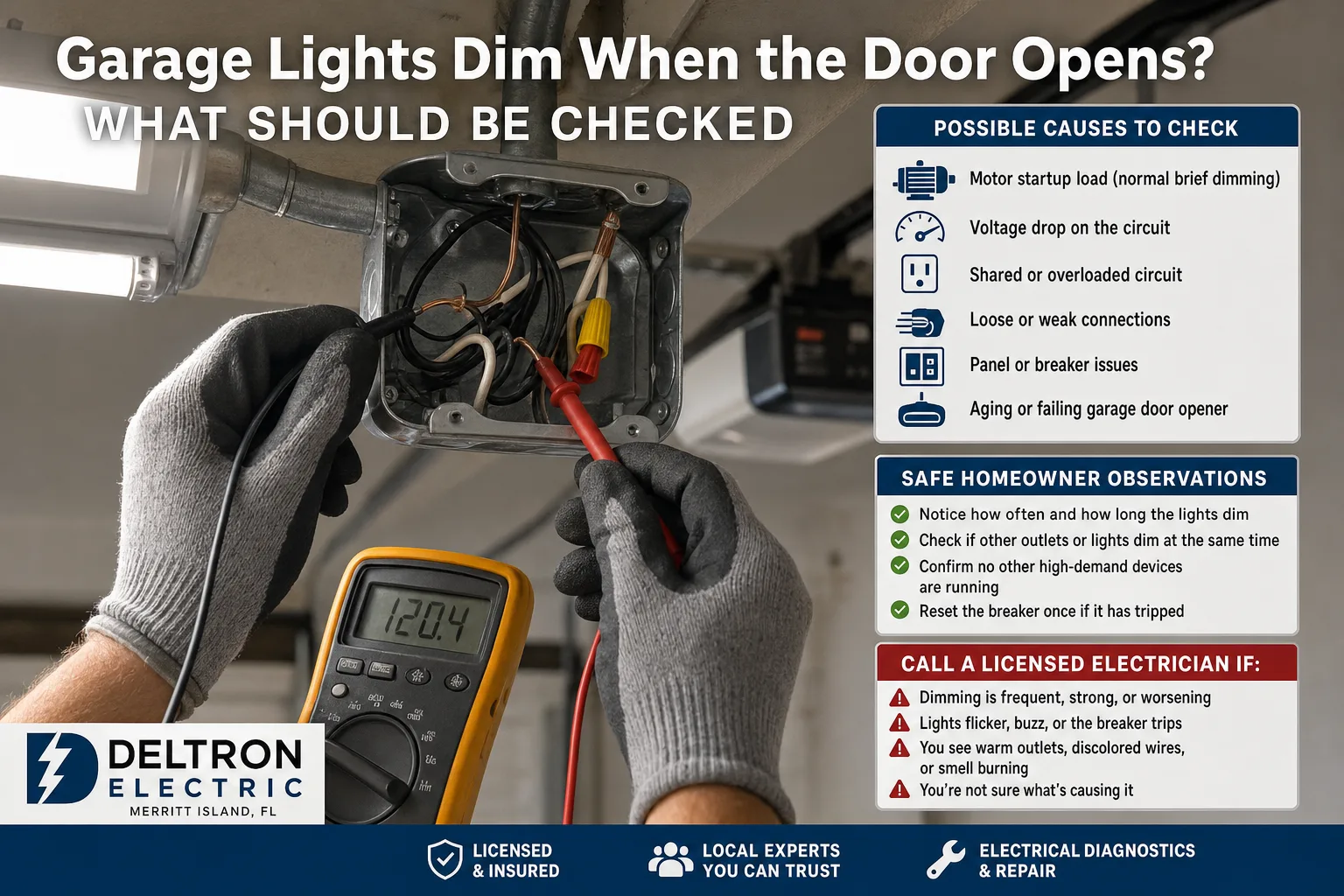
Call for an electrical evaluation promptly if you notice:
- A burning smell, melted plastic smell, smoke, discoloration, or scorch marks near outlets, switches, fixtures, the opener plug, or the panel.
- A receptacle, wall plate, switch, plug, extension cord, or panel cover that feels hot.
- Buzzing, crackling, arcing sounds, or visible sparking.
- A breaker that trips repeatedly when the garage door runs.
- Garage lights that flicker even when the door opener is not operating.
- Lights dimming in multiple rooms or throughout the house when the door starts.
- Power loss, intermittent operation, or multiple appliances behaving unusually at once.
If there is active sparking, smoke, or an immediate fire concern, move away from the area and contact emergency services. Do not remove panel covers, reset a repeatedly tripping breaker over and over, or attempt to bypass a breaker or garage door safety device.
Safe Checks Homeowners Can Make Without Opening Electrical Equipment
You do not need to take apart the opener, remove a panel cover, or access wiring to collect helpful information. Safe observations can make a Merritt Island electrical repair appointment more efficient and help distinguish a localized lighting issue from a larger concern.
Note the Pattern
Watch from a safe distance and make a simple note of what happens:
- Do the lights dim only at startup, or throughout the door’s movement?
- Is the change subtle, obvious, or worsening?
- Do only garage lights react, or do nearby rooms react as well?
- Does it happen when opening, closing, or both?
- Does it happen every time or only after other equipment has been running?
These observations help an electrician determine whether to focus first on a specific branch circuit, the opener supply, garage lighting, or the panel and service path.
Observe What Else Is Running
Without unplugging anything that is difficult to access or operating damaged equipment, take note of the loads that are normally in use. For example, is a garage refrigerator cycling on? Are power-tool chargers, a portable air conditioner, a freezer, or a vehicle charger in use? Does the condition change after a tool or appliance is turned off?
This does not replace testing, and it does not mean you should rearrange cords or move equipment to “solve” the issue. It simply gives the technician a clearer starting point.
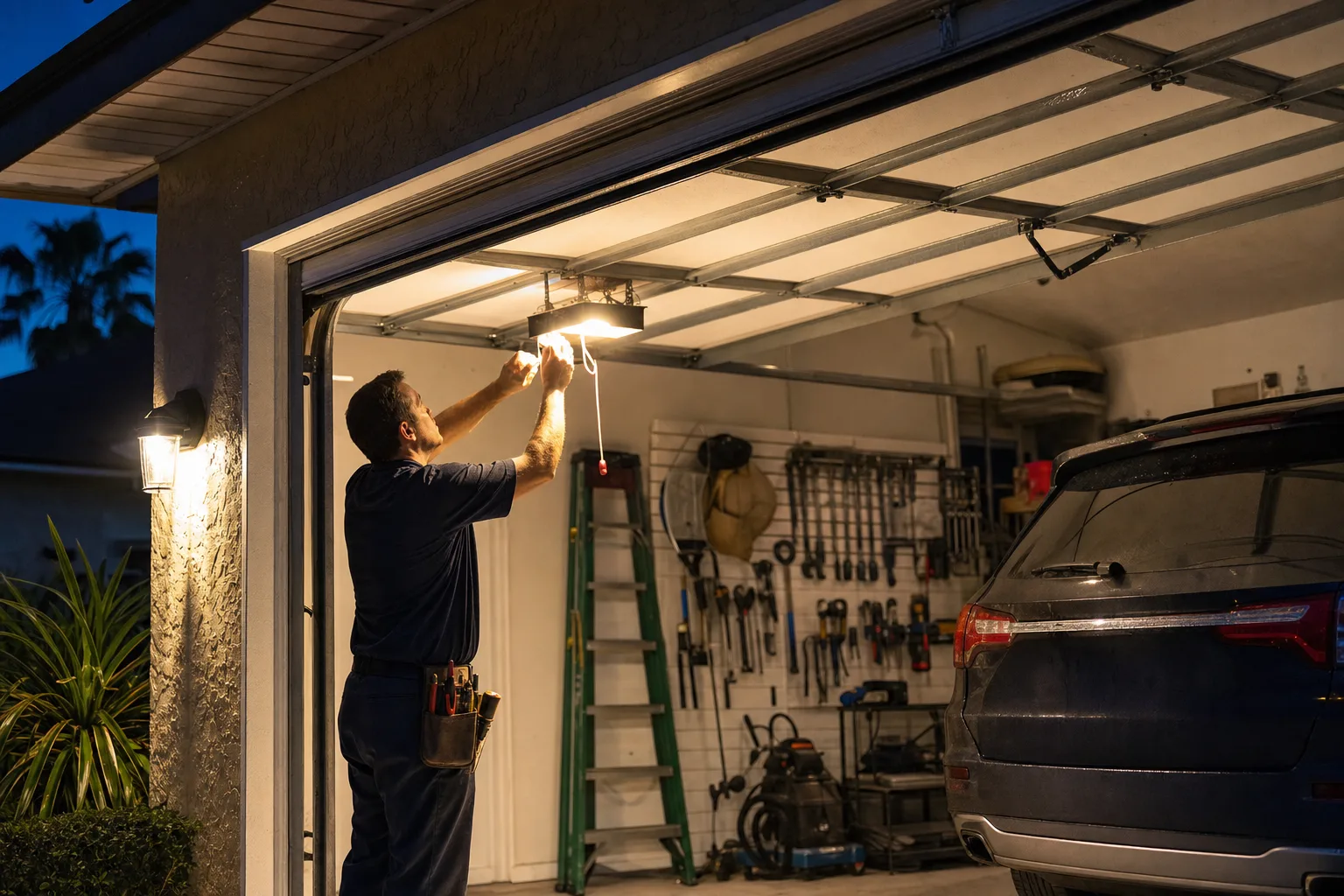
Look, Don’t Open
From the exterior only, check for obvious damage to visible plugs, cords, wall plates, light fixtures, and the opener’s power connection. Do not touch anything that appears hot, damaged, wet, loose, or discolored. Do not remove covers or try to tighten receptacles, switches, breakers, or panel lugs.
If the garage has moisture intrusion, salt-air exposure, corrosion, or water near electrical equipment, mention it when scheduling. Merritt Island’s coastal environment makes it especially practical to report visible corrosion or dampness around garage electrical equipment.
What an Electrician Checks During a Garage Electrical Diagnosis
Electrical diagnostics and repair should be methodical. The exact work depends on the symptoms and the home’s wiring layout, but the purpose is to identify the actual source of the voltage change rather than guess.
During a garage electrical diagnosis, an electrician may:
- Ask when the dimming began and whether it is limited to the garage.
- Inspect the accessible garage circuit, lighting, receptacles, switches, and opener supply arrangement.
- Check for signs of damaged devices, improper connections, heat exposure, corrosion, or overloading.
- Measure electrical conditions at appropriate points while evaluating the effect of normal loads.
- Review breaker performance and accessible panel conditions.
- Determine whether the symptom appears isolated to a branch circuit or suggests a broader service or panel issue.
- Explain the findings in plain language and outline appropriate repair options.
A professional diagnosis is not just about whether a breaker is on or off. It considers the circuit’s load, the integrity of connections, the condition of components, and how the electrical system responds when equipment starts. This matters because repeated dimming can be an early clue before a connection becomes hotter, a circuit becomes less reliable, or more devices begin showing symptoms.
Deltron Electric provides electrical service in Merritt Island for homeowners who need a garage lighting or circuit concern evaluated by an electrician rather than left to guesswork.
When to Schedule Electrical Repair in Merritt Island
It is reasonable to monitor a one-time, barely noticeable startup dip if there are no other symptoms. But repeated or pronounced dimming is worth scheduling before it develops into a recurring lighting, circuit, or connection problem.
Book a diagnostic visit if the condition happens regularly, is worsening, affects multiple lights, appears with other appliance loads, or is accompanied by flickering, tripped breakers, buzzing, heat, odor, or inconsistent power. You should also schedule service if you are unsure whether the garage door opener and lights are appropriately supplied or if the garage has been modified over the years with added receptacles and equipment.
Frequently Asked Questions
Is a brief light dim when the garage door opener starts normal?
A slight, momentary dim can occur when the motor starts because motors draw additional current at startup. It should be brief and minor. Noticeable, repeated, prolonged, or worsening dimming should be evaluated, especially if it affects other areas of the home.
Why do only my garage lights dim when the door opens?
If only the garage lights dim, the opener and lights may share the same circuit or the issue may be localized to the garage branch circuit, fixture wiring, or a connection in that area. An electrician can test the circuit and determine whether the condition is related to load, voltage drop, wiring, or equipment.
Can a garage door opener and lights be on the same circuit?
Whether equipment can share a circuit depends on the wiring design, the loads served, and applicable electrical requirements. The practical question is whether the existing arrangement is operating safely and reliably. If lights dim significantly or breakers trip, have the circuit evaluated rather than assuming the arrangement is adequate.
Should I worry if lights dim throughout the house when the garage door opens?
Yes, widespread dimming deserves prompt professional diagnosis. It may indicate that the issue is not limited to the garage circuit. Avoid repeatedly operating the door just to test the symptom, and arrange an electrician’s evaluation—particularly if you also notice panel noise, heat, odor, flickering, or interruptions in power.
What will an electrician check if my garage lights flicker or dim?
An electrician can inspect the garage circuit and accessible electrical components, assess loading, check for connection concerns, measure electrical conditions under normal operation, and determine whether the problem is isolated to the garage or related to the panel or electrical service. The findings guide the repair instead of relying on a one-size-fits-all solution.
Get the Dimming Issue Diagnosed Before It Gets Worse
Garage lights that dim when the door opens may be nothing more than a small motor-startup effect, but frequent flickering or pronounced brightness loss is a reason to look deeper. A timely diagnosis can identify a shared-circuit concern, weak connection, wiring issue, panel condition, or electrical supply problem before it becomes more disruptive.
For practical electrical diagnostics and repair in Merritt Island, call Deltron Electric at (833) 335-8766, or schedule an electrical diagnosis online or through the contact form. Describe when the lights dim, what else is running, and whether the issue reaches beyond the garage so the appointment can focus on the right electrical checks.