


Electrical Troubleshooting Services in Cocoa Beach: Why Kitchen Lights Flicker When the Microwave Runs
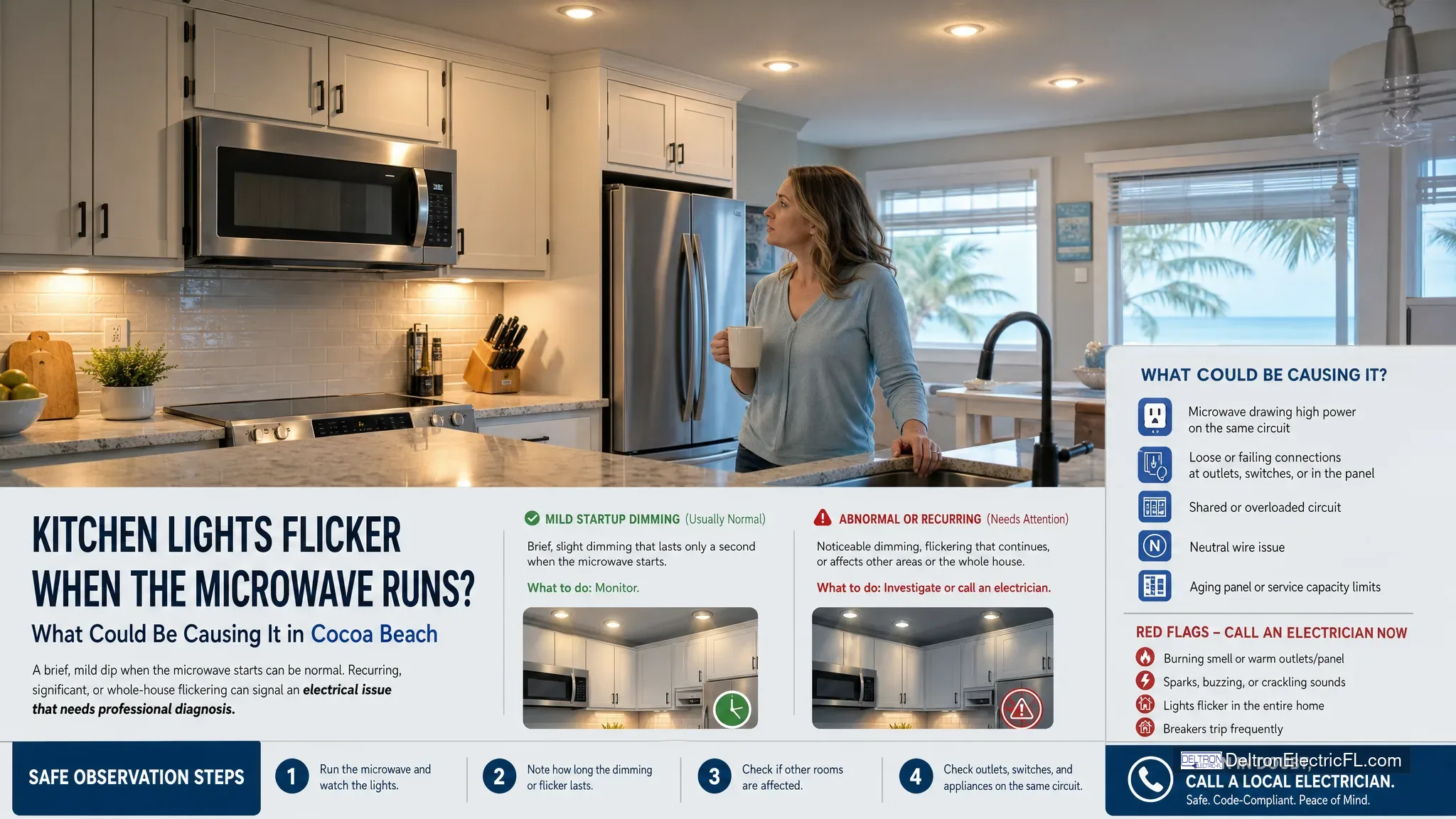
A microwave draws a substantial amount of power, especially when it first starts heating. In some Cocoa Beach homes, that can create a quick, mild dip in nearby kitchen lighting. But if lights flicker repeatedly, dim noticeably for the entire cooking cycle, brighten unexpectedly, or affect rooms beyond the kitchen, the problem is worth a professional electrical diagnosis.
Electrical symptoms are not always caused by one simple issue. A microwave may reveal an overloaded or shared circuit, a loose electrical connection, a wiring concern, an aging panel component, or a voltage issue involving the home’s incoming service. Deltron Electric provides electrical diagnostics and repair in Cocoa Beach to identify where the problem begins before it develops into a larger safety or reliability concern.
Is It Normal for Lights to Flicker When a Microwave Runs?
A brief and slight dimming of a kitchen light at the exact moment a microwave starts can be a normal load-related change. The microwave’s internal components can demand extra current during startup, and an older incandescent bulb may make that momentary dip more noticeable than an LED fixture. If the change is mild, lasts only a moment, and happens only on a nearby light, it may not indicate an urgent hazard.
However, “normal” should not mean ignored forever. A microwave should not make lights pulse, strobe, cycle between dim and bright, or visibly fluctuate throughout its cooking cycle. It also should not cause lights in distant bedrooms, bathrooms, or living areas to react. These patterns can point to an electrical condition that needs investigation rather than guesswork.
A mild startup dip is generally less concerning when:
- The light dims only slightly and for less than a moment when the microwave begins.
- The symptom is limited to one nearby kitchen light or fixture.
- No breaker trips, outlets become warm, or electrical noises occur.
- The lights remain steady while the microwave continues operating.
- The issue does not appear with other normal appliance use.
Flickering is more concerning when:
- The lights flicker repeatedly while the microwave runs.
- Brightness changes are dramatic rather than subtle.
- Multiple rooms or the whole house are affected.
- The microwave trips a breaker or loses power intermittently.
- The problem is new, worsening, or began after other electrical work or a storm.
For a homeowner searching for answers about lights flicker when microwave runs in Cocoa Beach, the key is to observe the pattern without attempting to repair wiring. A qualified electrician can determine whether the microwave is simply exposing a limitation on one branch circuit or whether the symptom extends to a panel, connection, or service issue.
Common Reasons a Microwave Makes Kitchen Lights Flicker
One symptom can have several possible causes. The microwave itself may be operating normally while drawing attention to a condition elsewhere in the electrical system. An electrical diagnosis is useful because it focuses on testing and inspection rather than assuming the appliance, outlet, circuit, or panel is automatically at fault.
A shared or overloaded kitchen circuit
Modern kitchen electrical layouts are designed to support several countertop appliances, but older homes or altered wiring can leave too many loads on one circuit. If a microwave shares a circuit with lighting, a refrigerator, a toaster oven, or multiple countertop receptacles, the combined demand may create voltage drop and visible light changes.
A microwave that is plugged into a receptacle shared with other kitchen equipment is not necessarily unsafe by itself, but repeated flickering, tripping, or heat at the outlet calls for inspection. An electrician can identify what the circuit actually serves and whether the circuit arrangement is appropriate for the equipment being used.
No dedicated microwave circuit or an improperly configured circuit
Whether a microwave needs a dedicated circuit depends on the appliance type, its installation instructions, electrical demand, and the home’s existing circuit layout. Built-in and over-the-range microwaves commonly have dedicated-circuit requirements from the manufacturer. Countertop models can also place a meaningful demand on a kitchen circuit.
In a Cocoa Beach home, an electrician can evaluate the microwave circuit, receptacle, breaker size, wiring condition, and connected loads. This is safer and more reliable than trying to solve flickering by moving appliances from outlet to outlet or replacing breakers without diagnosing the underlying issue.
Loose connections at an outlet, switch, fixture, breaker, or splice
Loose electrical connections can create resistance, intermittent voltage, heat, and flickering. A loose termination may be located at the microwave receptacle, a nearby lighting connection, a switch, a junction point, the electrical panel, or another part of the circuit. The location cannot be confirmed from flickering alone.
Because loose connections can overheat, homeowners should not remove outlet covers, pull receptacles from the wall, tighten panel connections, or investigate inside a panel. If an outlet is warm, discolored, buzzing, loose in the wall, or produces a burning odor, stop using that outlet and arrange prompt service.
Voltage drop on a long, heavily loaded, or aging circuit
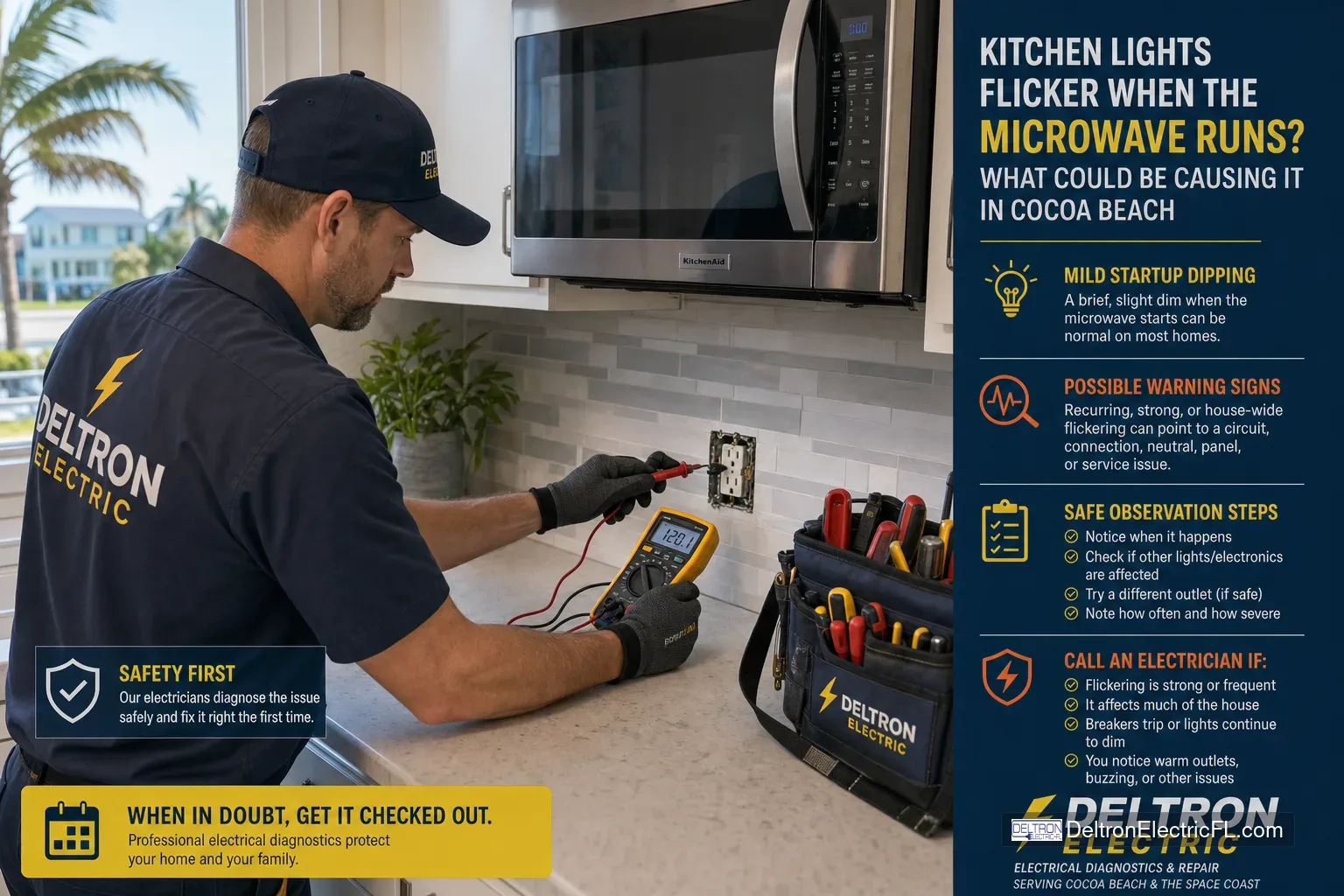
Voltage drop occurs when voltage available at a device decreases under load. A microwave’s power demand may make an existing voltage-drop condition more visible, particularly if the circuit is long, heavily used, or has wiring and connection issues. The result may be kitchen lights that dim when the microwave runs.
Testing is important here. Replacing a light bulb with a different type may make the symptom less visible, but it does not prove the circuit is healthy. A technician can measure and inspect the circuit under appropriate conditions to determine whether the observed change is within an acceptable range or related to a repair need.
Electrical panel or incoming service concerns
If lights flicker across the house when the microwave starts, the issue may not be limited to the kitchen. Panel connections, main service equipment, or the incoming utility connection can affect more than one circuit. Wide brightness changes, especially where one light becomes unusually bright while another dims, deserve prompt attention because they can be consistent with a neutral-related or service-related problem.
A panel should not buzz, crackle, or make persistent unusual sounds. Read Deltron Electric’s guide to electrical panel buzzing and other warning signs for more information about noises that should not be dismissed.
Warning Signs That Point to a More Serious Electrical Problem
Some electrical warning signs move this from a routine troubleshooting appointment to a prompt safety concern. Turn off and stop using the affected microwave outlet or circuit if it can be done safely from the breaker panel without opening the panel or handling damaged equipment. If there is smoke, active sparking, fire, or immediate danger, leave the area and call emergency services.
Call for prompt electrical service if you notice:
- A burning, fishy, or melting-plastic odor near the microwave, outlet, switch, fixture, or panel.
- A warm or hot outlet cover, plug, cord, switch plate, or electrical panel surface.
- Sparks, scorch marks, discoloration, melted plastic, or smoke.
- Buzzing, crackling, sizzling, or popping sounds from an outlet, wall, fixture, or panel.
- A breaker that trips repeatedly when the microwave is used.
- Lights that become much brighter or much dimmer in the kitchen or elsewhere in the house.
- Flickering that affects several rooms, major appliances, or electronics.
- Intermittent power loss, outlets that work only sometimes, or a microwave that cuts in and out.
Loose neutral warning signs deserve particular care. A neutral issue can create unstable voltage conditions, including unusual brightness changes on different circuits. It may contribute to appliance and electronics damage, but the cause and severity must be determined through proper testing. Do not assume a loose neutral is the explanation just because lights flicker; have a qualified electrician evaluate the system.
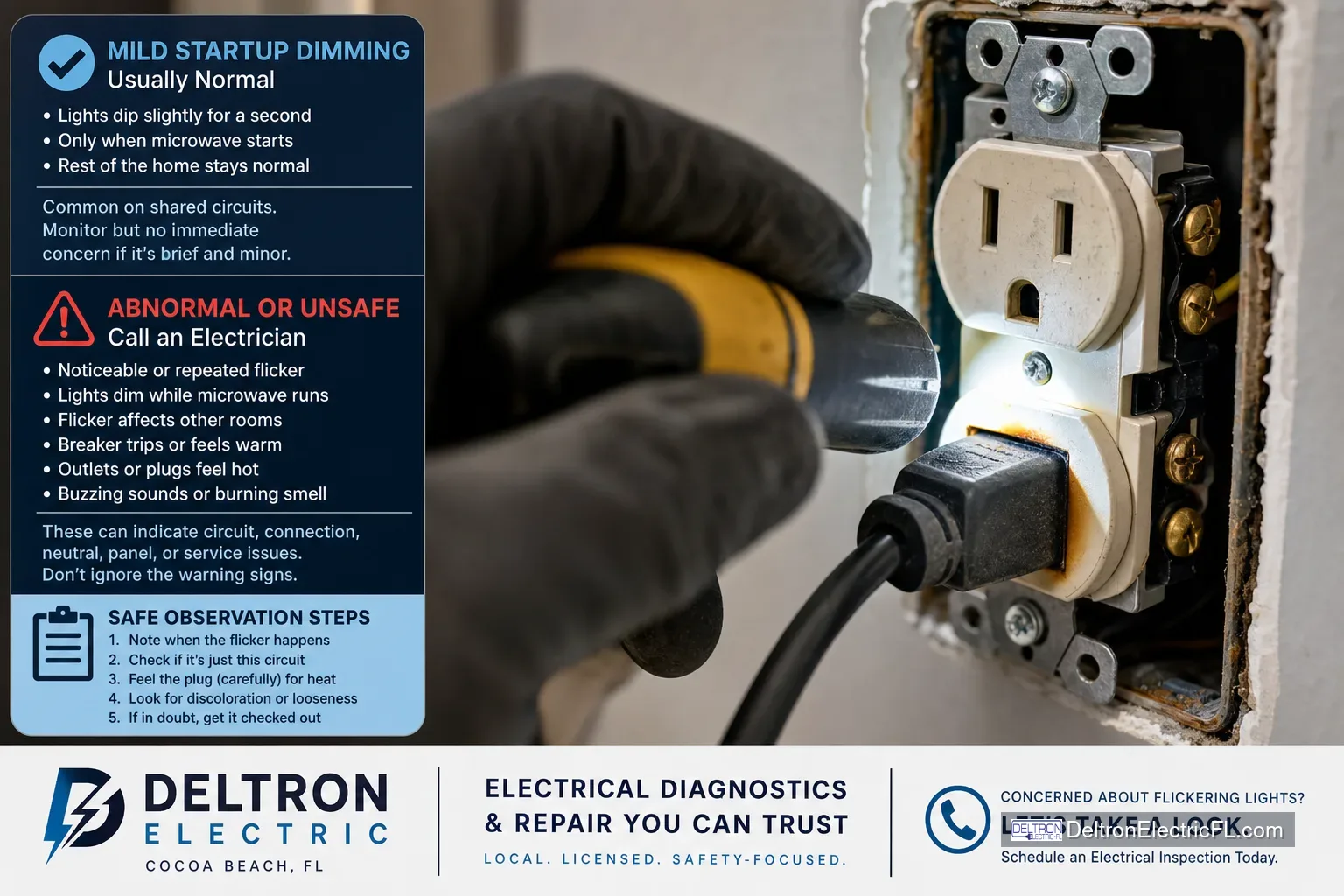
Electrical safety organizations such as the Electrical Safety Foundation International and the U.S. Consumer Product Safety Commission emphasize the importance of taking overheating, sparking, damaged electrical equipment, and recurring electrical symptoms seriously. The safest response is inspection by a qualified professional—not a do-it-yourself wiring repair.
What You Can Safely Check Before Calling an Electrician
You do not need to take electrical equipment apart to provide useful information for a service appointment. A few safe observations can help define the pattern and help an electrician begin troubleshooting efficiently.
Make note of the symptom
- Does the light dip once at microwave startup, or does it flicker throughout operation?
- Is the affected light in the same kitchen area, or do other rooms react too?
- Does the issue happen every time or only occasionally?
- Do other high-demand appliances create the same response?
- Has a breaker tripped, or has the microwave stopped unexpectedly?
- Did the problem begin after a new appliance was installed, after a power outage, or after storm activity?
Look without touching or disassembling
From a normal viewing distance, check for obvious discoloration around the receptacle cover, a plug that appears damaged, a loose outlet faceplate, or signs of heat. Do not remove the cover plate, pull the microwave plug if the cord or receptacle appears damaged, or attempt to inspect wiring behind the wall.
If there are no urgent warning signs, avoid running several high-demand kitchen appliances at the same time until the issue is evaluated. That is a temporary precaution, not a repair. Do not repeatedly reset a breaker that trips; repeated tripping is a sign that the circuit needs assessment.
Do not open the panel or attempt wiring repairs
Electrical panels and outlet boxes can contain energized components even when a breaker is off. Replacing a breaker, tightening a terminal, moving wires, or trying to trace a neutral without the proper training and equipment can create shock, arc-flash, fire, and equipment-damage risks. Deltron Electric’s licensing and professional disclaimer provides additional information about the importance of appropriate professional electrical work.
What Deltron Electric Checks During an Electrical Diagnosis
Electrical troubleshooting in Cocoa Beach should begin with a methodical diagnosis. Deltron Electric does not promise a cause before inspecting the home, because a flickering light can involve the appliance, the branch circuit, connected lighting, the panel, or the service. The goal is to locate the source of the symptom and explain the appropriate repair path clearly.
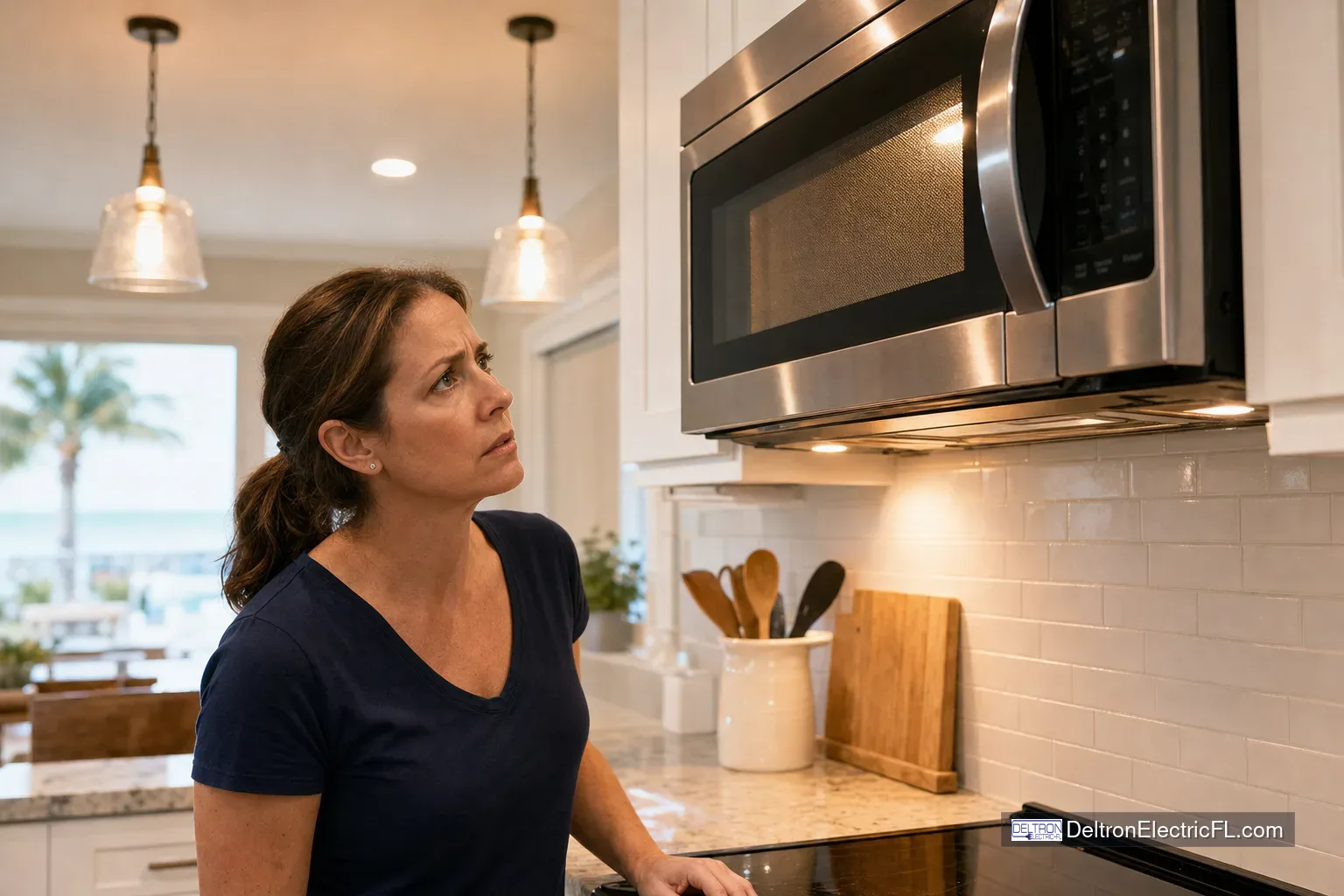
Depending on the conditions found, the diagnostic process may include:
- Discussing when the flickering occurs and which rooms or appliances are affected.
- Checking the microwave receptacle, plug condition, and accessible circuit components.
- Identifying whether lighting and appliance loads share a circuit.
- Evaluating the circuit breaker, wiring condition, and connections that are safely accessible for inspection.
- Testing for voltage behavior and signs of excessive drop or unstable supply under load.
- Inspecting the electrical panel for concerning conditions, including loose or overheated components where applicable.
- Determining whether the symptoms suggest a branch-circuit concern or a condition that may involve the main service or utility-side equipment.
For house-wide flickering or suspected service concerns, the electrician may recommend additional steps or coordination with the utility provider when appropriate. That recommendation depends on the diagnostic findings. The important point is that recurring light fluctuation should be evaluated at the correct level of the electrical system rather than treated as only a light fixture problem.
Repair Options: Circuit, Connection, Panel, or Service Upgrades
After diagnosis, repair recommendations should match the actual condition found. Not every microwave-related light dip requires an electrical panel replacement, and not every flicker is solved by changing a bulb. Deltron Electric can explain the specific issue, the safety implications, and the repair options before work proceeds.
Possible solutions may include:
- Receptacle or connection repair: Repairing or replacing damaged, loose, overheated, or improperly connected electrical components.
- Dedicated microwave circuit installation: Providing an appropriately configured circuit when the microwave should not share loads with kitchen lighting or other appliances.
- Circuit corrections: Separating loads, addressing wiring concerns, or correcting conditions that contribute to excessive voltage drop.
- Breaker or panel repairs: Addressing a faulty or unsuitable breaker, damaged panel component, or connection issue found during inspection.
- Electrical panel replacement or upgrade: Recommended only when the existing equipment’s condition, capacity, safety, or reliability supports that solution.
- Service-related follow-up: Investigating further or coordinating appropriate next steps when testing suggests the issue extends beyond an individual kitchen circuit.
Cocoa Beach homes vary widely in age, renovation history, kitchen layout, and electrical capacity. A recently updated kitchen may still have a shared circuit left from an earlier remodel, while an older property may have circuit or panel components that no longer match current household electrical use. Professional testing helps separate a minor, isolated issue from a condition that can affect appliances, lighting reliability, and electrical safety.
Frequently Asked Questions About Microwave-Related Light Flickering
Is a brief light dimming when the microwave starts normal?
A small, momentary dip in a nearby light at microwave startup can occur because the microwave draws power as it begins operating. It is less concerning when it is subtle, brief, and limited to one nearby fixture. Repeated flickering, substantial dimming, house-wide changes, tripping breakers, or any heat, odor, or buzzing should be professionally evaluated.
Why do lights flicker throughout the house when the microwave runs?
House-wide flickering suggests the condition may extend beyond the microwave’s individual circuit. Possible causes can include a panel connection, main service issue, or neutral-related condition, among others. Because broad brightness changes can affect multiple circuits and appliances, schedule an electrical diagnosis rather than assuming the microwave is the cause.
Can a loose neutral cause lights to flicker and damage appliances?
A loose or compromised neutral can contribute to unstable voltage and unusual light behavior, including lights becoming brighter or dimmer unexpectedly. Unstable voltage may put connected equipment at risk. However, flickering alone cannot confirm a loose neutral. Prompt professional testing is the appropriate way to identify the condition and determine the needed repair.
Does a microwave need its own dedicated circuit in a Cocoa Beach home?
It depends on the microwave type, its manufacturer instructions, its electrical requirements, and the existing circuit layout. Many built-in or over-the-range microwaves are intended to use dedicated circuits. If kitchen lights flicker when the microwave runs, an electrician can inspect the current setup and determine whether a dedicated microwave circuit or another repair is appropriate.
How much does it cost to diagnose flickering lights and a microwave circuit?
The cost depends on the time required to inspect the circuit, the panel, accessible wiring, the scope of the symptoms, and whether testing indicates a broader service concern. A single kitchen-circuit issue can require a different level of investigation than house-wide flickering. The most useful first step is scheduling a diagnosis so the repair recommendation is based on the actual source of the problem rather than an assumption.
Schedule Microwave and Lighting Troubleshooting in Cocoa Beach
If your kitchen lights flicker when the microwave runs, do not rely on the symptom alone to decide whether the problem is minor. A brief, mild startup dip may be a normal response to appliance load, but recurring flickering, noticeable brightness changes, warm outlets, burning odors, buzzing, sparks, or house-wide effects deserve prompt electrical attention.
Deltron Electric can identify whether the issue is isolated to the microwave circuit, kitchen wiring, electrical panel, or incoming service before it develops into a larger safety or reliability concern. To schedule an electrical diagnosis or service appointment in Cocoa Beach, call (833) 335-8766, schedule online, or use the contact form. A practical diagnosis gives you a clear path to the right repair without opening outlets or panels yourself.