


Lights Dimming When the AC Starts in Melbourne: Normal Load Shift or an Electrical Problem?
When your air conditioner starts, you may notice a brief dip in brightness from nearby lights. In some Melbourne homes, that momentary change can be a normal response to the AC compressor drawing power as it starts. But lights that flicker repeatedly, recessed lights turning on and off, or can lights that shut down after running for several minutes deserve closer attention.
A recessed light may be reacting to heat inside the fixture, an incompatible LED retrofit, a dimmer problem, a loose connection, or a larger circuit concern. Because several different faults can create similar symptoms, replacing bulbs or fixtures without testing can miss the real issue. Deltron Electric provides focused electrical diagnostics and repair in Melbourne to identify the confirmed cause before recommending fixture, wiring, circuit, or panel work.
Why Recessed Lights May Turn Off and Back On
A light that dims very briefly at the exact moment an AC system starts is different from a recessed fixture that turns off, cools down, and then comes back on. The distinction matters.
Air-conditioning compressors have a startup demand that can momentarily affect voltage on a home electrical system. A single, short brightness change may be noticeable in an older home or on a heavily used circuit, but it should not normally create ongoing flickering, a persistent low-light condition, or repeated fixture shutdowns.
When a recessed light turns off after it has been on for a few minutes and later switches back on by itself, the fixture may be overheating and activating an internal thermal protector. When it flickers, cuts in and out, or behaves differently when the AC starts, the cause may instead involve the LED lamp or retrofit module, dimmer, switch, splice, branch circuit, neutral connection, or electrical panel.
For example, a Melbourne homeowner may find that one kitchen can light goes dark after dinner preparation, then works again later in the evening. That pattern can point toward a heat-related fixture issue. In another home, every recessed light in the living room may flicker when the AC compressor starts, especially while other appliances are operating. That broader pattern calls for circuit and electrical-system testing rather than an assumption that each individual light fixture is bad.
Common reasons recessed fixtures cycle, flicker, or shut off include:
- An internal thermal protector responding to excessive fixture heat
- Insulation installed too close to a housing that is not rated for insulation contact
- A bulb or LED retrofit trim that does not match the fixture’s labeling or heat requirements
- An aging recessed housing, socket, driver, or connection
- An LED recessed light flickering because its dimmer is not compatible with the LED equipment
- A loose splice, damaged conductor, worn switch, or poor neutral connection
- A circuit carrying more load than expected or showing voltage-drop concerns under load
- A larger panel, breaker, service, or equipment issue affecting multiple lights or rooms
A qualified electrician in Melbourne should diagnose the pattern instead of treating every cycling light as the same problem. Fixture design, age, ceiling construction, insulation conditions, connected load, and the type of LED equipment all matter.
Overheating: When a Thermal Protector May Be Shutting the Light Down
Many recessed fixtures include a thermal protection device. Its purpose is safety: if temperatures around the fixture exceed the design limit, the protector can interrupt power to the light. Once the fixture cools, the light may turn back on. This can look like a failed bulb, but it may be the fixture responding to an overheating condition.
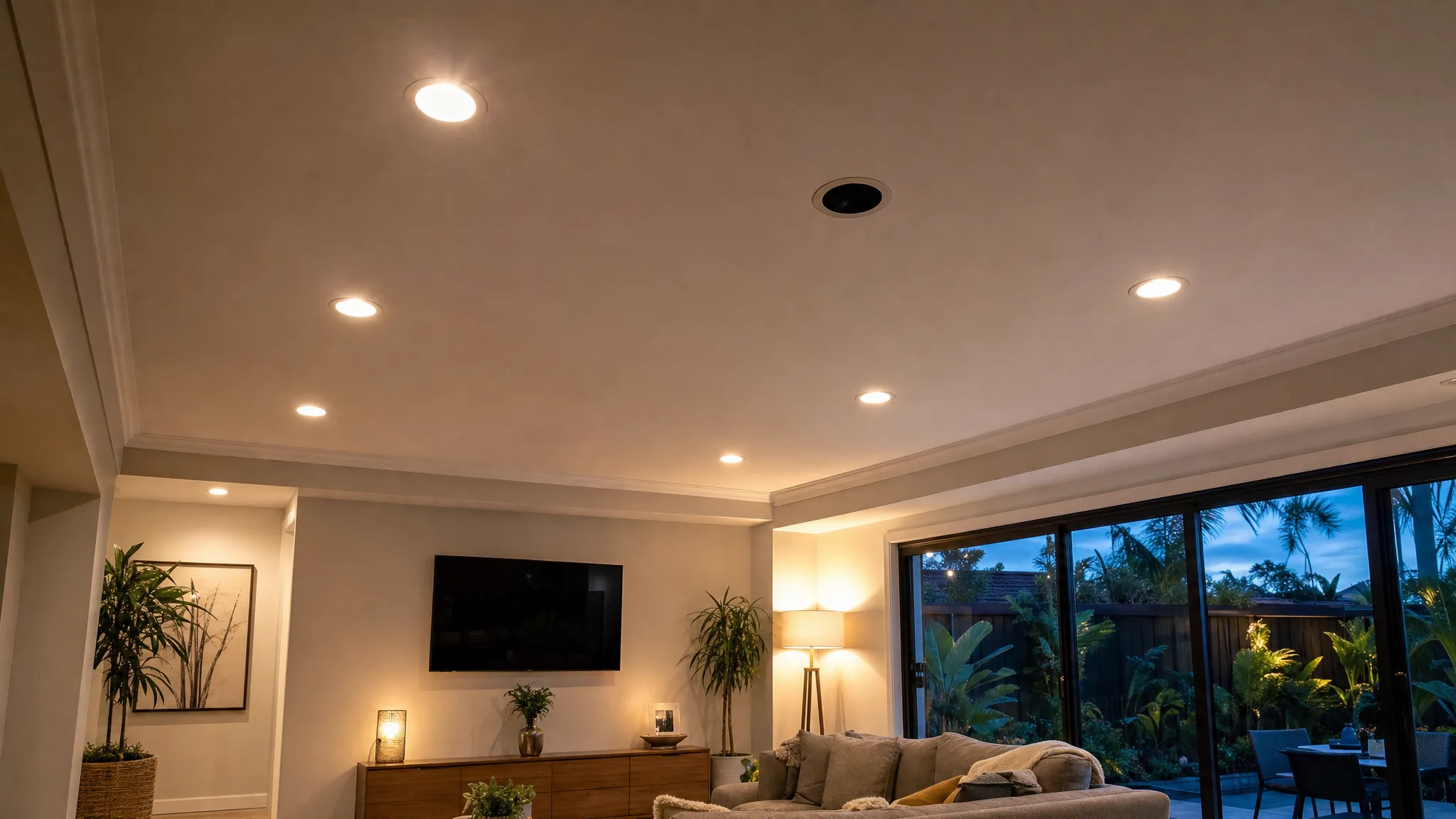
A thermal shutdown often follows a recognizable pattern:
- The light works normally when first switched on.
- It turns off after several minutes or after a longer period of use.
- The fixture may return after cooling.
- The shutdown may occur more often on hot days, after attic work, or when lights have been left on longer than usual.
Melbourne’s heat and humidity make attic and ceiling conditions worth considering, particularly in homes where insulation has been added, moved, or disturbed over time. However, insulation is not automatically a problem. Some recessed housings are specifically rated for insulation contact, while others require open air space and prescribed clearances. The fixture label and manufacturer installation instructions—not a general rule—determine what is appropriate for that particular housing.
How insulation and fixture design can contribute
Older non-insulation-contact housings can overheat if insulation is packed around or laid directly over them. A fixture with blocked airflow, an incorrect trim arrangement, or a lamp producing more heat than the housing is designed to handle can also trip thermal protection.
Do not move insulation around, reach into the ceiling cavity, defeat a thermal device, or attempt to bypass a safety protector. Those actions can create a fire hazard and can conceal the cause instead of correcting it. A licensed electrician can determine the fixture rating, inspect accessible conditions, and recommend the proper repair or replacement path.
Can an LED recessed light overheat?
Yes. LEDs generally produce less heat in the forward direction than many older lamp types, but they still create heat at the LED chips and electronic driver. That heat has to be managed correctly. A poorly matched LED retrofit, a failing driver, inadequate space around components, or an enclosed application that is not approved for that equipment can cause an LED recessed light flickering problem, premature failure, dimming, or cycling.
Some LED retrofit trims include integrated electronics rather than a replaceable “bulb.” If the driver or thermal management portion begins to fail, simply installing a different lamp may not solve the issue. Compatibility instructions and fixture labels should guide any replacement decision.
Wiring, Connections, and Circuit Problems That Need Attention
A recessed light that shuts off because it is hot is one type of concern. A recessed lighting wiring problem is another—and it should not be ignored. Loose electrical connections can generate heat and intermittent operation. A light may flicker when the ceiling is vibrated, when another appliance starts, or when current demand changes on the circuit.
Potential wiring and circuit-related causes include:
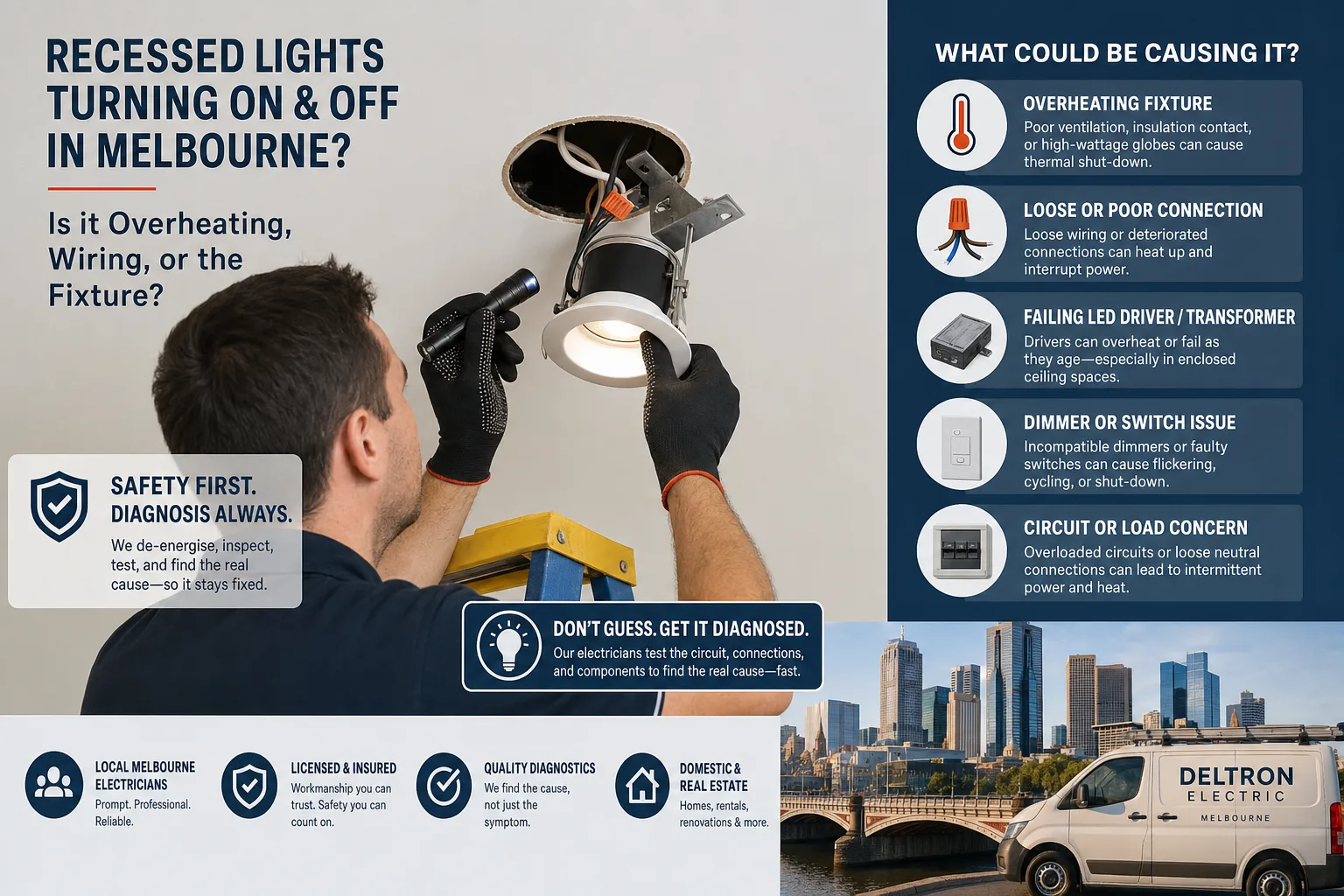
- A loose connection at the fixture junction box, switch box, or another point on the circuit
- A worn or damaged light switch
- A loose neutral connection that affects one fixture or several lights
- Damaged wiring or an aging splice in an accessible or concealed area
- An overloaded branch circuit or a circuit that has been modified over the years
- A failing breaker or a connection issue at the electrical panel
- Voltage concerns that become apparent when the AC compressor, pool equipment, or another motor load starts
If several lights in one room dim when the AC starts but recover immediately, the condition may be related to startup load and should be evaluated if it is becoming more noticeable. If lights continue to flicker, one fixture goes out independently, a breaker trips, or other rooms are affected, the situation is more concerning.
Pay attention to whether the issue is isolated to one recessed light or appears across a circuit. A single can light keeps shutting off after it warms up may suggest a localized fixture or retrofit issue. Multiple lights flickering together can point to the switch, shared wiring, a branch circuit, or a broader electrical concern.
Electrical symptoms near the panel should always be taken seriously. If you hear buzzing, crackling, or unusual noise from the panel, turn off affected equipment if it is safe to do so and arrange service promptly. Read more about why an electrical panel may be buzzing and why abnormal panel sounds need professional attention.
LED Bulbs, Retrofit Trims, Dimmers, and Fixture Compatibility Issues
Modern LED upgrades can improve efficiency and reduce maintenance, but a recessed fixture is a system. The housing, socket, trim, lamp or retrofit module, dimmer, switch, and wiring must work together. Mixing components without checking instructions can lead to flickering, buzzing, poor dimming range, delayed startup, or repeated shutoffs.
Incompatible LED equipment
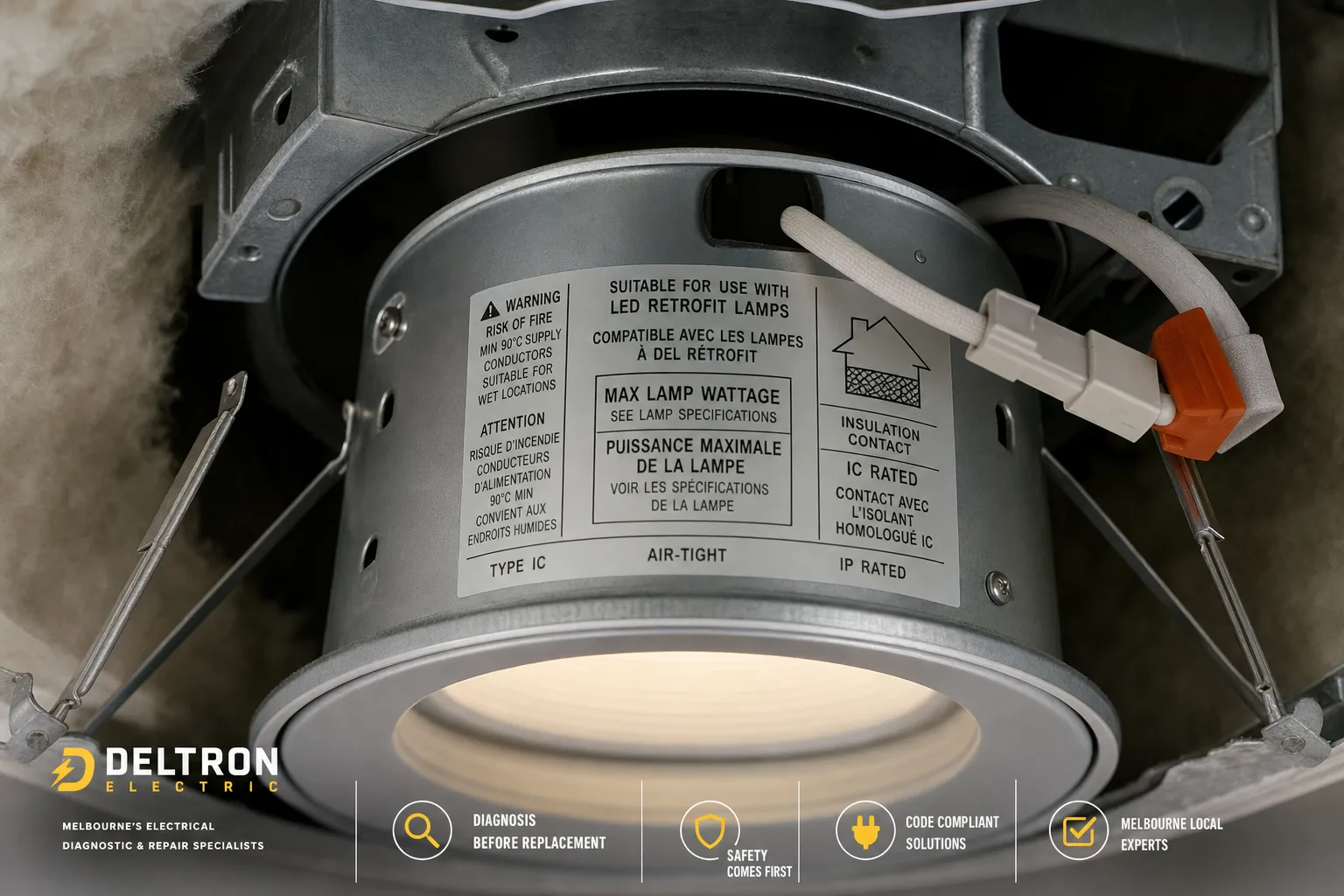
An LED lamp or retrofit trim may not be compatible with an existing housing, particularly in older recessed installations. The housing label may identify acceptable lamp types, wattage limits, insulation-contact rating, and other requirements. An integrated LED retrofit should also be installed according to its manufacturer instructions.
A retrofit that physically fits may still be the wrong electrical or thermal match. The right repair could be a compatible component, a housing upgrade, a wiring correction, or a complete fixture replacement—but that decision should follow inspection.
Dimmer and switch problems
Not every dimmer works with every LED product. A dimmer that was designed for incandescent lamps may cause LED recessed lights to flicker, pulse at low levels, drop out, or fail to turn fully off. Some LED products require a compatible dimmer model, a specific minimum load, or wiring arrangements that are not present in every home.
Switches also wear out. If flickering occurs only when the switch is touched, if lights cut out at certain dimmer positions, or if there is warmth, buzzing, discoloration, or an odor at the wall control, stop using that control and schedule electrical diagnosis.
Aging fixtures and hidden connection issues
Recessed lighting can remain in place for many years, sometimes through multiple bulb changes, ceiling repairs, remodels, and insulation projects. Over time, sockets, springs, connectors, internal wiring, and drivers can deteriorate. An older fixture may no longer be a good candidate for piecemeal repairs, but an electrician should verify the condition before recommending replacement.
Deltron Electric’s approach is diagnosis first. The goal is not to replace parts based only on a symptom. It is to identify whether the fault is in the fixture, LED component, control, connection, circuit, or upstream electrical equipment.
Warning Signs That Call for a Melbourne Electrician Now
Repeated lighting problems are not something to “wait out” when warning signs suggest overheating or a poor electrical connection. Turn the affected lights off and arrange prompt service if you notice any of the following:
- A hot, burning, melting-plastic, or smoky smell near a recessed light, switch, or panel
- Brown marks, yellowing, scorched trim, melted plastic, or discoloration around the fixture
- A recessed light that repeatedly shuts down and returns on its own
- Flickering that affects several lights, multiple rooms, or other electrical equipment
- A breaker that trips when lights or the AC run
- Crackling, popping, buzzing, or sparking sounds
- A switch plate, dimmer, ceiling trim, or panel that feels unusually warm
- Lights dimming severely or staying dim while the AC is operating
- Any sign of water intrusion around recessed fixtures, especially after a roof leak or ceiling stain
If there is smoke, visible sparking, active arcing, or an immediate fire concern, leave the area and call emergency services. For non-emergency but urgent electrical symptoms, an on-site evaluation by a licensed electrician in Melbourne FL is the appropriate next step.
Property owners and managers should also act promptly when occupants report cycling recessed lights in hallways, kitchens, common areas, or rental units. Repeated reports, particularly when they involve odor, warmth, breaker trips, or multiple fixtures, warrant documented professional evaluation rather than repeated bulb replacement.
What You Can Safely Check Before Scheduling Service
Homeowners can make useful observations without opening fixtures, removing wiring covers, accessing the attic, or working on energized electrical parts. Those details can help the electrician narrow down the possible cause during the service visit.
Safe observations to note
- Which fixture or fixtures are affected
- Whether the light turns off after a consistent amount of time
- Whether it comes back after cooling and, if so, approximately how long that takes
- Whether the issue happens only when the AC starts or also when it has not been running
- Whether the lights are controlled by a standard switch, dimmer, timer, smart switch, or multi-way switch
- Whether the lighting was recently upgraded to LED bulbs or retrofit trims
- Whether a breaker trips or other lights, outlets, fans, or appliances act differently at the same time
- Any visible discoloration, odor, unusual sound, or water staining around the ceiling area
If it can be done without disassembling the fixture, you may record the bulb brand and model from packaging or note the fixture’s visible label information. The housing label and product instructions can identify approved bulb types, wattage limits, insulation-contact ratings, and compatibility requirements. Do not remove a recessed light housing, open a junction box, reach above the ceiling, or tighten wiring connections yourself.
It is also reasonable to avoid leaving a cycling light on unattended. If the light shuts down, smells hot, or flickers persistently, turn it off at the switch and do not keep resetting or testing it repeatedly.
What Deltron Electric Tests During Recessed-Lighting Diagnosis
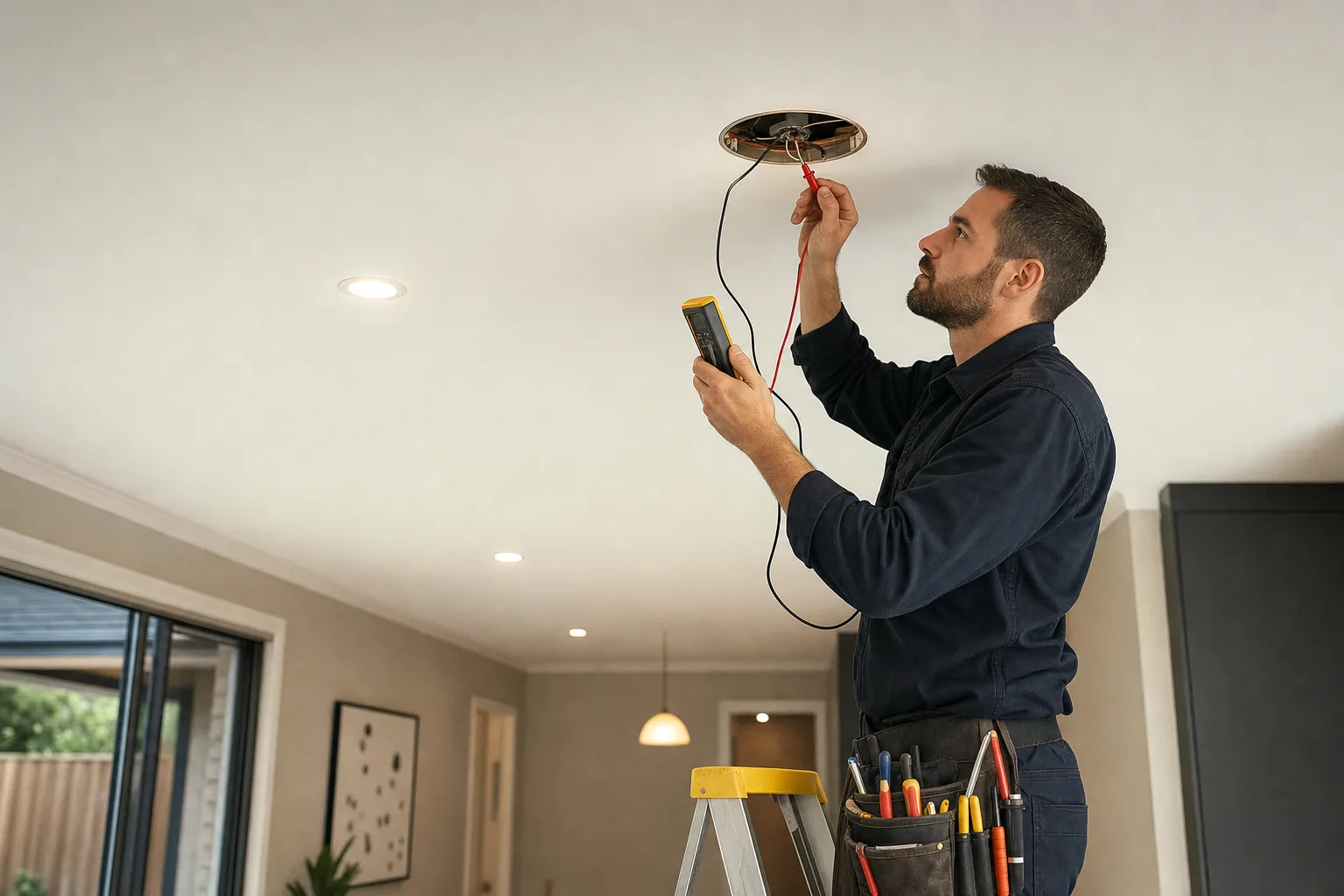
Professional troubleshooting is more than swapping a bulb. During a recessed-lighting evaluation, Deltron Electric can assess the symptom in the context of the fixture, the controls, and the electrical circuit serving it. The exact scope depends on access, fixture type, the reported behavior, and what testing reveals.
A diagnostic visit may include evaluating:
- The fixture type, visible labeling, lamp or LED retrofit configuration, and apparent condition
- Whether the equipment is installed and used within its listed ratings and manufacturer compatibility instructions
- Accessible heat conditions, trim arrangement, and indications of insulation-contact concerns
- The switch or dimmer, including LED-dimmer compatibility and control operation
- Accessible fixture connections and circuit splices for signs of loose, damaged, or overheated conductors
- Circuit voltage and performance under appropriate tested load conditions
- The breaker and panel connections when symptoms suggest an upstream circuit issue
- Whether the AC startup event is coincidental, localized to a circuit, or part of a wider electrical-system concern
Testing is important because the same visible symptom can have different causes. A recessed light that turns off after fifteen minutes may need a compatible LED retrofit or a corrected installation condition. Another fixture with the same timing may have an aging thermal protector. A group of lights that flicker when the AC starts may need circuit repairs, control replacement, or evaluation of panel equipment.
If inspection points to an outdated or capacity-limited panel, Deltron Electric can explain the appropriate next steps, including options for electrical panel replacement in Melbourne. Panel replacement is not the automatic answer to flickering lights; it is considered when testing confirms a panel-related condition or when the existing equipment no longer supports safe, reliable electrical use.
Pricing for a recessed-light wiring or overheating diagnosis in Melbourne depends on factors such as fixture accessibility, ceiling height, the number of affected lights, whether attic access is available, the type of fixtures and controls installed, and the confirmed fault. After diagnosis, the electrician can explain whether the repair involves a compatible component, control replacement, connection repair, fixture replacement, circuit work, or another solution.
Frequently Asked Questions
Why does my recessed light turn off after it has been on for a few minutes?
A thermal protector may be shutting the fixture off because it is getting too hot. Possible reasons include insulation or airflow conditions, an incorrect bulb or retrofit, a failing LED driver, or an aging housing. An intermittent connection can also produce similar behavior, so the fixture and circuit should be evaluated rather than assumed to be overheating.
Can an LED recessed light overheat even though LED bulbs run cooler?
Yes. LED components and drivers still generate heat, and they require proper thermal management. A compatibility problem, enclosed or unsuitable installation condition, damaged driver, or mismatched retrofit can lead to overheating symptoms, flickering, or cycling.
Is it safe to keep using a can light that turns itself off and back on?
It is not a condition to ignore. Cycling can indicate that a safety device is responding to excessive heat, but it can also indicate a fixture, connection, or circuit problem. Turn off the affected light if it smells hot, shows discoloration, flickers heavily, or repeatedly shuts down, and schedule professional diagnosis.
Does a recessed light cycling on and off mean I need to replace the whole fixture?
Not necessarily. The cause may be a lamp, LED retrofit, dimmer, installation condition, fixture component, connection, or circuit issue. Diagnosis comes before a recommendation to replace the fixture or wiring, helping avoid unnecessary work and ensuring the actual fault is addressed.
How much does it cost to diagnose a recessed-light wiring or overheating problem in Melbourne?
The cost depends on the service conditions, including access to the fixtures, number of affected lights, ceiling and attic conditions, fixture type, controls, and the testing needed to identify the fault. A focused on-site evaluation provides the information needed to discuss an appropriate repair recommendation and related cost.
Schedule a Recessed-Lighting Diagnosis Before the Problem Escalates
If one recessed light turns off after it has been on for several minutes, then comes back on after cooling, a thermal protector may be responding to excess heat. If several lights dim when the AC starts, the cause may be a normal momentary load shift—or it may involve a loose connection, overloaded circuit, panel issue, or voltage concern that needs testing. Repeated cycling, flickering, hot trim rings, a burning smell, breaker trips, or lights that affect other rooms are not problems to solve by continually replacing bulbs.
Homeowners can safely note when the issue occurs, whether the light is LED or incandescent, whether a dimmer is involved, and whether the AC or another large appliance is running at the same time. You can also check accessible fixture and bulb labels for wattage, insulation-contact, heat-rating, and LED compatibility instructions. Do not remove recessed housings, reach into junction boxes, alter wiring, bypass a thermal cutoff, or keep operating a can light that smells hot or repeatedly shuts itself off.
A licensed electrician in Melbourne can test the conditions that are not visible from the room below. Deltron Electric can evaluate the fixture’s heat conditions, lamp or retrofit compatibility, dimmer operation, driver performance, connections, grounding, voltage behavior, and the circuit serving the lights. Diagnosis comes before recommending a fixture, driver, dimmer, wiring, or panel repair, so the solution is based on the confirmed fault rather than a guess. If you have also noticed buzzing at the service equipment, review Why Is Your Electrical Panel Buzzing?; buzzing, heat, and lighting changes together warrant prompt professional attention.
For electrical diagnostics and repair in Melbourne, call Deltron Electric at (833) 335-8766 or book an electrical diagnosis or service appointment through the contact form. When scheduling, describe which lights cycle or flicker, how long they run before shutting off, whether the AC affects them, and any heat, odor, breaker, or dimmer symptoms you have observed. That information helps focus the on-site evaluation.
Pricing depends on access above the fixture, the type and number of recessed lights, the installed bulbs or retrofit trims, and the fault confirmed during testing. Whether the answer is a heat-rated fixture correction, an LED compatibility adjustment, a repaired connection, or a broader circuit repair, getting the issue evaluated now can help prevent worsening damage and avoid unnecessary part replacements.