


Warm Breaker Panel in Melbourne: What Homeowners Should Check Before It Becomes a Bigger Issue
A warm breaker panel deserves attention, but sparks, crackling, smoke, or a burning smell are an escalation—not a reason to inspect more closely. If you notice these symptoms at your Melbourne home, condo, rental, or business, the first decision is how to keep people safe, not which breaker to reset.
The “checks” in this article are observations you can report from memory or a safe location. They do not involve touching the cabinet, opening the panel, testing its temperature, or investigating wiring. Emergency responders address immediate danger; an electrician diagnoses and repairs the electrical problem afterward.
Panel Sparking Right Now? Move Away and Know When to Call 911
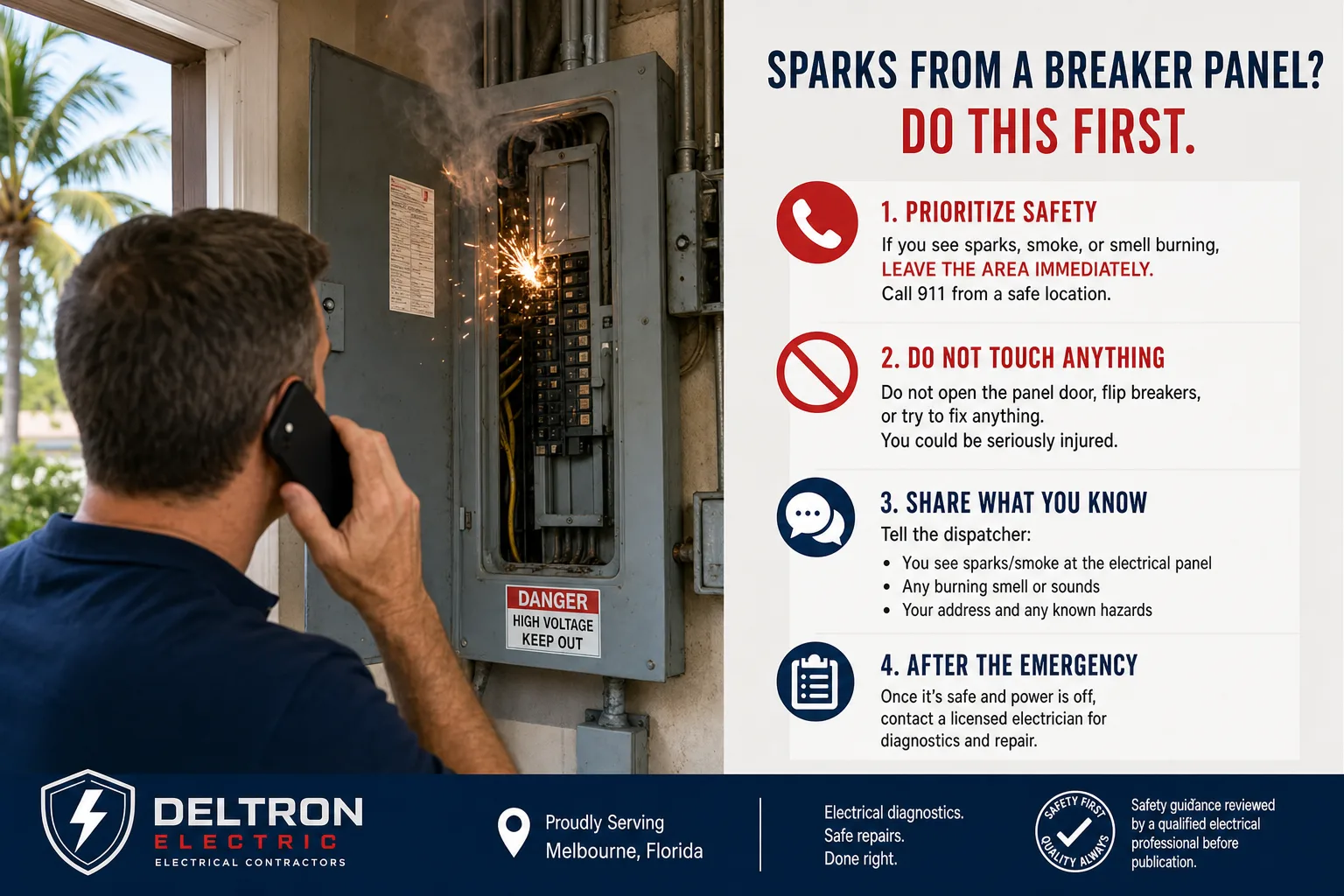
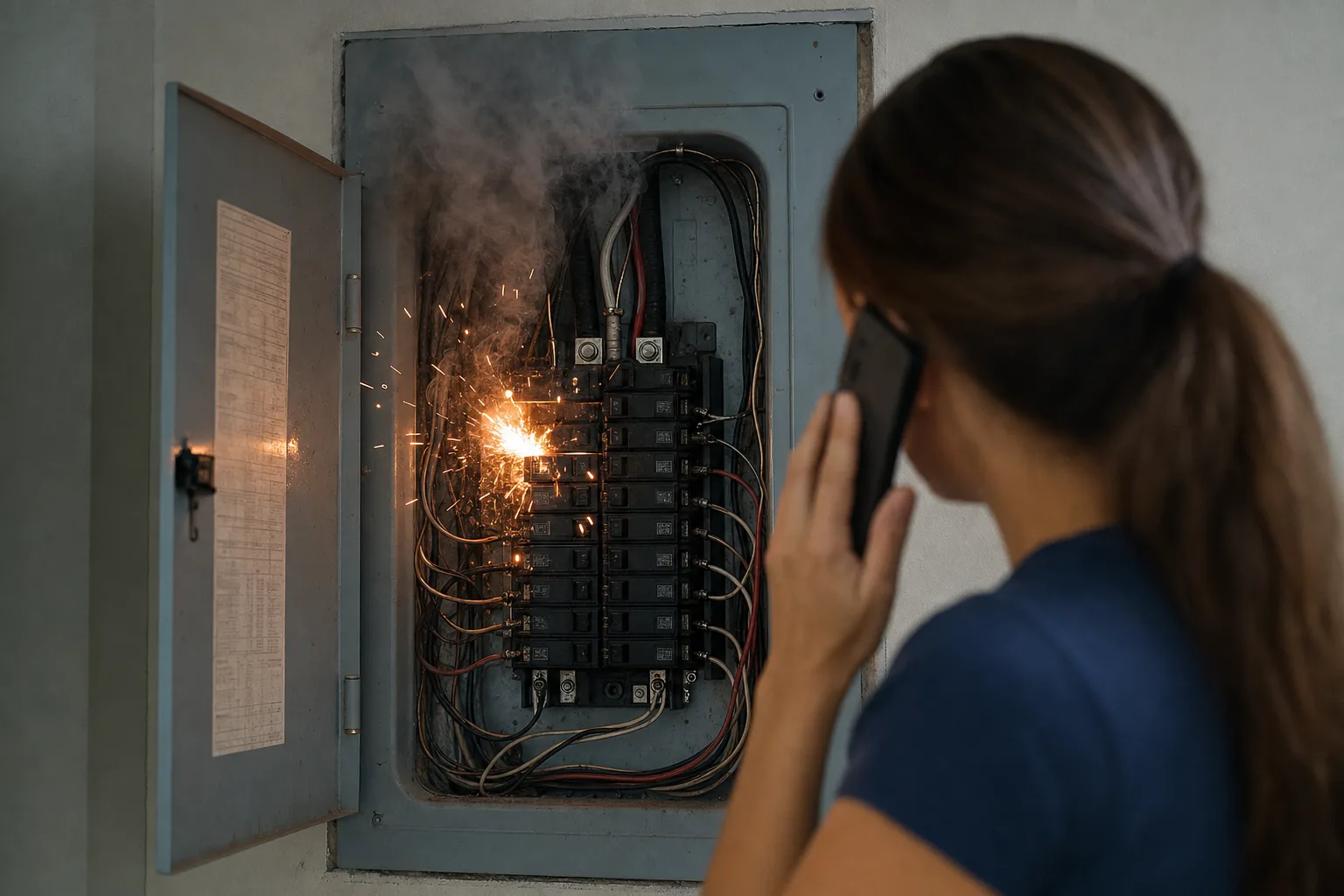
If your panel is actively sparking, smoking, producing a burning smell, or making crackling or popping sounds that suggest active electrical failure, move away, leave the building by a safe route, and call 911 from outside. Do not wait for visible flames. Tell the dispatcher that the concern is an electrical panel and describe what you noticed.
Visible sparks can indicate electricity traveling through an unintended path. That can produce intense localized heat and damage insulation or nearby materials. A brief flash does not reveal how much damage has occurred, and a closed panel door does not establish that the problem is contained.
- Move away from the panel. Keep children, visitors, employees, and pets away without putting yourself at risk.
- Get outside using a safe exit. Do not pass through smoke or approach the panel to use your usual route.
- Call 911 for active danger. Describe sparks, smoke, burning odors, unusual sounds, or anyone who may still be inside.
- Stay out until responders say it is safe. Do not return because the sound stopped or the lights stayed on.
- Arrange electrical diagnosis after the immediate hazard is addressed. A contractor appointment is not a substitute for emergency response.
What if there is warmth but no sparking?
Some electrical equipment produces heat during normal operation, but a homeowner cannot determine safe operating conditions by touch. Do not place your hand on the panel to compare temperatures. If you previously noticed unusual warmth without smoke, odor, sparks, or abnormal sounds, arrange professional assessment, especially if there have also been tripped breakers or flickering lights.
If warmth is accompanied by a breaker panel burning smell, discoloration you already noticed, crackling, or visible sparks, stop treating it as a routine maintenance question. Follow the emergency guidance above. Do not get closer to decide whether the smell is “strong enough.”
What if the panel is in the garage or outside?
An exterior location does not make sparking harmless. A garage panel may be near stored household items, while outdoor service equipment may be attached directly to the building. Stay clear of the equipment and any nearby water, metal enclosures, or damaged wiring. Let responders determine the hazard area.
Never move a vehicle, storage rack, or other object if doing so requires approaching the sparking equipment. Tell responders about blocked access instead. If the panel affects your exit route, use another safe exit and explain the access problem to the dispatcher.
The U.S. Fire Administration’s home fire escape guidance emphasizes getting out and staying out. Retrieving belongings or checking whether smoke has cleared should not delay evacuation.
Before Help Arrives: What Not to Touch, Reset, Open, or Investigate
When people ask what to do when a breaker panel sparks, turning off the main breaker often seems like the obvious first step. But operating a handle on a failing panel requires approaching the very equipment that may present a shock, burn, or fire hazard.
Do not approach or touch a sparking panel to turn off the main breaker. Move away and follow emergency personnel’s instructions. Do not assume a handle is safe to operate because it is accessible or because you have used it before.
Leave the panel and surrounding electrical equipment alone
- Do not open the panel door or remove its cover. There is no need to identify the sparking component yourself.
- Do not reset a tripped breaker. Repeated resetting can reenergize a fault rather than solve it.
- Do not push, tap, or wiggle breakers. A change in sound is not a safe diagnostic test.
- Do not tighten connections or replace parts. These are professional tasks requiring appropriate isolation and verification.
- Do not use water on electrical equipment or attempt to fight a panel fire. Evacuate and call 911.
- Do not use a meter, voltage pen, or thermal camera to investigate. Owning a test instrument does not make approaching the panel safe.
- Do not remove the utility meter or operate unfamiliar disconnect equipment. Utility coordination may be necessary.
- Do not connect a generator or backup source. Additional power sources can complicate isolation and create hazards.
Even when a main breaker is off, parts of the equipment may remain energized. Solar equipment, batteries, generators, and multiple service arrangements can introduce additional considerations. Tell responders and the electrician about those systems if you know they exist, but do not try to trace their connections.
Do not recreate the symptoms
A homeowner may remember that the sparks appeared when the air conditioner started or when a workshop tool was running. That information is useful. Repeating the event is not. Do not turn appliances on and off to see whether the panel sparks again, and do not reset an outlet or breaker to test a theory.
Similarly, do not unplug equipment throughout the building as a substitute for leaving. If there is active danger, evacuation takes priority over reducing electrical loads, saving refrigerated food, or shutting down office computers.
Photos are optional, not a reason to approach
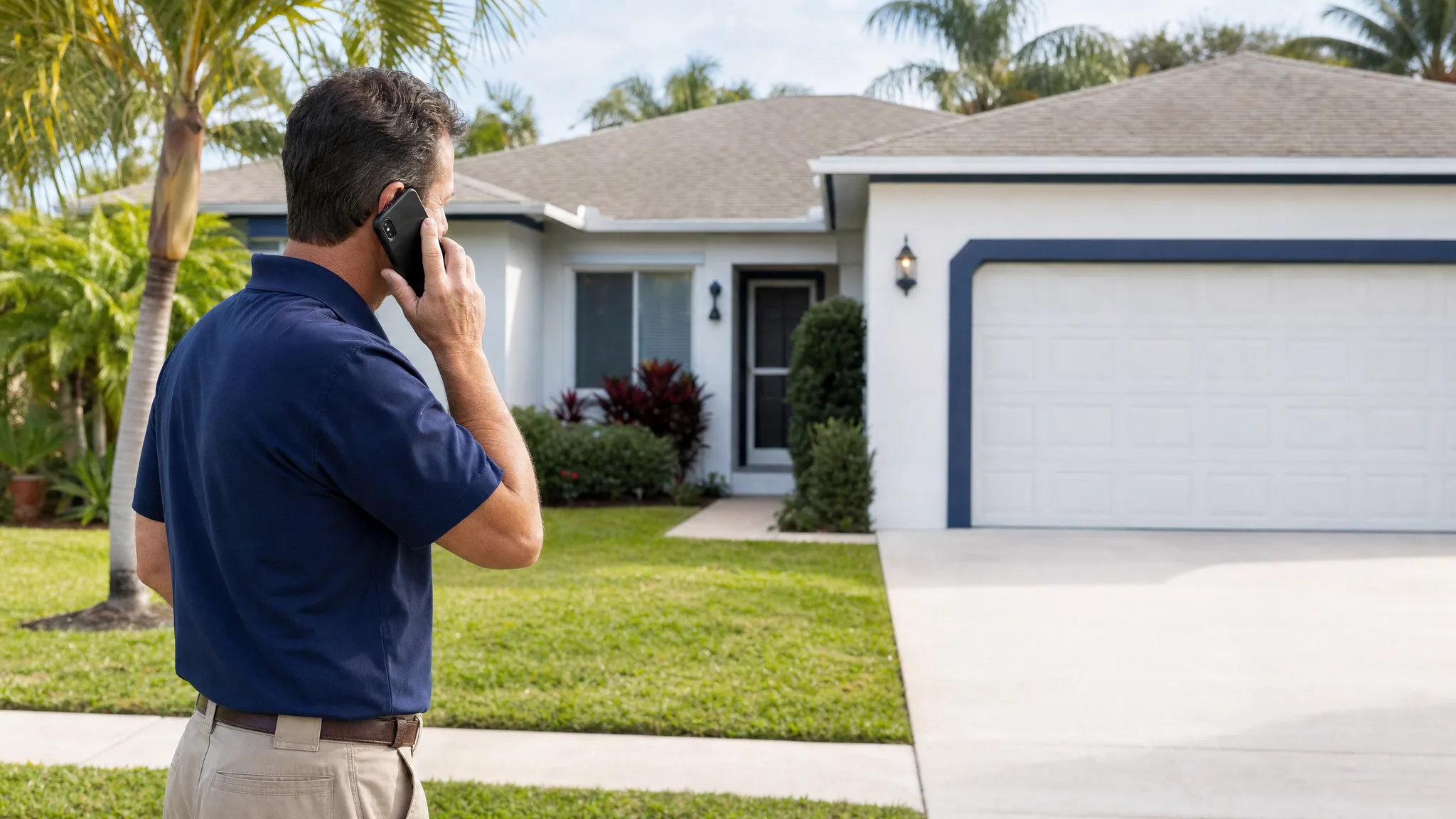
An existing photograph or security-camera recording may help document when the incident happened. However, nobody should stand near a sparking panel to record a video, photograph a label, or provide a live demonstration over the phone. A service provider can begin the intake conversation without a close-up image.
Stay at a safe location and follow the dispatcher’s instructions. Do not reenter to retrieve paperwork, locate a model number, or investigate whether a nearby outlet also smells burned.
The Sparks Stopped—Why the Panel Still Needs Prompt Attention
The end of visible sparking does not establish that the panel is safe. Electrical faults can be intermittent. A connection may arc under certain load conditions, quiet down when a load stops, and become active again later. A breaker may also trip while damaged components remain inside the enclosure.
The lack of smoke or noise afterward cannot tell you whether insulation has deteriorated, a connection has been damaged, or surrounding material has been heated. Lights that still work are not evidence that the panel is operating safely.
Can you use the electricity or wait until morning?
Do not treat a previously sparking panel as safe for normal electrical use or decide to “test it until morning.” If the incident just occurred and there is smoke, odor, unusual noise, heat-related concern, or uncertainty about an ongoing fire hazard, stay clear and call 911. Explain that visible sparking has stopped but describe the full event.
If emergency responders have already addressed immediate danger, follow their restrictions and arrange prompt professional diagnosis. Do not restore power that responders or the utility have disconnected. Clearance to enter the property does not necessarily mean permission to reenergize damaged electrical equipment.
If the event happened earlier and no immediate danger is present, contact an electrician promptly rather than waiting for another episode. Explain that the panel sparked, not merely that a breaker tripped. The service provider needs the actual symptoms to discuss an appropriate next step.
Do not let inconvenience drive the safety decision
Melbourne households may be understandably concerned about air conditioning, refrigerators, pool equipment, or a home office during an outage. Rental managers may also be worried about occupied units. Those needs matter, but they do not justify energizing equipment that has not been assessed.
If someone relies on powered medical equipment, tell emergency personnel immediately and use the person’s established backup or relocation plan. For other needs, temporary relocation or approved alternative arrangements may be necessary while the electrical condition is evaluated.
Waiting for another flash does not help establish repair cost. It can expose the property to additional damage and leave the electrician with a more involved repair. Prompt diagnosis is the way to determine what failed and what can safely remain in service—not an assurance that the repair will be small.
What Might Cause Panel Sparks, and Why Remote Diagnosis Is Unreliable
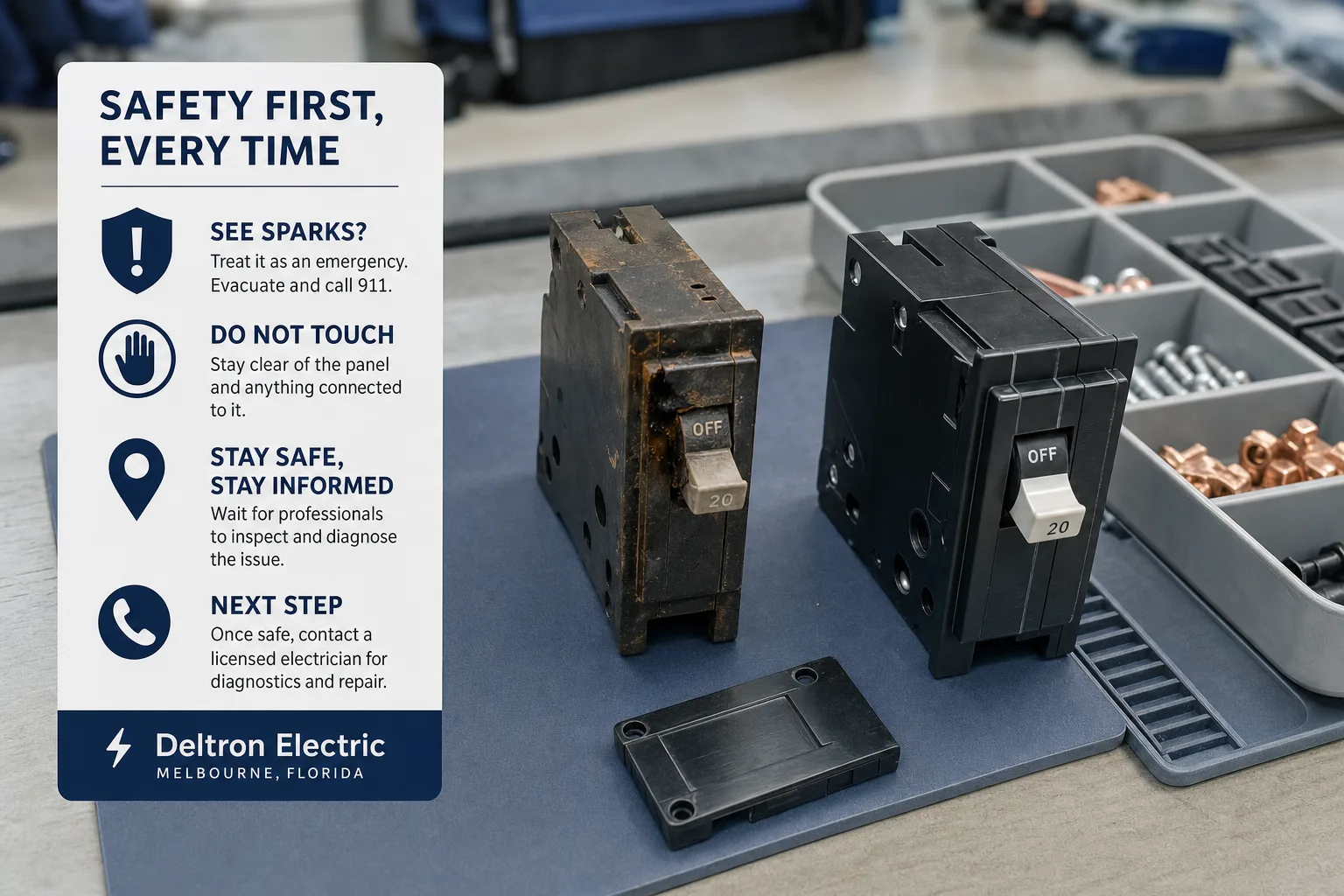
Electrical panel arcing occurs when electricity crosses a gap or follows an unintended conductive path. It can happen at a connection, inside a damaged component, or where insulation no longer separates energized parts adequately. The visible flash is a symptom, not a complete diagnosis.
The Electrical Safety Foundation International’s home electrical safety resources provide background on electrical hazards and the importance of professional attention to warning signs. For a particular panel, determining the cause requires qualified assessment of the actual equipment and conditions.
Possible causes an electrician may investigate
- Loose or deteriorated connections: A poor connection can generate localized heat and may arc. This is not an invitation to tighten anything yourself.
- Damaged breaker contacts or bus connections: A breaker and the parts it connects to must both be evaluated when damage is suspected.
- Insulation failure or a short circuit: Damaged wiring may allow current to travel where it should not.
- Moisture intrusion and corrosion: Water entry or deterioration can affect enclosures, connections, and insulating surfaces.
- Incorrect or incompatible components: A breaker that physically fits is not automatically approved for that panel.
- Previous installation defects or modifications: Earlier work may need examination, particularly around altered circuits or equipment.
- Load-related problems: Circuit demand, connection condition, and protective-device performance may all need evaluation.
These possibilities can overlap. A damaged breaker may be the visible result of a problem at its connection rather than the only failed part. Replacing it without evaluating surrounding damage may not address the cause.
Melbourne storm exposure provides context, not a diagnosis
On the Space Coast, a useful service history may include recent thunderstorms, wind-driven rain, roof leaks, flooding, or power restoration. Properties nearer saltwater may also have environmental exposure that matters when equipment condition is evaluated.
However, sparks after a storm do not prove that lightning caused the problem. An existing connection defect may have become noticeable at the same time. Likewise, corrosion cannot be judged reliably from a distant description of a cabinet.
Report what actually happened: “The panel crackled after power returned,” or “There was a garage roof leak last week.” Avoid labeling the cause unless a qualified professional has already established it. A surge protector is not a repair for a loose connection, damaged bus, or wet electrical enclosure.
Why a phone estimate has limits
A description such as “sparking electrical panel in Melbourne, FL” communicates urgency, but it cannot identify whether the damage is limited to one component or involves the panel assembly, service conductors, or connected wiring. Age, symptoms, and photographs may guide planning; they cannot establish safe operating condition remotely.
A responsible diagnostic conversation should explain those limits. You should not be promised a simple breaker replacement before someone has assessed whether the panel can safely accept one.
What to Tell Responders and Your Electrician From a Safe Location
Clear observations are more useful than electrical terminology. You do not need to identify a bus bar, calculate the load, or know the panel manufacturer before calling for help.
Start with the information emergency responders need
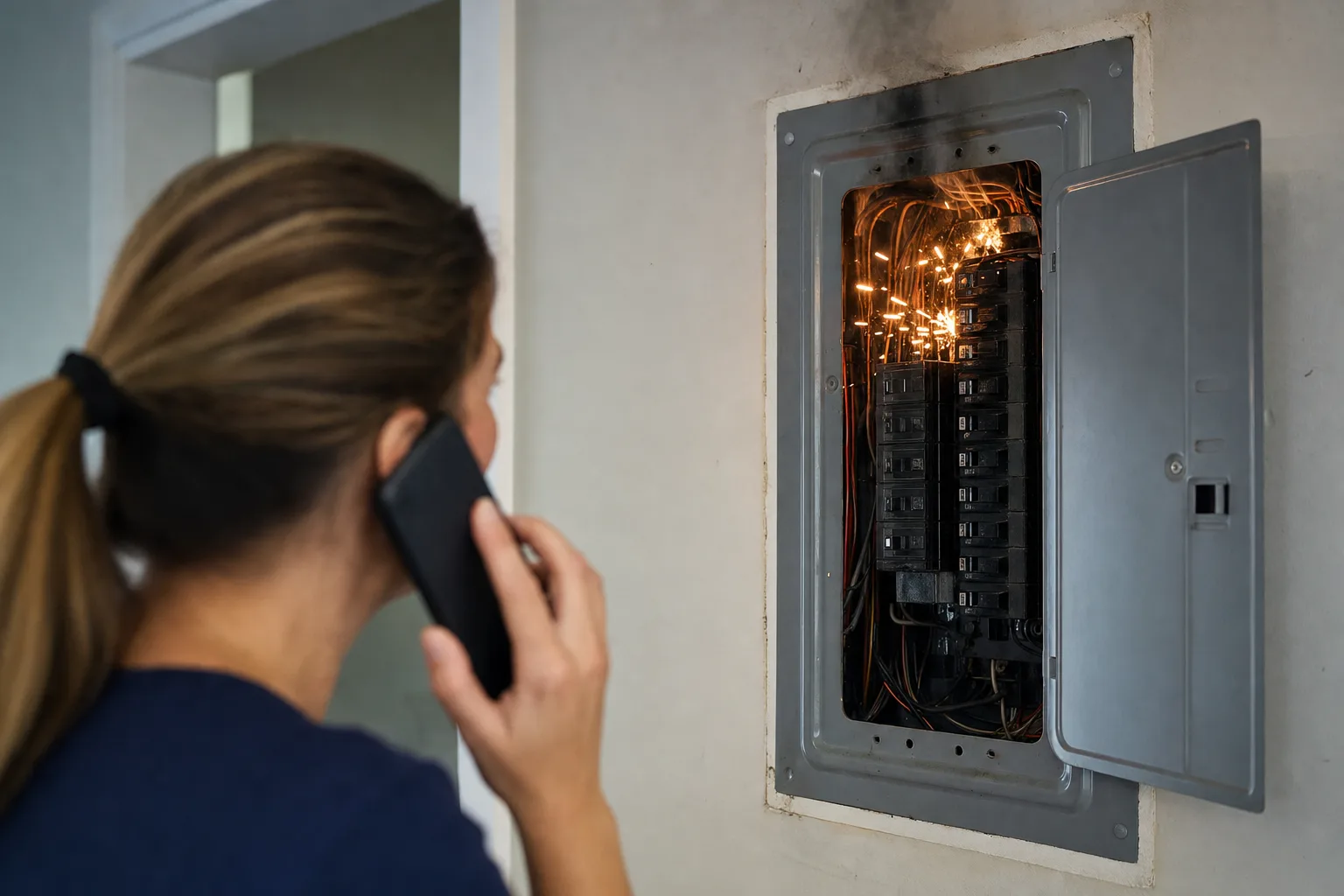
Give the property address, unit or suite number, and your current safe location. State whether you saw sparks, smoke, or flames; heard crackling or popping; or noticed a burning smell. Tell the dispatcher whether everyone is outside and whether anyone needs help evacuating.
If you already know where the panel is located, describe it simply: “inside the garage beside the laundry area,” “in the unit’s hallway closet,” or “in a shared electrical room.” Mention water near the equipment, a downed wire, solar panels, or a generator only if those facts are known. Do not investigate to complete the report.
For a condo or commercial building, share gate codes or access instructions you already have. Tell responders if the equipment is behind a locked door. Do not enter the electrical room to unlock it unless emergency personnel specifically direct a safe action.
Prepare a concise history for the diagnostic service conversation
After immediate danger has been addressed, the electrician’s intake discussion may include:
- Timing: When did the symptoms begin, and have they happened before?
- What you noticed: Sparks, crackling, popping, smoke, burning odor, flickering, or a loss of power.
- What was already operating: Air conditioning, an electric range, laundry equipment, a pool pump, or workshop equipment—without recreating the event.
- Emergency actions: Whether responders attended, the utility disconnected power, or restrictions were given.
- Recent changes: Remodel wiring, an appliance installation, added equipment, or known electrical work.
- Water or storm history: Leaks, standing water, or symptoms noticed around an outage.
- Property arrangements: Owner-occupied home, rental, condo, or commercial premises, plus who can authorize work.
- Access and occupancy: Who can provide approved access and whether occupants have special power needs.
A useful summary might be: “We saw flashes at the garage panel and heard crackling. Everyone is outside. Responders attended and the power is disconnected. We need the fault diagnosed and guidance on the repair and reconnection process.” This reports the condition without pretending to know the cause.
Questions to ask when choosing a service provider
When looking for an electrician Melbourne property owners can call for this problem, ask whether the contractor handles panel-fault diagnosis and related repairs at your property type. Discuss the soonest available diagnostic visit, how diagnostic charges are explained, and whether utility coordination may be needed.
Ask for the contractor’s license information and verify its current status through the Florida DBPR license search. Confirm any insurance or building-required documentation directly. Do not assume a website’s appointment request form provides emergency dispatch or guarantees a particular arrival time.
What Melbourne Condo Residents, Renters, and Property Managers Should Do
Ownership and access arrangements change who authorizes repairs, but they do not change the immediate safety response. Do not wait for a landlord, association manager, or maintenance supervisor to return a call before contacting 911 for active danger.
For condo residents and unit owners
A condo may have a unit panel, shared service equipment, and electrical rooms serving multiple residences. The equipment involved may not be entirely under the unit owner’s control. Leave investigation of shared equipment to responders and authorized electrical professionals.
After calling emergency services when necessary, notify building management or the association’s designated contact from a safe location. Provide the unit number, what you observed, and any instructions from responders. Management may need to coordinate access, communicate with other occupants, and identify the appropriate party to authorize work.
Responsibility for repair depends on the equipment involved, governing documents, and applicable requirements. Do not assume that everything inside a unit is automatically the owner’s responsibility or that every panel issue belongs to the association. That determination can proceed without delaying emergency action.
For renters
After getting safe and reporting immediate danger, notify your landlord or property manager through the designated urgent-maintenance channel. Send a short written account if you can do so safely. Include the incident time and whether responders or the utility have disconnected power.
Do not accept instructions to reset a sparking panel or remove its cover. Tell the manager that the symptoms involve the panel itself and that professional evaluation is needed. Keep any incident reference information and responder instructions you receive; you do not need additional photos to justify reporting a safety concern.
For rental property owners and managers
Arrange access and authorization without sending a tenant or general maintenance worker to investigate energized equipment. Ask whether the property has been cleared for entry, what electrical restrictions remain, and whether the affected equipment serves more than one dwelling.
Coordinate with the electrician, utility, and applicable building department as needed. If power must remain off, address occupancy and accommodation questions promptly rather than treating restoration as a simple breaker reset. Electrical repairs and the decision about safe continued occupancy may involve different responsible parties.
For small commercial property operators
Keep staff and customers away from the affected area and follow evacuation instructions. Report equipment such as commercial refrigeration, security systems, or shared tenant services to the responding professionals, but do not delay leaving to shut everything down.
Coordinate with the building owner or property manager about repair authorization. A retail operator may control its business equipment but not the service equipment supplying the suite. Nobody should energize a suspect panel simply to resume trading or prevent inventory loss.
What Professional Diagnosis May Involve: Repair, Replacement, and Cost Factors
Once immediate hazards are addressed and appropriate access is available, electrical diagnostics and repair in Melbourne should focus on identifying the fault, determining the extent of damage, and establishing a safe repair plan. A diagnostic visit is not automatically a panel replacement appointment.
First: establish conditions for safe evaluation
The electrician will need to understand what happened, what responders or the utility have done, and whether there are additional power sources. Safe isolation may require utility involvement or coordination with building management. Parts of service equipment cannot necessarily be made safe by switching off a main breaker.
Do not interpret the need for a utility disconnect as unnecessary delay. It may be part of creating the conditions needed to assess and repair the equipment safely. Access restrictions, wet conditions, or shared building service can also affect the sequence.
Next: identify the failed parts and any related damage
Depending on the condition and safe work arrangements, evaluation may include the panel enclosure, breakers, bus connections, conductors, insulation, evidence of overheating, and possible moisture entry. The electrician may also need to evaluate a connected circuit if the fault extends beyond the cabinet.
Equipment identification matters. Replacement components must be appropriate for the actual panel under applicable manufacturer documentation and listing requirements. A similar appearance, matching handle color, or the ability to fit into a slot is not sufficient evidence of compatibility.
Ask the electrician to distinguish confirmed findings from remaining uncertainty. For example, identifying a damaged breaker does not necessarily establish whether its connection or surrounding panel components can remain in service. The explanation should connect the proposed work to the observed defect.
Does a sparking panel always need replacement?
No. Some problems may be repairable with appropriate component or conductor work when the remaining equipment is suitable for continued service. Other conditions may require panel replacement, particularly when critical internal parts are damaged, corrosion is extensive, or a compliant repair cannot be made with available approved components.
The decision should not be based on age alone, nor should a relatively new panel be assumed repairable without assessment. Relevant questions include:
- What component failed, and what evidence supports that finding?
- Has heat or arcing damaged adjacent parts or conductor insulation?
- Are appropriate replacement parts available for this equipment?
- Can the enclosure and internal assembly remain in service under applicable requirements?
- Does the source of moisture or other contributing condition also need correction?
- What testing, inspection, or utility approval is needed before restoration?
What affects the repair cost?
The main cost factors are the location and extent of the fault, the condition of surrounding equipment, component availability, labor and access requirements, and whether service disconnection, permits, or inspections are necessary. Repairing one approved component is a different scope from replacing damaged service equipment and associated conductors.
A shared condo installation can require more coordination than an accessible single-family panel. Water intrusion may require another trade to correct a leak before electrical restoration is appropriate. A diagnostic visit may also identify separate deficiencies that should be clearly distinguished from the immediate fault repair.
Ask how the diagnostic charge works, what the proposed repair includes, and what additional findings could change the scope. Obtain an explanation of required safety work versus optional improvements. No reliable fixed repair price can be established solely from the statement that sparks came from the panel.
Permits, inspections, and restoration depend on the property
A Melbourne mailing address does not by itself establish which building department has jurisdiction. The actual property may fall under a city or county authority. The contractor should confirm the applicable permit and inspection requirements for the proposed work rather than make a blanket promise that none are needed.
Emergency response, electrical repair, inspection, and utility reconnection are separate steps when they apply. Completion of one does not automatically complete the others. Ask who is coordinating each step and what must happen before normal electrical use resumes.
Address future improvements after the fault is resolved
Once the panel problem has been corrected, it may be appropriate to discuss load needs, dedicated circuits, surge protection, or storm-related exposure. These are follow-up decisions, not substitutes for diagnosing the sparking.
For properties exposed to coastal weather, Deltron Electric’s article on storm-season electrical considerations for Cocoa Beach rental properties offers related context. Any preventive upgrade should be selected around the actual installation and the findings from the repair—not an assumption that every panel incident has the same cause.
After Immediate Danger Is Addressed: Arrange a Deltron Electric Service Visit
Sparks from a breaker panel require a different response from an ordinary question about panel warmth. Your role is to keep clear, report what you observed, and avoid actions that could expose you to shock or fire. You do not need to discover which component failed before asking for help.
If the panel is actively sparking, smoking, crackling, or producing a burning smell, leave by a safe route and call 911 from outside. Do not wait for an electrical appointment. If the sparks have stopped, that alone does not establish safety or justify restoring disconnected power.
After emergency responders have addressed any immediate danger, Deltron Electric can discuss electrical service in Melbourne, FL for troubleshooting and repair needs. Describe the panel symptoms, whether power is disconnected, any responder restrictions, and whether the property is a home, condo, rental, or commercial space. Service availability and the necessary scope must be confirmed directly.
Call (833) 335-8766 or contact Deltron Electric to discuss a diagnostic service visit. Ask about the soonest available diagnostic appointment and how the initial evaluation is handled. The next step is to identify the fault and determine the repair needed before the equipment is returned to normal use—not to wait for another spark.
Safety scope: This article provides general safety information, not an assessment of your electrical equipment. Follow emergency responder and utility instructions. Equipment-specific safety and repair decisions require evaluation by a qualified electrical professional.