


How Salt Air and Storm Season Affect Electrical Panels and Outdoor Equipment on the Space Coast
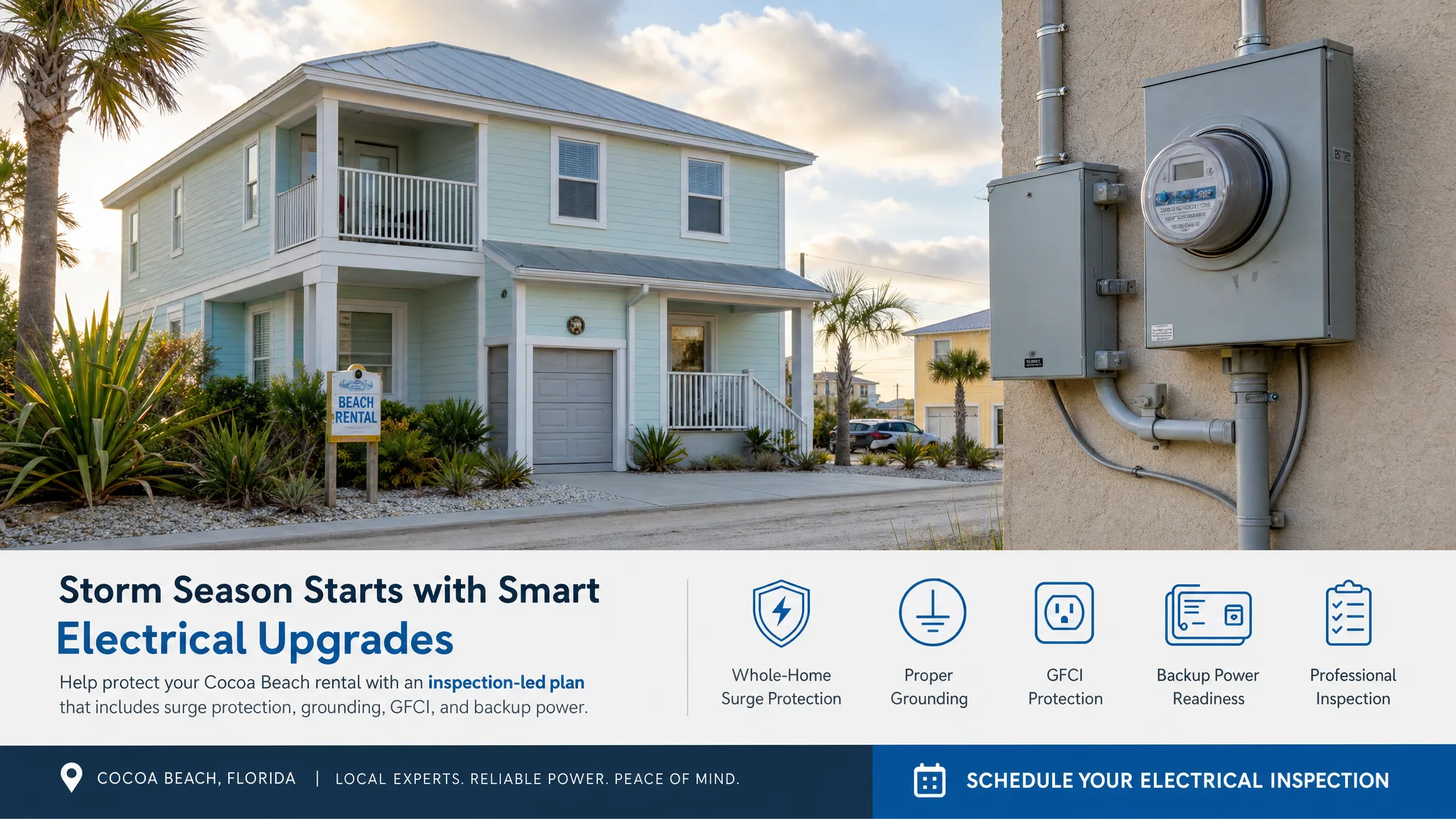
Cocoa Beach rental properties face electrical conditions that inland homes may not experience as often: salt-heavy air, humidity, wind-driven rain, outdoor equipment exposure, utility disturbances, and periods when a unit sits vacant between guests or seasonal tenants. For landlords, condominium associations, and vacation-rental operators, storm preparation should include more than shutters and property cleanup. It should include an electrical review focused on the panel, surge protection, outdoor receptacles, grounding, and equipment that must work safely when the weather changes.
A qualified electrician in Cocoa Beach can help identify immediate hazards, separate them from planned improvements, and explain whether whole-home surge protection, panel work, outdoor repairs, or capacity upgrades are appropriate for the property.
Why Cocoa Beach Rental Properties Need Electrical Storm-Season Planning
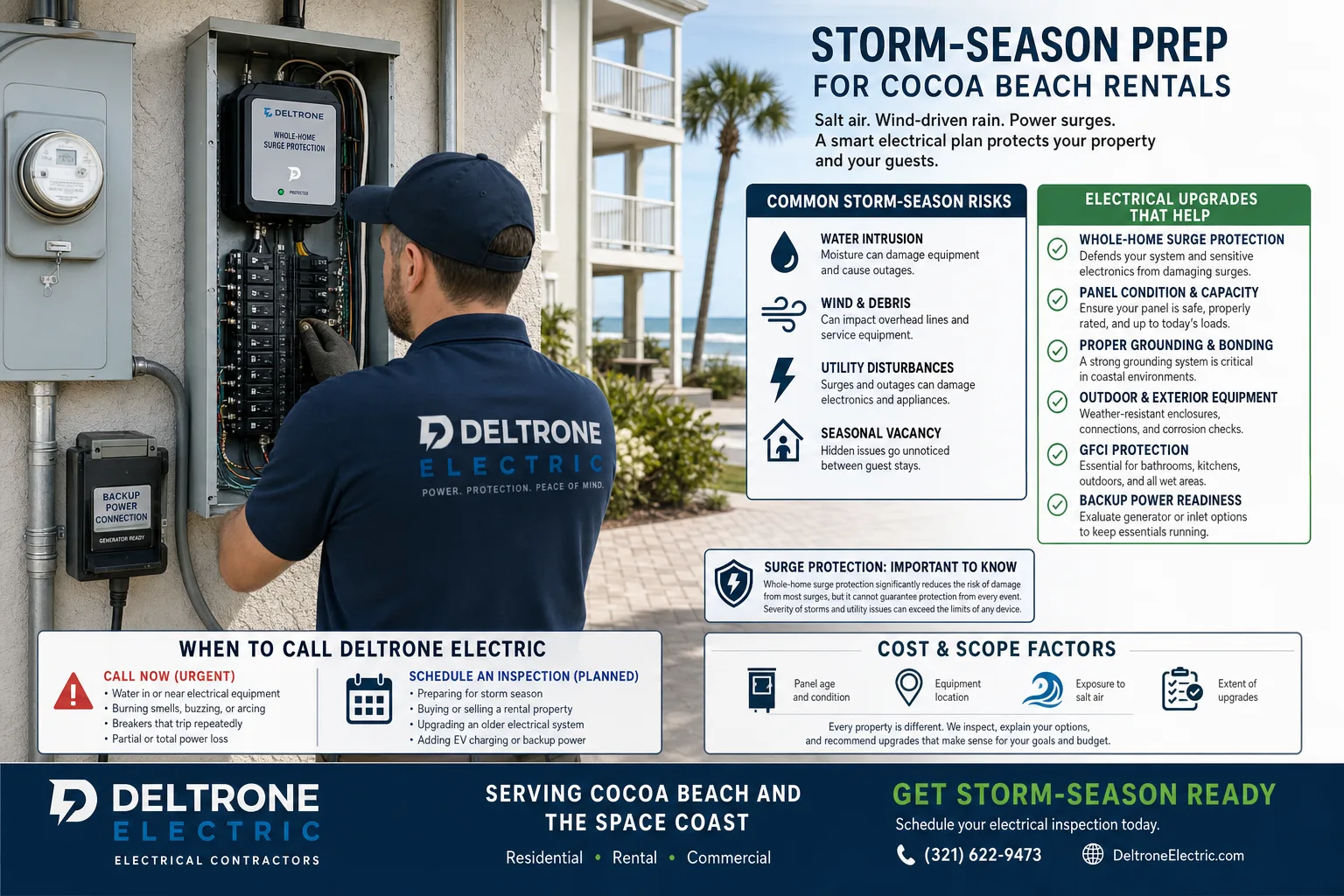
Electrical systems at coastal rentals do not operate in a sealed environment. Salt air can settle on metal components, moisture can enter compromised enclosures, and wind-driven rain can expose weaknesses at outdoor disconnects, service equipment, receptacle covers, pool-area electrical components, and air-conditioning connections.
Storm season also brings electrical events that can affect equipment even when a property does not have direct storm damage. Utility switching, nearby lightning activity, power interruptions, and restoration-related voltage disturbances can place stress on connected appliances and electronics. A rental may have several items worth considering in a protection plan, including:
- HVAC equipment and controls
- Refrigerators, ice makers, and cooking appliances
- Wi-Fi equipment, smart locks, security cameras, and access controls
- Televisions and guest entertainment equipment
- Garage-door equipment and exterior lighting controls
- Property-management systems, gate equipment, or common-area equipment in multifamily settings
Seasonal occupancy changes the maintenance picture. A guest may notice that an exterior GFCI receptacle trips after rain, but a vacant unit may have no one present to report it. A corroded disconnect may remain unnoticed until an HVAC technician needs to service the system. Panel directories that were once accurate may no longer match the circuits after years of renovations, appliance replacements, and owner-added equipment.
For that reason, storm-season electrical safety is most effective when it is planned before the first major weather event. An inspection-led approach gives the owner or manager time to prioritize repairs, coordinate tenant access, obtain permits when required, and avoid making rushed decisions after a problem has already interrupted occupancy.
Start With the Electrical Panel, Main Breaker, and Service Disconnect
Whole-home surge protection is typically installed at or near the electrical service equipment, so the panel and related service components should be evaluated first. An electrician should not assume every existing panel has suitable space, sound internal condition, proper grounding, or the right configuration for an added protective device.
What an electrical assessment may review
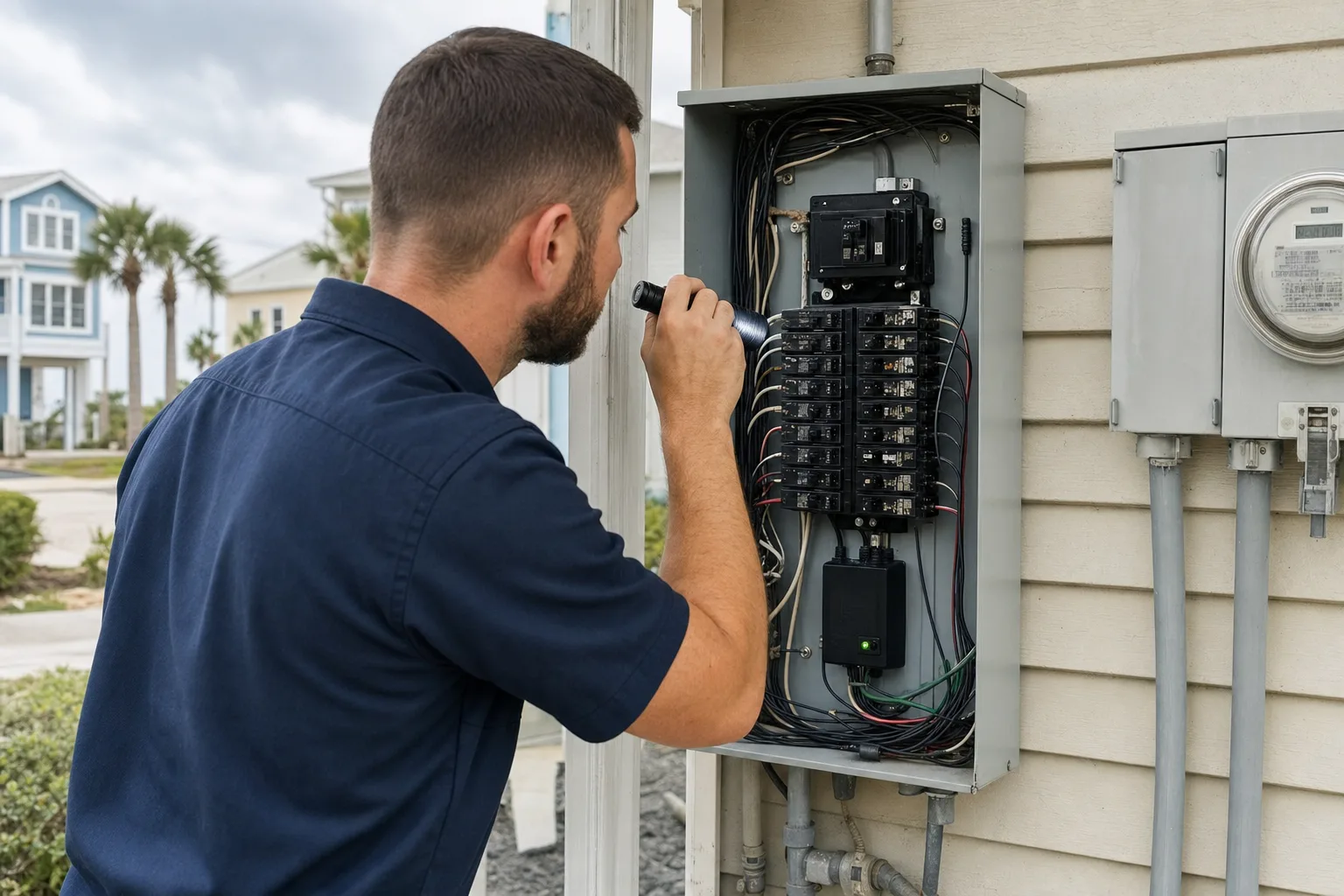
For a Cocoa Beach rental property, the review may include the condition and accessibility of the electrical panel, main breaker, service disconnect, branch breakers, panel cover, circuit labeling, grounding and bonding components, and visible signs of moisture or corrosion. At multifamily properties, the scope may also include meter banks, common-area panels, exterior disconnects, and equipment serving shared amenities.
Clear panel labeling is a practical safety item that often gets overlooked. During a tenant emergency, maintenance visit, or storm-related shutdown, a manager should be able to identify the circuit serving the HVAC air handler, water heater, refrigerator, exterior outlets, lighting, and other important loads. Inaccurate or missing labels can slow down troubleshooting and increase the chance that the wrong circuit is turned off.
Watch for concerns such as rust around panel seams, a loose cover, damaged breaker handles, water staining, corrosion at the service disconnect, buzzing, heat, a burning odor, or breakers that trip repeatedly. These conditions need diagnosis; simply resetting a breaker or installing a surge device does not correct a failing connection, water intrusion, overloading issue, or damaged equipment.
If the service disconnect or main breaker is corroded, outdated, damaged, or difficult to operate, replacement scope depends on the equipment condition and location. Read more about what affects main breaker or service disconnect replacement cost in Cocoa Beach, including access, corrosion, replacement compatibility, and permit considerations.
Why timing matters before storm season
Panel and service work can require scheduling around tenant occupancy, utility coordination, equipment availability, local permitting, and inspections. Property owners should schedule an assessment well before a forecasted storm rather than waiting until the system is under stress. The City of Cocoa Beach and the applicable authority having jurisdiction determine local permit and inspection requirements for electrical alterations and replacement work.
For code context, the National Electrical Code includes requirements addressing surge-protective devices for certain dwelling-unit services. However, code requirements and the right scope for a particular rental are not the same question. A local inspection is still necessary to determine what the existing installation can safely accept and what work may be required.
How Whole-Home Surge Protection Helps Protect Rental Property Equipment
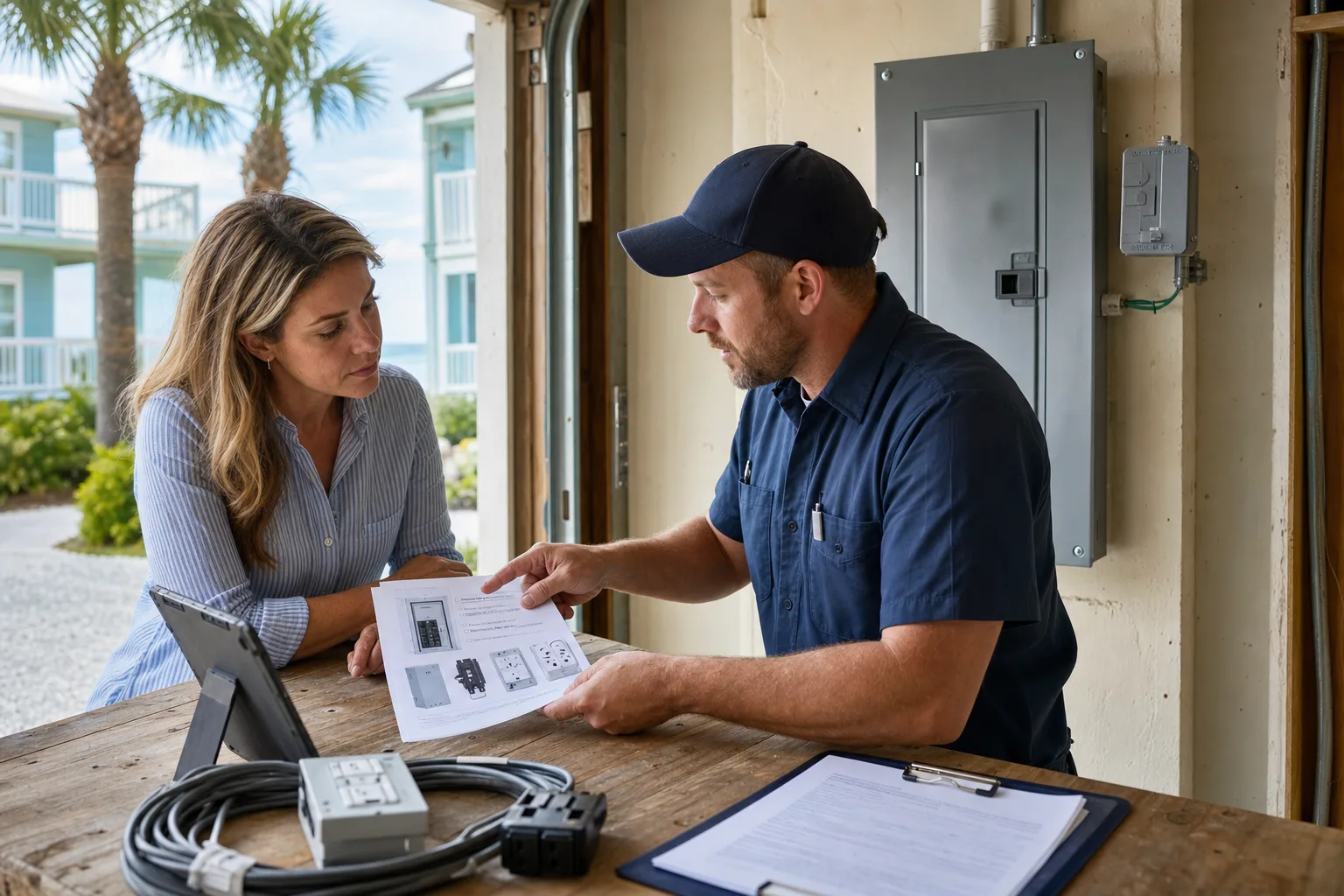
Whole-home surge protection is designed to help reduce the amount of damaging transient voltage that reaches equipment through the electrical system. It is commonly installed at service equipment or a distribution panel and is intended to work as part of a layered protection strategy.
For Cocoa Beach rental property electrical upgrades, whole-home surge protection can be particularly useful where the property depends on modern appliances, connected devices, electronic controls, and HVAC equipment. It may also complement point-of-use protection for selected electronics, especially where manufacturers recommend it.
What surge protection can and cannot do
A properly selected and installed whole-home surge protective device can reduce exposure to many common power surges from internal switching and utility-related disturbances. It does not guarantee that every appliance, electronic device, or building system will survive every lightning event, utility issue, wiring defect, or severe storm condition.
Surge protection also cannot fix:
- Water inside a panel, receptacle, disconnect, or junction box
- Loose, overheated, or corroded electrical connections
- An overloaded circuit or undersized electrical service
- Failed GFCI protection
- Damage caused by a fallen line or physical storm damage
- Improper generator connections or backfeeding hazards
This distinction matters for rental-property surge protection. A device may be one of the highest-value improvements in a storm-preparation plan, but it should be selected after the panel, grounding, equipment location, and overall property load needs are reviewed.
The cost of whole-home surge protection can vary based on the panel type and condition, available breaker space, device location, needed repairs, access, permit requirements, and whether related upgrades are recommended. For a broader explanation, review these whole-home surge protection cost factors.
Outdoor Equipment, GFCIs, and Corrosion Risks Near the Coast
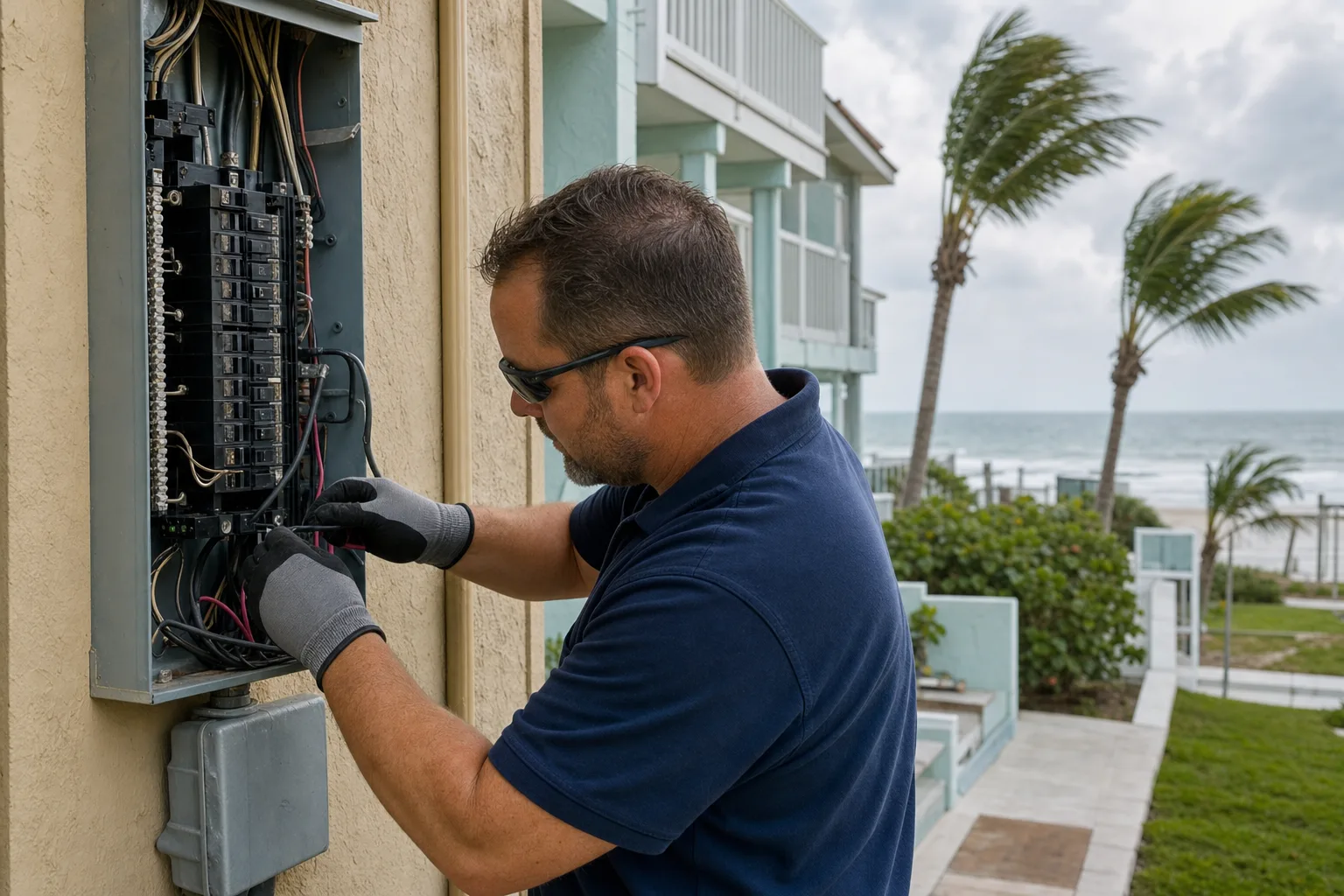
Outdoor electrical equipment is often the first part of a rental property to show the effects of Cocoa Beach weather. Service disconnects, condenser disconnects, outlet boxes, exterior lighting, RV outlets, pool and spa-related equipment, and weatherproof covers are exposed to sun, humidity, rain, and salt air over time.
Salt air does not need to cause an immediate failure to create a problem. Corrosion can slowly affect metal enclosures, fasteners, terminals, cover hardware, and connections. Once a cover no longer closes securely or an enclosure has deteriorated, wind-driven rain can create a more direct safety concern.
Check outdoor receptacles and weather protection
Exterior receptacles should have appropriate weather-resistant components and covers suitable for their location and intended use. A cover that is cracked, missing, loose, or unable to close around a plugged-in cord can leave the receptacle more vulnerable to moisture. Exterior outlet boxes should not be loose, visibly corroded, or damaged by landscaping, impact, or UV exposure.
GFCI receptacles and GFCI-protected circuits are especially important in outdoor, wet, and damp locations. A GFCI that trips may be responding to a real leakage path caused by moisture, a damaged cord, a failing appliance, a deteriorated outlet, or an issue farther downstream on the circuit. Repeatedly resetting it without diagnosis is not a storm-preparation plan.
Between guest stays, maintenance teams should test accessible GFCI devices using their test and reset controls when appropriate, confirm that outdoor covers close correctly, and report outlets that trip, feel loose, show discoloration, or do not reset. Testing is not a substitute for repair when a device behaves abnormally.
Outdoor equipment that deserves a closer look
- Air-conditioning disconnects and visible wiring pathways
- Exterior service equipment and meter-related enclosures
- Patio, balcony, and pool-area receptacles
- Exterior lighting, photocells, switches, and junction boxes
- Outdoor ceiling fans and weather-exposed fixtures
- RV outlets and equipment used for temporary power needs
- Common-area electrical equipment at condominiums and multifamily properties
Ownership responsibilities can overlap at condominium and multifamily communities. The unit owner, association, property manager, utility, and tenant may each be responsible for different parts of a concern. The utility generally handles its equipment and supply-side issues, while an association may control common-area equipment or exterior infrastructure. Property managers should document the affected equipment, determine who has authority to approve work, and coordinate access early. An electrician can identify the customer-owned electrical scope, but utility and association coordination may still be necessary.
Electrical Upgrades That Support Generators, EV Chargers, and Major Appliances
Storm-season planning is a good time to consider upcoming electrical loads rather than treating every project as separate. A rental owner may be planning a generator connection, replacing an electric range, installing a heat-pump water heater, adding laundry equipment, upgrading HVAC, or offering EV charging. Each project can affect panel capacity, breaker space, feeder sizing, grounding, and the overall service plan.
Generator and backup-power planning
A portable generator should never be connected by an improvised cord arrangement or backfed through a receptacle or breaker. Safe generator connections require properly designed equipment and installation for the property. Depending on the desired loads and system design, planning may involve an inlet, transfer equipment, selected emergency circuits, panel modifications, or other code-compliant components.
For vacation rentals and condominiums, the planning question should be specific: What loads matter during an outage? Examples may include refrigeration, selected lighting, internet equipment, a sump-related system where applicable, gate access, or limited HVAC support. A generator connection does not promise uninterrupted operations, but it can be planned to support selected loads safely when the property and local rules allow it.
EV chargers and appliance capacity
EV charger installation for a rental, workplace, or multifamily property should begin with a load assessment. The same is true for major appliance additions. A panel may appear to have an open breaker position while still requiring a closer review of its capacity and condition.
Combining projects can sometimes reduce repeat disruption because an electrician can assess the panel, service disconnect, surge protection, and planned loads together. In other cases, separating urgent safety repairs from future amenities is the better approach. The correct sequence depends on the inspection findings, tenant schedule, access, budget timing, and permit requirements.
What Rental Owners Should Treat as Urgent Before a Storm
Not every electrical improvement needs emergency scheduling. Planning work such as adding surge protection, improving panel labels, or preparing for a future EV charger can often be scheduled during normal service. However, certain signs should be treated as urgent because they may indicate shock, fire, or water-intrusion risks.
Call for prompt electrical evaluation when you notice:
- Water in or around electrical panels, disconnects, receptacles, switches, or junction boxes
- A hot panel cover, hot outlet, hot switch, burning smell, crackling, buzzing, or visible arcing
- Heavy corrosion, rust-through, loose equipment, or a damaged outdoor enclosure
- A main breaker or service disconnect that will not operate normally
- Repeated breaker trips or GFCI trips, especially after rain or when a specific appliance is used
- Flickering lights, significant dimming, or intermittent power at a rental unit
- Damaged wiring, a fallen service attachment, or storm damage near electrical equipment
If there are downed power lines, stay away, keep tenants and guests clear, and contact the utility or emergency services as appropriate. Do not touch a line, tree, fence, vehicle, standing water, or structure that could be energized.
For recurring circuit issues that are not an immediate life-safety emergency but affect a rental’s safe operation, schedule professional diagnosis rather than guessing at the cause. Deltrone Electric provides electrical troubleshooting in Cocoa Beach for concerns such as flickering lights, breaker trips, outlet problems, and unexplained circuit behavior.
How an Electrician Builds a Practical Upgrade Plan for a Cocoa Beach Rental
A useful electrical plan begins with the property’s actual conditions, not a preselected equipment list. Deltrone Electric can assess the panel, outdoor equipment, grounding, visible corrosion concerns, and present or planned load needs before explaining the recommended repair or upgrade scope.
A practical planning sequence
- Document the property and occupancy needs. Identify whether the property is a single-family vacation rental, condominium unit, multifamily building, or common-area facility. Note upcoming guest stays, seasonal vacancies, association restrictions, and equipment that needs reliable power.
- Address immediate hazards first. Water-exposed equipment, heat, damaged enclosures, repeated tripping, and severe corrosion take priority over convenience upgrades.
- Inspect service equipment and labeling. Review the panel, main breaker, service disconnect, grounding, breaker condition, available space, and circuit directory.
- Review outdoor electrical equipment. Check exposed receptacles, GFCI protection, covers, disconnects, lighting, and other equipment affected by salt air and wind-driven rain.
- Evaluate surge protection in context. Determine whether whole-home surge protection can be added appropriately and whether other repairs or service work should happen first.
- Plan future loads. Consider generator connections, EV charging, appliances, HVAC changes, room rewiring, or common-area equipment before approving a narrow panel-only project.
- Clarify permits, access, and coordination. Establish who will authorize work, provide unit access, coordinate with tenants or guests, and communicate with the association or utility when needed.
This process helps owners distinguish a necessary repair from an elective improvement. It also produces clearer scope expectations. Cost is affected by the existing panel condition, equipment age and compatibility, corrosion level, distance to equipment, wall or exterior access, the need for replacement enclosures or wiring, service capacity, local permits, and whether multiple upgrades are being completed together.
Frequently Asked Questions
Is whole-home surge protection enough to protect a Cocoa Beach rental during storm season?
No. Whole-home surge protection can reduce the risk from many electrical surges, but it cannot guarantee protection from every event or correct water intrusion, corrosion, grounding problems, overloaded circuits, damaged wiring, or failed outdoor equipment. It works best as one part of an inspection-led electrical safety plan.
What electrical issues should a landlord address before renting out a coastal property for the season?
Prioritize any water exposure, overheating, corrosion, repeated breaker or GFCI tripping, loose outlets, damaged covers, unexplained flickering, and inaccurate panel labeling. Also consider a review of the panel, outdoor disconnects, GFCI-protected locations, surge protection options, and electrical capacity for planned appliances or guest amenities.
How much does surge protection or storm-prep electrical work cost for a Cocoa Beach rental property?
The scope varies. A straightforward surge-protection installation is different from a project that also requires panel repair, replacement breakers, grounding corrections, corroded disconnect replacement, new outdoor receptacles, generator equipment, or permits. An on-site assessment provides the information needed to explain the condition of the existing system and the likely work involved before repairs begin.
Can a rental property add a generator connection or EV charger at the same time as surge protection?
Often, these projects can be evaluated together. The electrician should review electrical capacity, panel condition, breaker space, service equipment, grounding, equipment locations, and the property’s intended loads. Combining the planning process can help avoid installing equipment without accounting for future electrical needs.
When should a property manager call an electrician for corrosion, tripping GFCIs, or water-exposed equipment?
Call promptly when corrosion affects enclosures or connections, a GFCI repeatedly trips, water has reached electrical equipment, or equipment shows heat, damage, or unreliable operation. Keep people away from damaged or wet equipment and do not assume a reset solves the underlying cause.
Schedule a Cocoa Beach Surge-Protection and Storm-Season Electrical Assessment
Before storm season and before seasonal occupancy increases, give your rental property a practical electrical review. Deltrone Electric can assess the panel, main breaker or service disconnect, grounding, outdoor receptacles and equipment, corrosion concerns, property load needs, and options for whole-home surge protection in Cocoa Beach. You will receive a clear explanation of what needs prompt repair, what can be planned, and what the upgrade scope involves before work begins.
To request surge protection help in Cocoa Beach for a rental home, condominium, multifamily property, or vacation rental, call Deltrone Electric at (833) 335-8766.