


Whole-Home Surge Protector Installation in Titusville: Frequently Asked Questions
Titusville homes and rental properties can experience electrical surges from nearby lightning, utility switching, power restoration after an outage, and equipment cycling inside the home. A whole-home surge protector is designed to reduce the impact of many of these voltage spikes before they travel farther through the electrical system.
For homeowners, condo owners, and property managers, the practical questions are usually about placement, panel compatibility, and whether a panel-mounted device is enough on its own. This guide explains what a whole home surge protector installation in Titusville typically involves, what an electrician evaluates first, and when additional electrical work may be recommended.
What Is a Whole-Home Surge Protector and What Does It Protect?
A whole-home surge protector, also called a surge protective device or SPD, is installed at or near the electrical service panel. Its role is to help limit excess voltage that enters the home’s electrical system. When a surge occurs, the device provides a path that helps divert or manage that excess energy rather than allowing all of it to continue toward connected circuits and equipment.
This type of protection is especially relevant in Titusville and throughout the Space Coast, where storm season can bring frequent lightning activity, momentary power interruptions, and utility-related switching events. Surges do not always arrive as an obvious lightning strike or major outage. Some are small, repeated events that can gradually affect sensitive electronics and controls.
Whole-home surge protection may help protect hardwired and plugged-in electrical equipment, including:
- Refrigerators, ranges, dishwashers, and microwave ovens
- Washer and dryer control boards
- Lighting circuits, LED drivers, dimmers, and smart switches
- Garage door openers and outdoor electrical equipment
- Televisions, networking equipment, computers, and chargers connected to branch circuits
- Pool-related electrical equipment and other properly installed outdoor circuits
- Newer appliances with electronic controls
It is important to keep expectations realistic. A whole-home device helps reduce surge exposure, but it cannot guarantee that every appliance or electronic device will survive every electrical event. No surge protector can promise complete protection from a direct lightning strike or from severe damage involving the utility service, building wiring, or connected communications lines.
Surge protection is one layer of electrical safety and equipment protection. Sound wiring, properly functioning breakers, grounding and bonding, GFCI protection where required, and suitable point-of-use protection for sensitive electronics all matter as well.
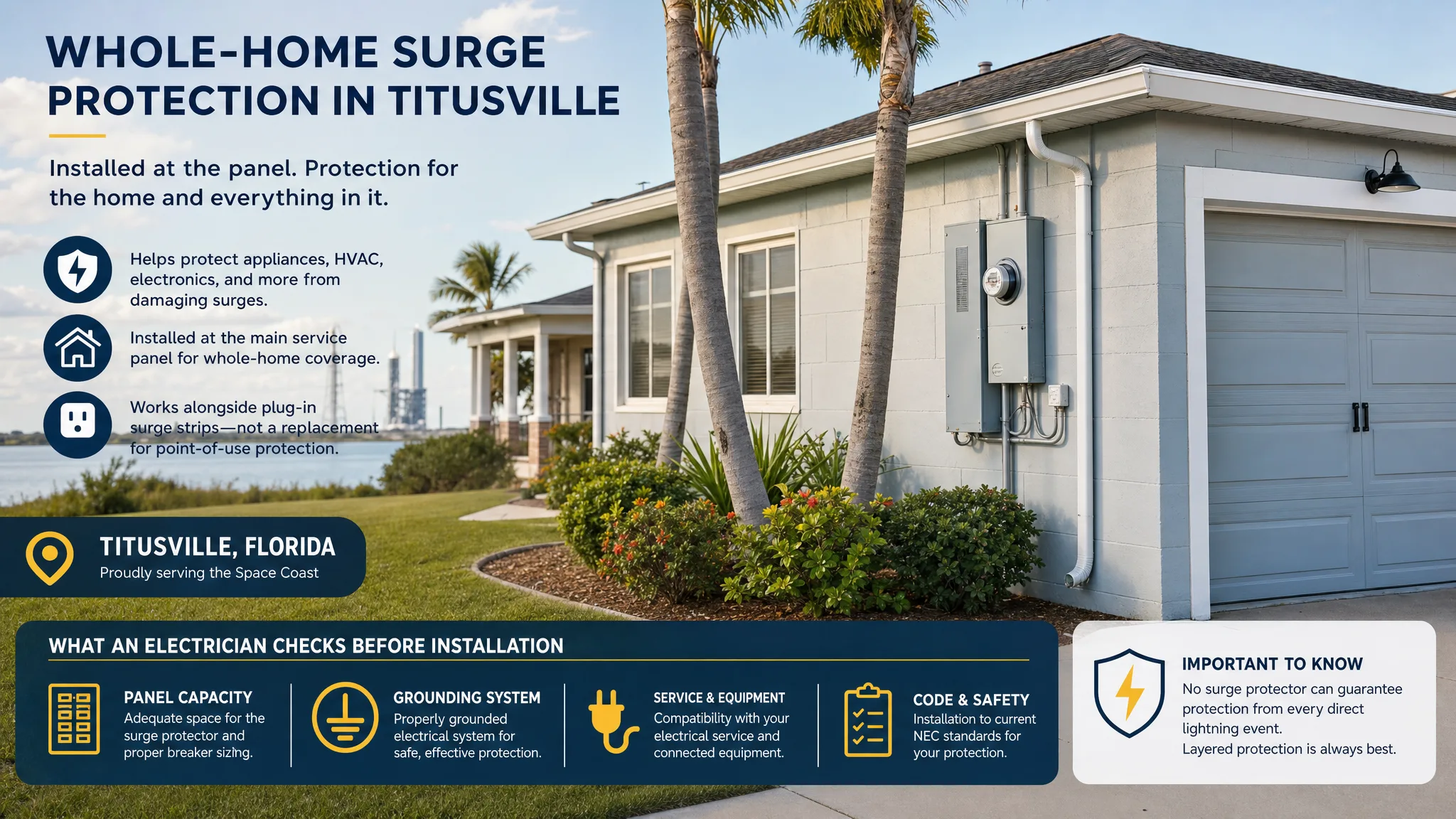
Where Is a Whole-Home Surge Protector Installed?
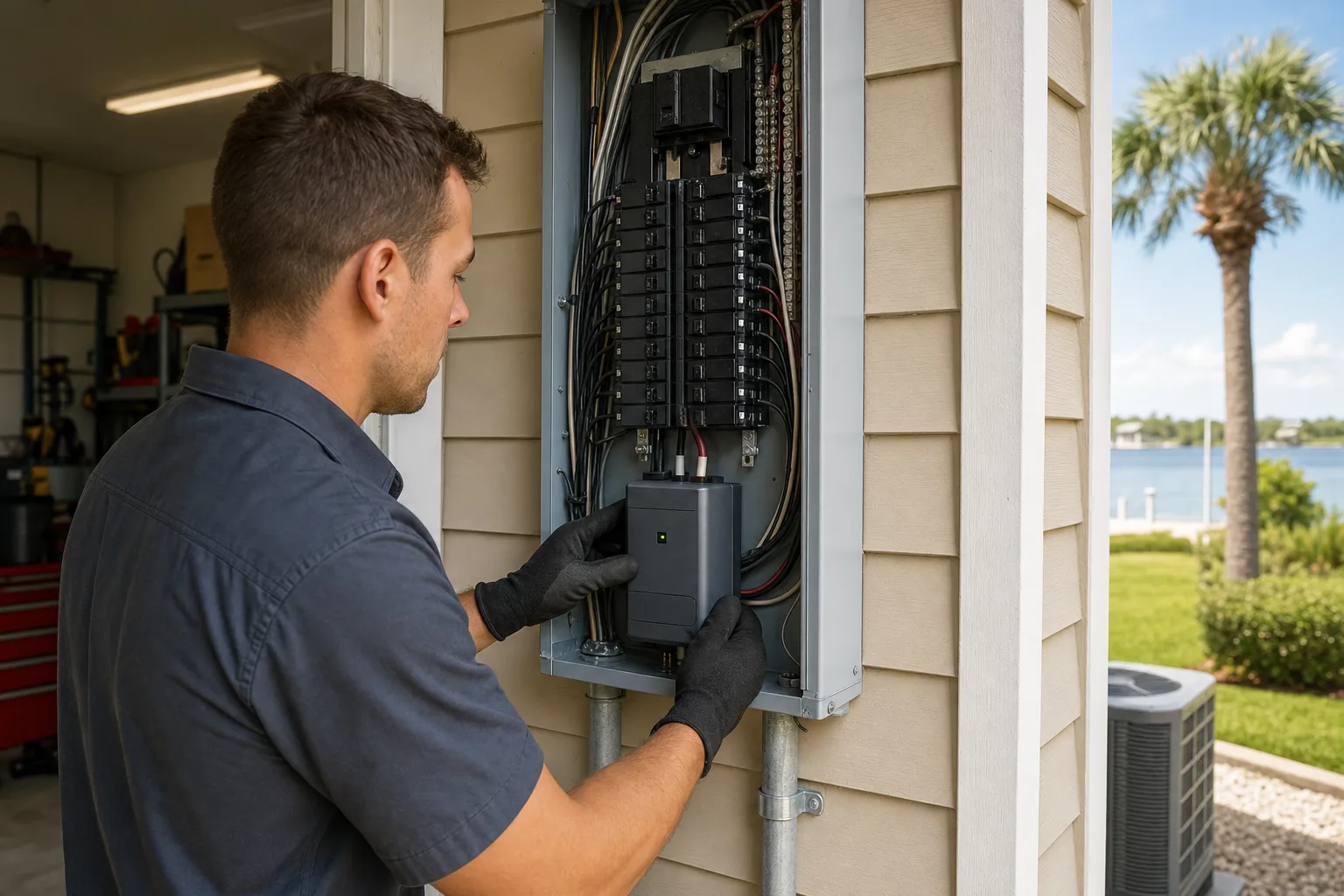
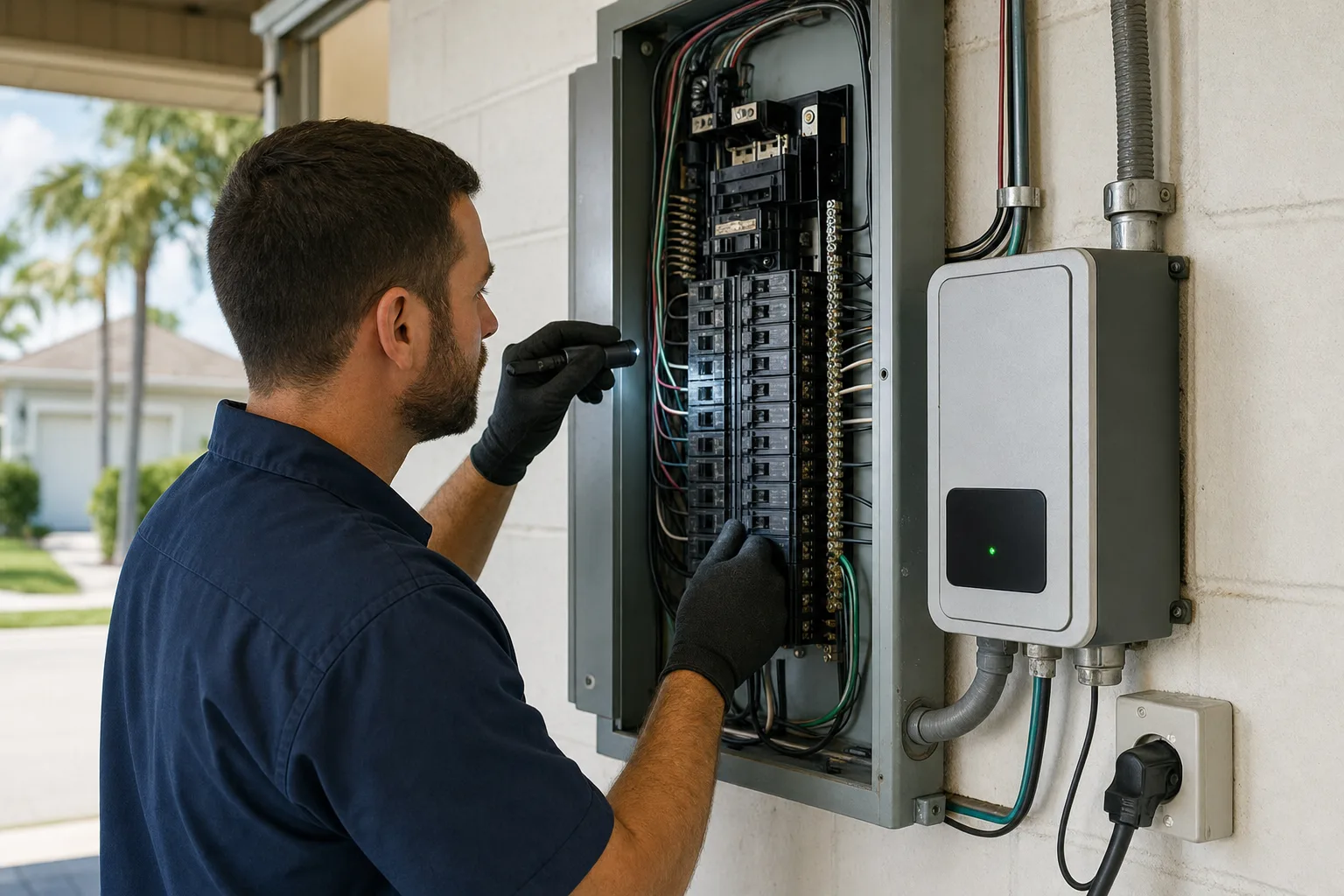
In most residences, a Type 2 surge protective device is installed at the main electrical panel or a subpanel. Depending on the listed equipment and panel arrangement, the device may mount inside the panel, on the outside of the panel enclosure, or in a nearby approved enclosure connected to the panel.
The placement matters because a panel-mounted device is intended to protect the electrical distribution system close to where power enters and is divided among the home’s circuits. An electrician will follow the specific installation instructions for the selected listed device, including its required breaker configuration and connection method.
Some homes have more than one panel. For example, a main service panel may feed a separate garage panel, an addition, a pool equipment panel, or a detached structure. During a surge protection assessment, the electrician can explain whether protection at the main panel addresses the property’s needs or whether another panel should also be considered.
Is It the Same as a Plug-In Surge Strip?
No. A plug-in surge strip is a point-of-use product that protects equipment plugged directly into it, provided it is a legitimate surge-protective device and is being used correctly. It does not protect hardwired appliances, lighting circuits, or the rest of the electrical system.
A whole-home unit serves a different purpose. It is installed at the panel to address surges affecting the home’s circuits more broadly. The two forms of protection work together rather than replacing one another. More on that appears below.
What an Electrician Checks Before Installation
A professional evaluation should come before selecting or installing an electrical panel surge protector. While many Titusville homes can accommodate whole-home surge protection, the suitability of the panel and electrical system needs to be confirmed on site.
Panel Condition and Equipment Compatibility
The electrician identifies the panel manufacturer, panel type, enclosure condition, and available connection options. Electrical equipment is not interchangeable simply because it appears to fit. The surge protective device, breakers, panel components, and installation method must be appropriate for the existing equipment and installed according to their listing and instructions.
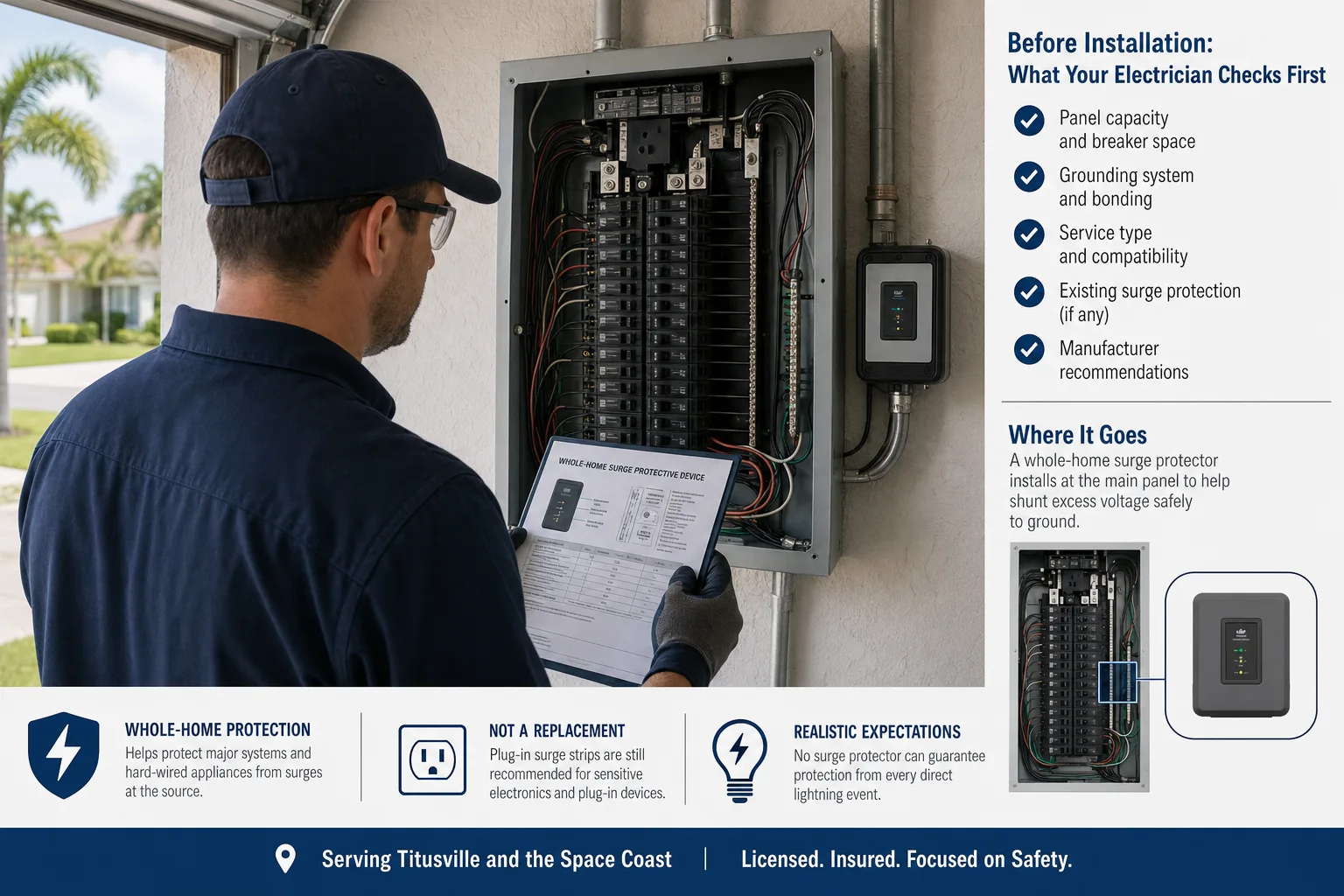
Visible corrosion, water intrusion, damaged covers, overheating marks, loose-looking components, or prior unprofessional alterations deserve attention before a new device is added. This is particularly important for exterior panels and meter equipment exposed to Florida rain, humidity, salt air in coastal areas, and storm debris.
Breaker Space and Required Breaker Arrangement
Many panel-mounted surge protective devices need dedicated breaker space or a particular connection arrangement. The electrician checks whether the panel has usable space, whether existing circuits are properly arranged, and whether a suitable breaker is available for the selected device.
A crowded panel does not automatically mean surge protection is impossible. However, it may change the options. In some situations, the appropriate next step may involve reorganizing circuits, using an approved panel-compatible solution, adding a subpanel, or discussing a larger electrical upgrade. If a panel is outdated, damaged, or no longer a good fit for the home’s electrical demands, review electrical panel replacement in Titusville before treating surge protection as an isolated project.
Grounding and Bonding
Surge protection depends on a properly functioning electrical system. The electrician evaluates accessible grounding and bonding components and looks for conditions that may need correction. Grounding and bonding are technical parts of the electrical system that help establish a safer path for fault current and support proper operation of protective equipment.
Homeowners should not attempt to alter grounding connections or work inside a live panel. Even a seemingly small panel task can expose a person to energized parts and may create fire or shock hazards if performed incorrectly.
Electrical Capacity and Planned Loads
Surge protective devices do not normally serve as a major continuous household load, but the assessment is a useful time to discuss the panel’s overall condition and future plans. A Titusville property adding an electric range, heat pump water heater, workshop equipment, pool equipment, or EV charger may need electrical capacity planning beyond a surge protector.
If your electrical goals include backup power during storm-related outages, ask how surge protection fits with generator installation in Titusville. These are separate systems, but planning them together can help avoid avoidable panel-space and compatibility issues.
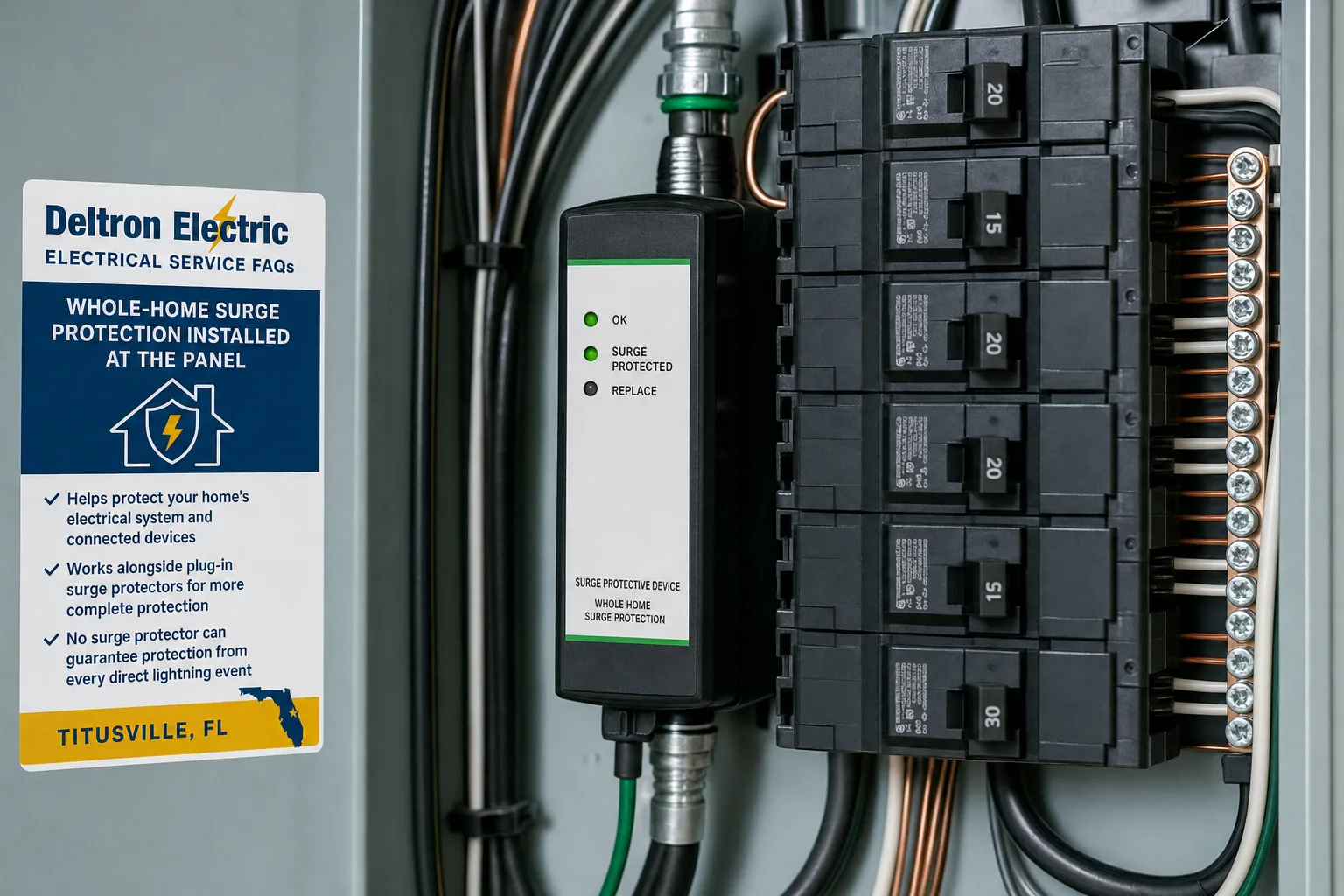
What the Installation Process Usually Includes
After evaluating the panel and confirming a suitable installation approach, the electrician will explain the recommended device location, any required breaker or panel changes, and what work will be performed. The exact sequence can vary based on the panel design and whether related repairs are needed, but a straightforward installation commonly includes the following steps:
- Review the electrical panel and selected device. The electrician confirms the equipment is appropriate for the panel and intended installation.
- Safely de-energize equipment as needed. This may require an interruption to power while the panel work is completed. Homeowners should plan for refrigeration, internet equipment, medical equipment, gates, and other items that could be affected by an outage.
- Install the surge protective device and its approved connection. The device is mounted and connected according to the manufacturer’s instructions and applicable electrical requirements.
- Inspect the completed work. The electrician checks the installation, panel cover, connections, and device status indicators where applicable.
- Explain the result. You should know where the device is located, what its indicator light or status display means, and when to request a follow-up inspection.
For a compatible, accessible panel with no complications, whole-home surge protector installation may be completed in one appointment. However, the time required depends on the panel condition, access, breaker space, whether repairs are needed, and whether permitting or inspection requirements apply to the specific scope. An on-site assessment provides a more reliable timeline than an estimate based on a photo alone.
What Can Affect Cost, Timing, and Installation Options?
Questions about surge protector installation cost factors are reasonable, but the device itself is only one part of the scope. A practical quote should account for the condition and layout of the actual electrical system instead of assuming every panel can accept the same installation.
Factors that can affect the scope, timing, and options include:
- The type, age, condition, and accessibility of the electrical panel
- Available breaker space and the need for a compatible dedicated breaker
- Whether the panel serves as the main service equipment or a subpanel
- Grounding, bonding, corrosion, water exposure, or repair concerns found during inspection
- The need to coordinate access with a condo association, tenant, property manager, or utility
- Whether the home has planned appliance upgrades, EV charging, generator equipment, or a future addition
- Local permitting and inspection requirements that apply to the work
Older panels can sometimes accept surge protection, but age alone does not answer the question. The panel must be evaluated for safety, condition, compatibility, and usable space. If the panel lacks capacity, has deterioration, or is not well suited for additional work, a targeted upgrade may be the safer long-term choice. Deltron Electric can assess whether a new or improved panel is warranted through its electrical panel installation in Titusville service.
Why Whole-Home Protection Still Works Best With Point-of-Use Protection
Whole-home protection is valuable because it addresses surges at the electrical panel, including events that may affect hardwired appliances and circuits throughout the property. But sensitive electronics can still benefit from an additional layer at the outlet.
For example, consider a home office with a computer, monitor, modem, router, printer, and charging equipment. A quality point-of-use surge protector can help protect the connected devices from residual voltage that may remain after a panel-mounted device responds. The same approach can be useful for entertainment centers, networking cabinets, and certain appliance electronics when the manufacturer permits it.
Use point-of-use products thoughtfully:
- Choose listed surge protection products rather than assuming every power strip provides surge protection.
- Do not overload strips or connect one power strip into another.
- Replace damaged, discolored, heat-affected, or questionable strips.
- Check whether the product has a protection-status indicator and follow its instructions.
- Remember that cable, phone, satellite, and data lines can provide another path for a surge. Ask about protection needs for those systems when relevant.
A whole-home SPD also does not correct problems such as flickering lights, a hot switch, recurring breaker trips, a buzzing panel, or voltage drops when major equipment starts. Those symptoms may point to a wiring, connection, load, or equipment concern that needs electrical troubleshooting rather than a surge protector alone.
When Titusville Homeowners Should Schedule a Surge Protection Assessment
There is no need to wait for a major appliance failure to consider whole-home surge protection in Titusville. An assessment is particularly useful before Florida’s more active storm months, after a utility event, or when planning other electrical improvements.
Consider scheduling an evaluation if you are:
- Buying an older Titusville home and do not know the condition or history of the panel
- Replacing a panel, renovating, or adding circuits for a kitchen, garage, addition, or outdoor equipment
- Adding modern appliances with electronic controls, smart-home equipment, or a future EV charger
- Managing a rental property where appliance downtime can disrupt tenants and maintenance schedules
- Concerned about a lack of breaker space, panel corrosion, or storm exposure around exterior electrical equipment
- Recovering from outages, nearby lightning activity, or repeated unexplained electronics problems
For condo owners, panel access and association requirements can affect scheduling. The panel may be inside the unit, in a shared electrical room, or subject to building management procedures. Property managers can make the visit more efficient by providing panel access, documenting prior electrical work, and identifying equipment that has recently malfunctioned.
Whole-Home Surge Protection FAQs
Can a whole-home surge protector be installed in an older Titusville electrical panel?
Possibly, but it depends on the panel’s condition, available space, listed compatibility, breaker arrangement, and grounding and bonding conditions. An older panel should be inspected rather than assumed suitable. If the panel has damage, corrosion, unsafe conditions, or insufficient capacity, repairs or a panel upgrade may be recommended first.
Does a whole-home surge protector protect against lightning strikes and Florida storm outages?
It can help reduce damage from many lightning-related, utility, and in-home surge events. It cannot guarantee protection from every surge or from a direct lightning strike. During storm season, a whole-home device is best viewed as one important layer within a properly maintained electrical system, not as a promise that all electrical equipment will be unharmed.
How long does whole-home surge protector installation usually take?
A compatible panel with clear access and no needed repairs may allow the work to be completed during one service appointment. More time may be needed when the panel is full, equipment is damaged or outdated, additional circuits are planned, access must be coordinated, or permitting and inspection steps apply. An electrician can give a clearer answer after examining the panel.
Will my panel need a new breaker, more space, or an upgrade before a surge protector can be installed?
Some installations require a dedicated compatible breaker and sufficient panel space. If the panel is full or its equipment does not support the needed arrangement, the electrician will explain the available options. That may be a minor adjustment, a different approved installation approach, an added subpanel, or a broader panel upgrade based on the system’s condition and future electrical needs.
Do I still need plug-in surge strips after installing whole-home protection?
For sensitive electronics, point-of-use surge protection is still a sensible additional layer. Whole-home protection helps at the panel, while plug-in protection serves the individual equipment connected to it. Use quality listed products, avoid overloading them, and replace them when they show damage or no longer indicate active protection.
A Practical Next Step for Storm-Season Readiness
Whole-home surge protection is most useful when it is selected for the actual panel, installed correctly, and considered alongside the condition of the rest of the electrical system. Whether you own a home, condo, or rental property, a panel review can clarify what is already protecting the property and what still needs attention.
For broader repair, upgrade, and safety help, explore Deltron Electric’s Titusville electrical services. If you are unsure about panel compatibility, existing surge protection, or storm-season readiness, would you like Deltron Electric to provide a direct assessment and practical recommendation? Call (833) 335-8766.