


Why Does a Ceiling Fan Hum or Run Slowly in Deltona?
A ceiling fan that hums, runs slowly, flickers with the lights, or responds poorly to its wall control can point to a fan issue, a control issue, or a circuit problem. If the wall switch controlling the fan feels warm or hot, that symptom deserves extra attention. A mildly warm dimmer may be expected in some situations, but a hot light switch, burning odor, buzzing, discoloration, sparking, or repeated flickering can signal a failing component or an unsafe electrical connection.
For Deltona homeowners and property owners, the safest response is not to guess at the cause or remove a switch cover while the circuit is energized. Stop using the affected switch when warning signs are present and arrange professional electrical diagnostics and repair. Deltron Electric can evaluate the switch, fan control, wiring connections, and related circuit to identify what is actually causing the symptom.
Is a Hot Light Switch Normal or Dangerous?
The answer depends on the type of switch and the level of heat. A standard on/off light switch should generally not feel noticeably warm during ordinary use. A dimmer switch may feel slightly warm because it regulates electrical power rather than simply turning it on or off. That slight warmth can be normal when the dimmer is correctly matched to the lighting load and installed properly.
However, “warm” and “hot” are not the same thing. If a switch is uncomfortable to touch, seems hotter than usual, feels hot even when little is running, or comes with other changes such as a smell, buzzing, flickering, or discoloration, treat it as a potential electrical problem. Heat can be created when electricity encounters resistance where it should not, including at a loose connection, worn switch contact, overloaded control, or damaged wire.
This matters with ceiling fans because the wall control may be carrying power for both the fan and its light kit. A fan that hums or runs slowly can be related to an incompatible speed control, a failing fan component, or insufficient power reaching the fan. If the switch or control is also getting hot, the problem needs a hands-on diagnosis rather than continued use.
A switch can also feel warmer in a Deltona home because of a warm interior wall or a room without strong air circulation, but ambient room temperature does not explain a burning smell, buzzing, visible damage, or excessive heat at the device itself. When in doubt, it is better to have the circuit checked than to wait for the symptom to escalate.
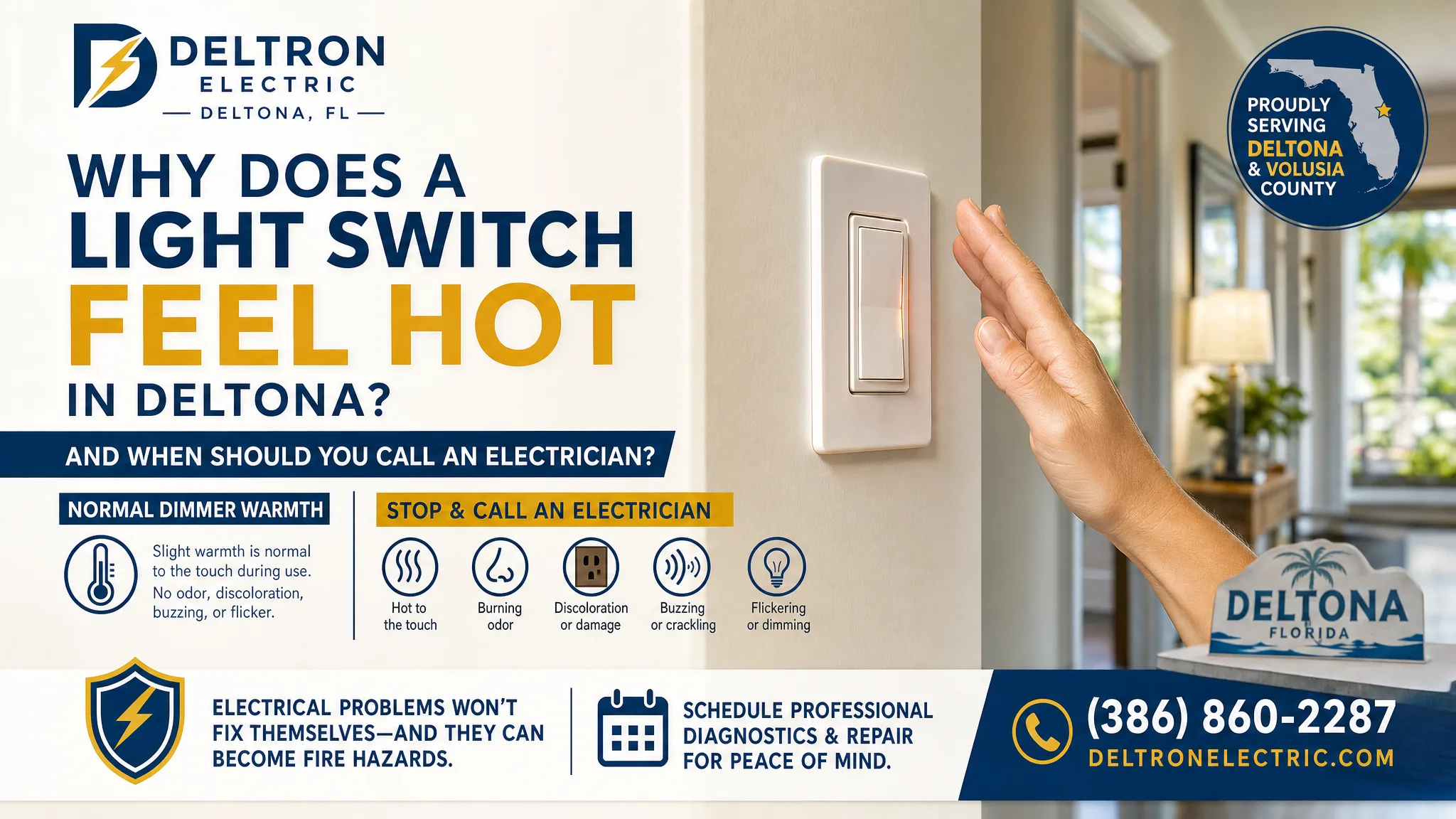
Warning Signs That Mean You Should Stop Using the Switch
Some electrical symptoms call for prompt attention, while others require immediate stop-use precautions. Do not keep operating a switch to “see if it happens again” when it is showing signs of overheating or arcing.
Stop using the switch if you notice any of the following:
- A hot switch: The switch plate or control is too hot to comfortably touch, especially when it controls a ceiling fan, light fixture, or other load.
- A burning smell from the light switch: A sharp electrical, melting plastic, or burnt odor can indicate overheated insulation, a damaged device, or arcing at a connection.
- Discoloration: Yellowing, browning, black marks, melting, warping, or cracking around the switch or cover plate should not be ignored.
- Buzzing, crackling, or sizzling: A faint sound from a dimmer can occur in limited circumstances, but a new, loud, intermittent, crackling, or sizzling sound needs professional evaluation.
- Sparking: A visible spark when operating the switch, especially if it is repeated or accompanied by odor or heat, is a stop-use sign.
- Flickering lights or an unstable ceiling fan: Lights that flicker, a fan that surges or slows, or a switch that works inconsistently may indicate a bad connection, failing control, or circuit issue.
- A tripped breaker or loss of power: A breaker that trips after the switch is used may be responding to a fault or overload.
If there is smoke, active sparking, visible flame, or an immediate fire concern, move away from the area and call emergency services. If it is safe to do so and you know which breaker controls the affected circuit, turning that breaker off can reduce the risk while you wait for an electrician. Do not touch a damaged switch, remove the cover plate, or attempt to inspect wiring inside the box.
For a hot, buzzing, discolored, or burnt-smelling switch that is not an active emergency, stop using the switch and schedule an electrical diagnosis before putting that circuit back into regular service.
Common Reasons a Light Switch Feels Hot
A switch is only one visible part of a larger electrical path. The exact cause cannot be confirmed remotely, but these are common issues an electrician may investigate during electrical repair in Deltona.
Loose or damaged wiring connections
A loose connection can create resistance and heat. Over time, connections at the switch, inside the electrical box, at the fan canopy, or elsewhere on the circuit can loosen or degrade. That resistance may cause heat at the switch, flickering, intermittent operation, buzzing, or a burning odor. A connection can look normal from the outside while the issue is concealed in the box or along the circuit.
A worn or failing switch
Like other mechanical electrical devices, switches wear with repeated use. Internal contacts can deteriorate, and the device may no longer make a reliable connection. A failing switch can become warm, make noise, feel loose, operate inconsistently, or cause lights and fans to behave unpredictably.
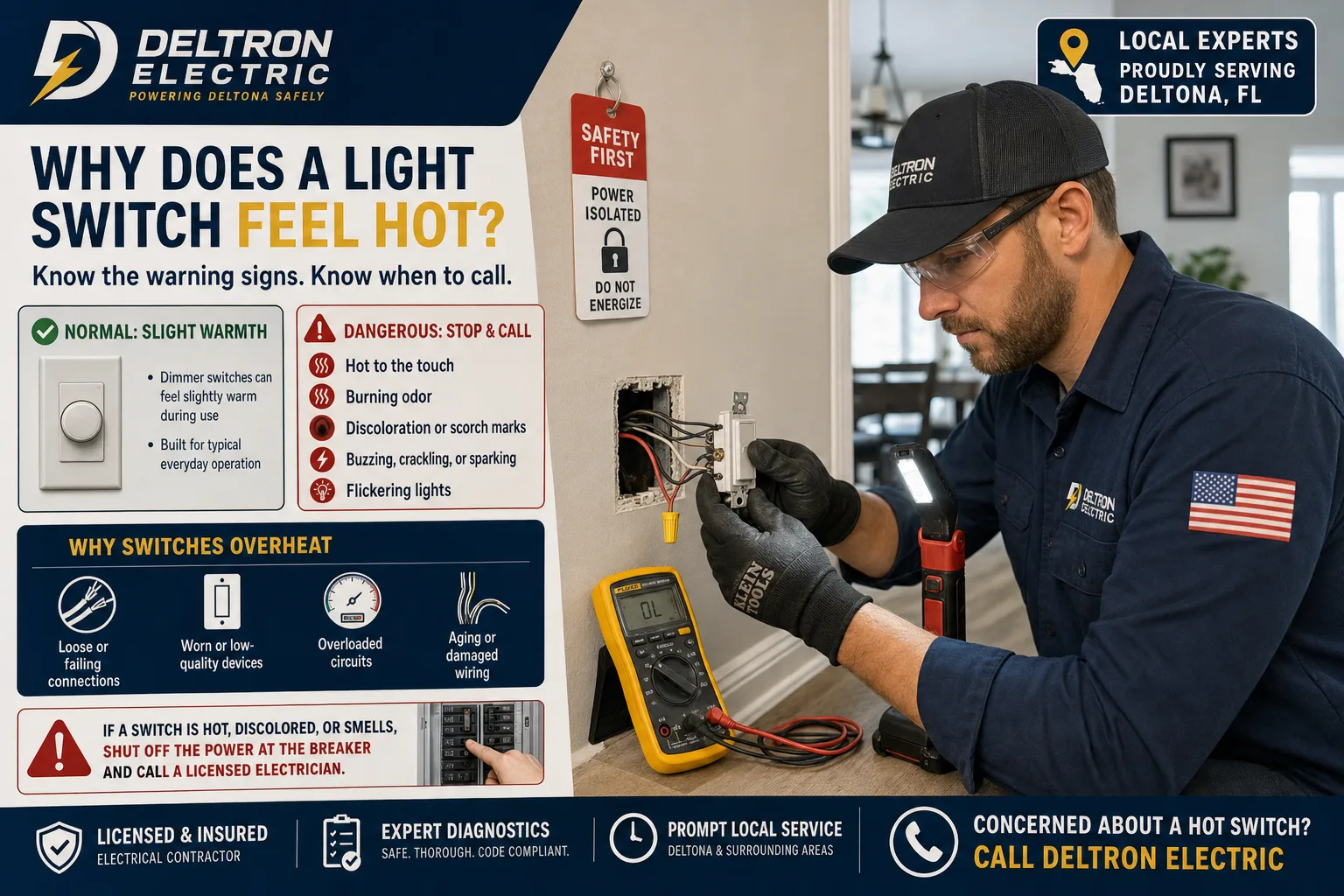
An overloaded or improperly matched control
A switch or dimmer must be suitable for the type and amount of load it controls. A control that is not rated or designed for the connected fan, light kit, bulbs, or fixture configuration can overheat. This is especially relevant when a conventional light dimmer has been used with a ceiling fan, or when a fan speed control and fan motor are not compatible.
Problems at the ceiling fan or fixture
If a ceiling fan hums but will not reach normal speed, its motor, capacitor, receiver, remote-control module, pull-chain switch, or other components may be involved. The issue may be within the fan rather than the wall switch. Still, a hot control, flickering lights, or buzzing at the wall is a reason to inspect both the fan setup and the circuit supplying it.
Circuit or panel-related concerns
Sometimes the issue is not limited to one switch. Flickering in multiple rooms, recurring breaker trips, several devices behaving inconsistently, or a noisy electrical panel may point to a broader circuit or service concern. A panel should not buzz or crackle. If you hear noise at the panel as well as at a switch, review why an electrical panel is buzzing and arrange an electrician’s assessment.
When the existing panel cannot safely support a home’s electrical needs, a professional may discuss options such as electrical panel replacement. That recommendation should follow diagnosis of the actual condition of the circuit and electrical system—not an assumption based on one warm switch.
Why Dimmers, LED Bulbs, and Heavy Loads Can Affect Switch Temperature
Dimmers commonly generate some heat as they control the flow of power to lighting. A slight amount of warmth at a properly installed dimmer may be normal. Yet the dimmer must be compatible with the fixture and bulbs it controls, and it must be appropriate for the total connected load.
LED bulbs use less energy than many older bulb types, but compatibility still matters. Some LED bulbs and dimmers do not work well together. Their mismatch can lead to flickering, humming, reduced dimming range, or an unstable light output. Those symptoms do not automatically mean the wiring is unsafe, but they should not be dismissed when combined with heat, smell, buzzing, or damage at the wall control.
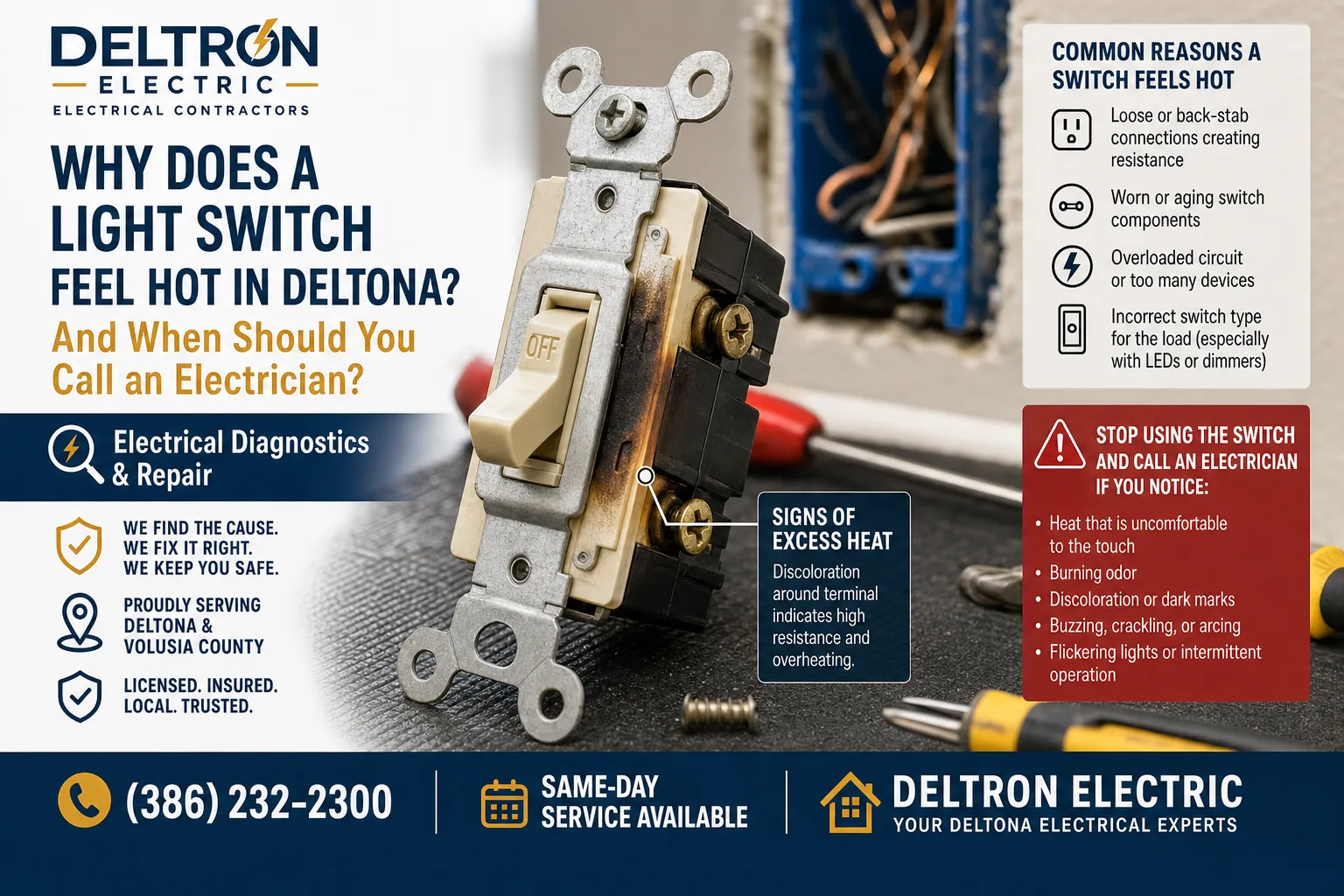
Ceiling fan controls have their own compatibility requirements. A fan speed control is not interchangeable with every dimmer, and some fans are intended for their manufacturer-provided remote or control system. Installing the wrong type of wall device may cause a fan to hum, run slowly, or fail to operate correctly. A control can also heat up if it is trying to handle a load it was not designed for.
Heavy loads matter as well. A wall box may contain more than one switch or dimmer, and devices installed close together can retain more heat. A switch controlling multiple lights, a large fixture, or a fan-and-light combination may require an electrician to verify the device selection, condition, wiring, and circuit capacity.
It is not safe to solve these symptoms by replacing bulbs, changing controls, or opening a live switch box without understanding the electrical setup. If your fan is humming or slow and the switch is warm, hot, buzzing, or discolored, a qualified electrician can determine whether the issue is compatibility, a failed device, a loose connection, the fan itself, or a wider circuit problem.
What to Do Right Now—and What Not to Do
A careful response can help limit additional stress on the circuit while you arrange service.
Appropriate immediate steps
- Turn the affected switch off and avoid using the fan or light controlled by it.
- If the switch is hot, smells burnt, buzzes, sparks, or has visible discoloration, turn off the correct breaker if you can safely identify it.
- Keep people from operating the switch until it has been inspected.
- Make a note of what was running when the symptom appeared, such as the fan, light kit, a dimmer setting, or another appliance on the same circuit.
- Watch for related symptoms, including flickering in nearby rooms, breaker trips, or noise from the panel, and share those details with the electrician.
What not to do
- Do not remove the cover plate or open the switch box while it is energized.
- Do not tighten wires, replace a switch, or attempt to “repair” a connection yourself.
- Do not continue using a hot or burnt-smelling control because it still appears to work.
- Do not cover the switch, tape over damaged areas, or rely on a fan remote as a substitute for correcting a suspected wiring problem.
- Do not repeatedly reset a breaker that trips when the affected circuit is used.
For property owners, the same approach applies in rental homes, condos, and commercial spaces: isolate the affected equipment when appropriate and have the issue evaluated. Electrical problems can worsen behind a wall where heat and damage are not immediately visible.

What an Electrician Checks During Hot Switch Diagnosis
Professional electrical diagnostics and repair in Deltona starts with identifying the specific symptom and tracing it to the source. The visible switch may be the failed part, but it may also be where a different circuit issue first becomes noticeable.
During a hot switch or ceiling fan control diagnosis, an electrician may:
- Ask when the warmth, odor, humming, slow fan speed, flickering, or buzzing occurs.
- Verify the affected circuit and safely isolate power before accessing electrical components.
- Inspect the switch, dimmer, fan control, cover plate, and electrical box for heat damage, worn components, improper device selection, or connection concerns.
- Check wiring connections at the switch and evaluate the condition of the box and accessible conductors.
- Assess the ceiling fan, light kit, control method, and compatibility between the fan, bulbs, dimmer, speed control, or remote receiver.
- Test the circuit and look for signs that the problem extends beyond the wall switch.
- Review the relevant breaker and panel condition when the symptoms suggest a circuit-level concern.
After finding the cause, the electrician can explain whether the work is limited to a device or connection repair, involves the fan or fixture, or requires broader circuit or panel work. In some homes, an aging or inadequate panel may be part of the larger conversation. If that is the case, Deltron Electric can discuss electrical panel installation in Deltona based on the condition and needs of the system.
Cost depends on what the diagnosis finds. A straightforward switch or control issue is different from concealed wiring damage, a failing fan component, a multi-location circuit problem, or panel-related repairs. An on-site assessment is the practical way to define the scope and provide an accurate repair recommendation instead of offering a misleading one-size-fits-all price.
Frequently Asked Questions About Hot Light Switches
Is it normal for a dimmer light switch to feel warm?
A dimmer can feel slightly warm during normal operation because it manages power to the lights. It should not feel excessively hot or be accompanied by a burning smell, discoloration, sparking, crackling, or flickering. If a dimmer becomes uncomfortable to touch or its behavior changes, stop using it and have it checked.
Should I turn off the breaker if my light switch feels hot?
If the switch feels hot, smells burnt, buzzes, sparks, or shows visible damage, stop using it. If you can safely identify the correct breaker, turn it off and leave it off until an electrician evaluates the circuit. Do not remove the cover plate or touch exposed components.
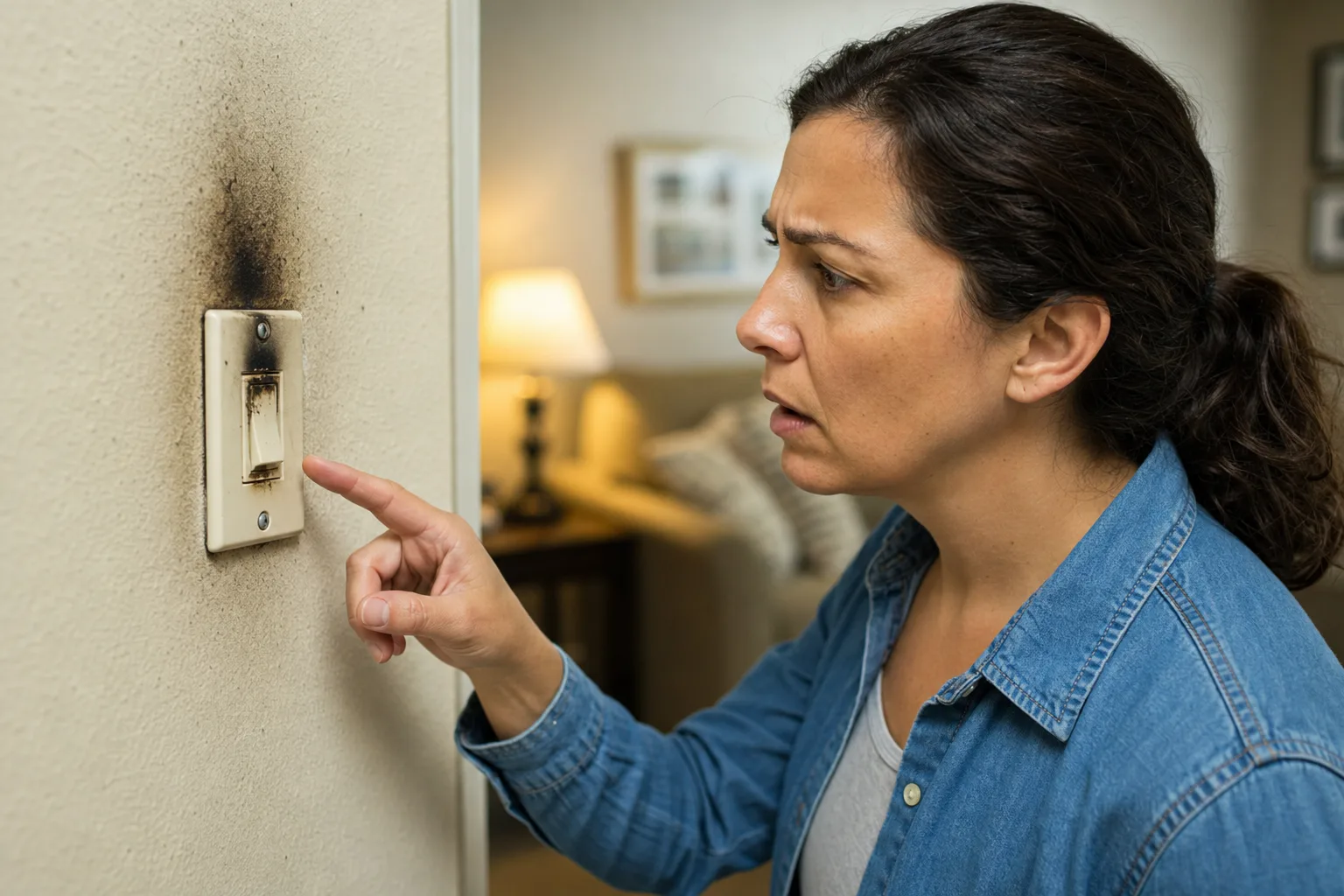
What does a burning smell or discoloration around a light switch mean?
A burning smell from a light switch or browning, blackening, melting, or warping around it may indicate overheating, arcing, damaged insulation, or a failed electrical device. Treat these as urgent warning signs. Do not keep using the switch.
Can a bad light switch cause a fire?
A failed switch, loose connection, or overheated component can create heat where it should not be present. Because electrical faults can damage insulation and surrounding materials, a hot or burnt-smelling switch should be professionally diagnosed promptly rather than ignored.
How much does it cost to have a hot light switch diagnosed in Deltona?
The cost depends on the service call, accessibility, the condition found, and whether the repair is limited to one device or involves wiring, the fan, the circuit, or the electrical panel. Diagnosis is important because it separates a simple control replacement from a problem that requires more extensive electrical repair. Deltron Electric can evaluate the condition and explain the recommended scope before repair decisions are made.
Schedule Electrical Repair in Deltona Before the Problem Worsens
A ceiling fan that hums or runs slowly may be a fan-control compatibility issue, a failing fan component, or a circuit concern. But when the associated wall switch is hot, smells burnt, buzzes, sparks, discolors, or causes flickering, the right next step is a professional diagnosis—not continued use or a DIY repair attempt.
Deltron Electric provides Deltron Electric service in Deltona for homeowners and property owners who need a suspected switch, fan control, circuit, or panel issue evaluated. Stop using the affected switch when warning signs are present, then call (833) 335-8766 or use the contact form to schedule electrical diagnosis and repair before the problem gets worse.