


Why Do GFCI Outlets Keep Tripping in Palm Bay Kitchens, Baths, or Outdoors?
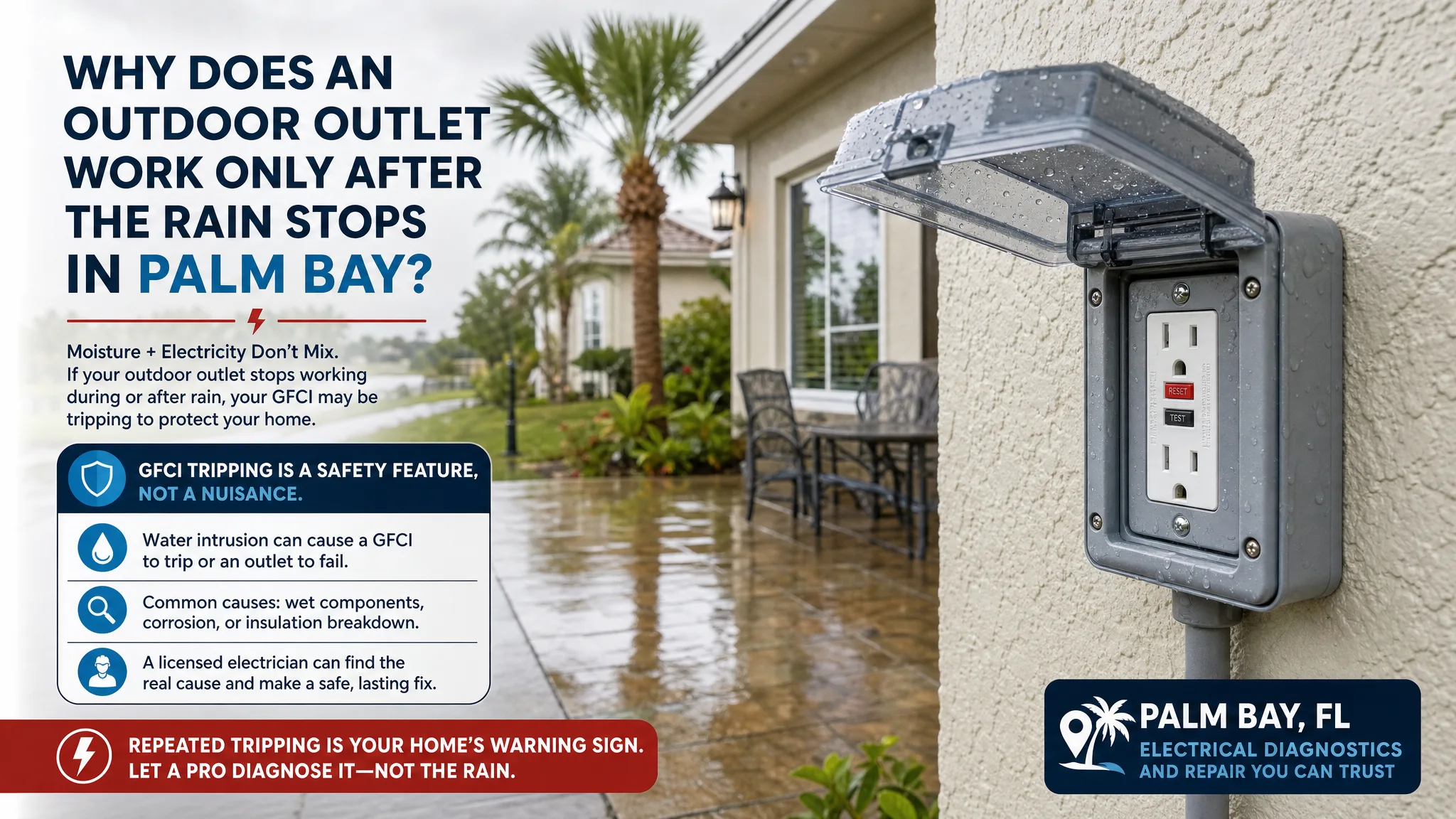
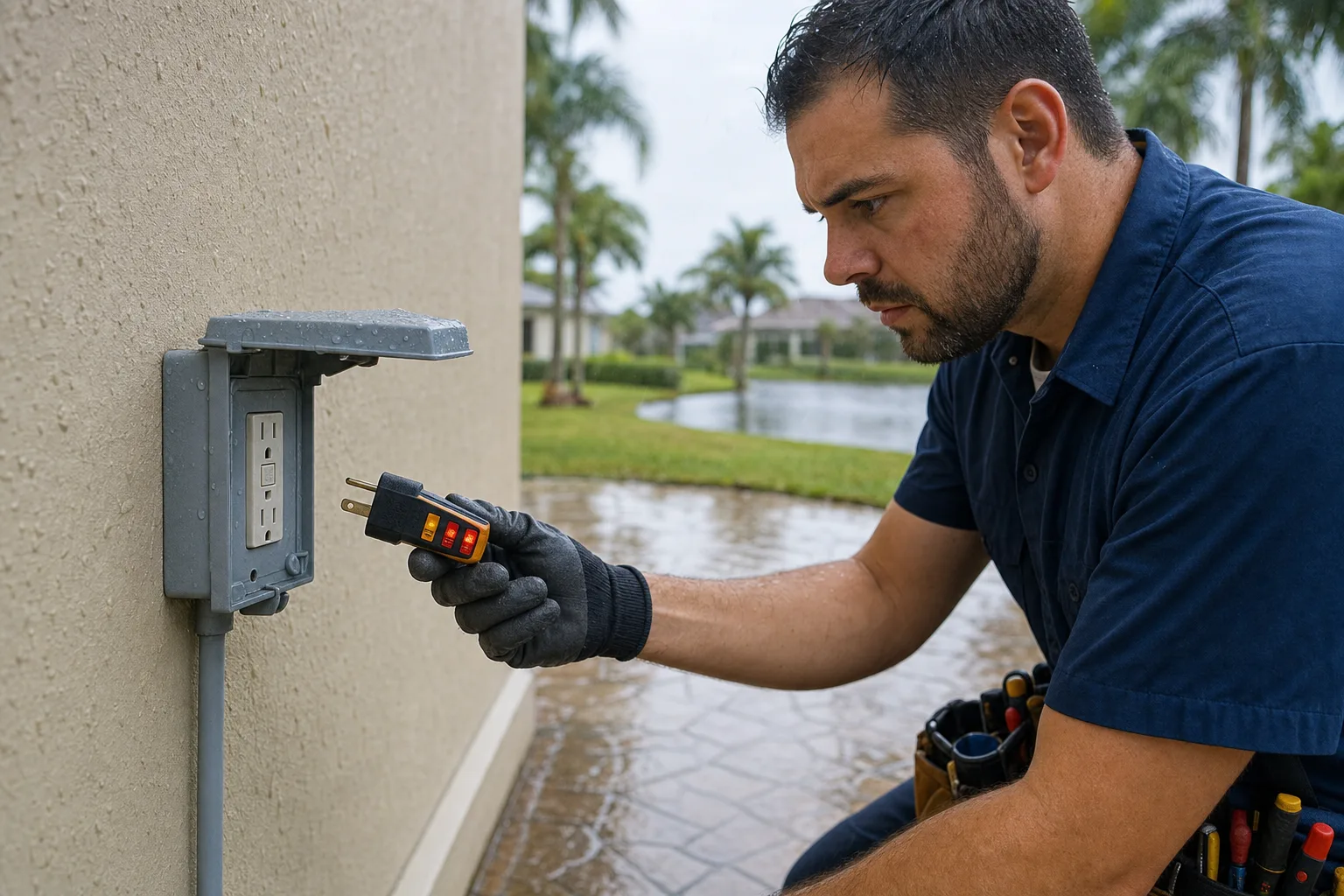
A GFCI outlet that trips during or after rain is doing an important job: it may be responding to moisture or another electrical fault before that condition creates a shock hazard. In Palm Bay, frequent heavy rain and high humidity can expose weak points in exterior outlets, weatherproof covers, electrical boxes, and wiring connections.
If an outdoor outlet works again after it dries out, that does not necessarily mean the problem is gone. It often means moisture has temporarily affected a GFCI-protected circuit. Repeatedly resetting the outlet may restore power for a while, but it does not identify where water entered or whether a damaged connection, worn cover, or downstream outlet is involved.
For safe Palm Bay electrical services, Deltron Electric helps homeowners and property owners diagnose rain-related outlet failures before the next storm creates the same problem.
Why an Outdoor Outlet May Work Again Once the Rain Stops
Ground-fault circuit interrupter outlets, commonly called GFCI outlets, are designed to shut off power quickly when they sense an imbalance in electrical current. That imbalance can occur when electricity may be taking an unintended path, including through moisture, damaged insulation, deteriorated wiring, or a faulty connected device.
When rainwater gets into an outdoor receptacle box, behind a cover, or into a connection on the same protected circuit, the GFCI may trip. Once the moisture evaporates or drains away, the circuit may appear normal enough to reset. This dry-weather recovery can make the issue seem minor, but it is actually useful diagnostic information: the failure pattern may be tied to water exposure.
An exterior receptacle may also be protected by a GFCI located somewhere else. For example, the reset button that controls an outdoor outlet could be in a garage, bathroom, kitchen, laundry area, utility room, or another exterior location. That means an outlet that appears dry may still stop working because moisture affected another outlet farther along the circuit.
This is particularly relevant when outdoor power is used for:
- Landscape equipment, pressure washers, and yard tools
- Patio appliances, fans, lighting, or entertainment equipment
- Holiday lights and temporary outdoor decorations
- Pool-area accessories and outdoor convenience power
- EV charging accessories or other equipment connected near the driveway
A rain-related trip is not a reason to bypass GFCI protection or keep resetting it until it holds. The GFCI may be responding exactly as intended. The next step is determining whether the issue is moisture intrusion, a damaged device, an outlet cover problem, a loose connection, or a fault elsewhere on the circuit.
Common Causes of a Rain-Related Outdoor GFCI Trip
There is no single answer to an outdoor outlet not working after rain. The visible outlet may be the point where the problem shows up, while the actual source may be at the cover, box, wiring, another protected receptacle, or even a cord-connected item. An electrician Palm Bay property owners call for electrical diagnostics and repair will check the system rather than assume the visible outlet is the only problem.
Water Entering an Exterior Receptacle or Electrical Box
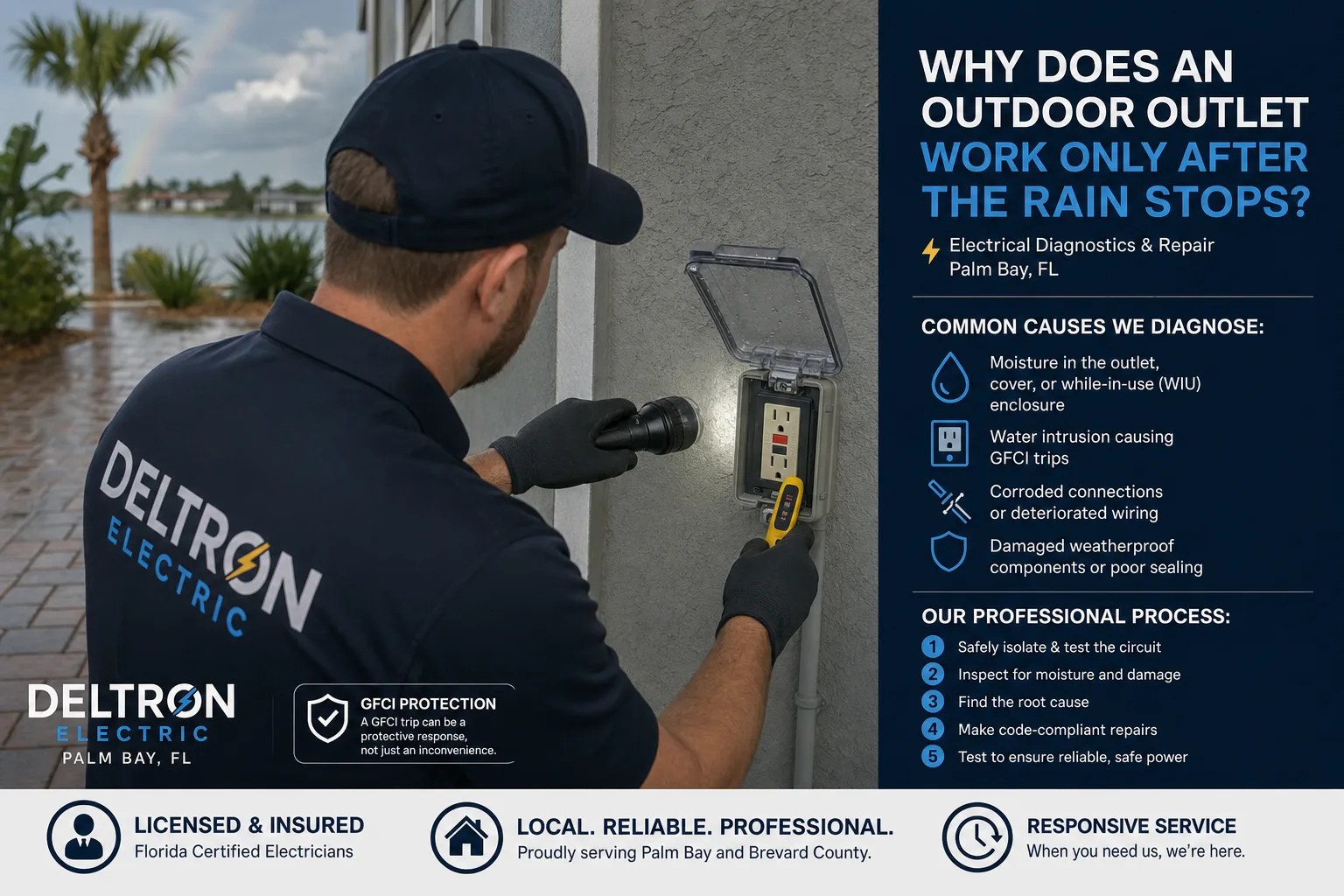
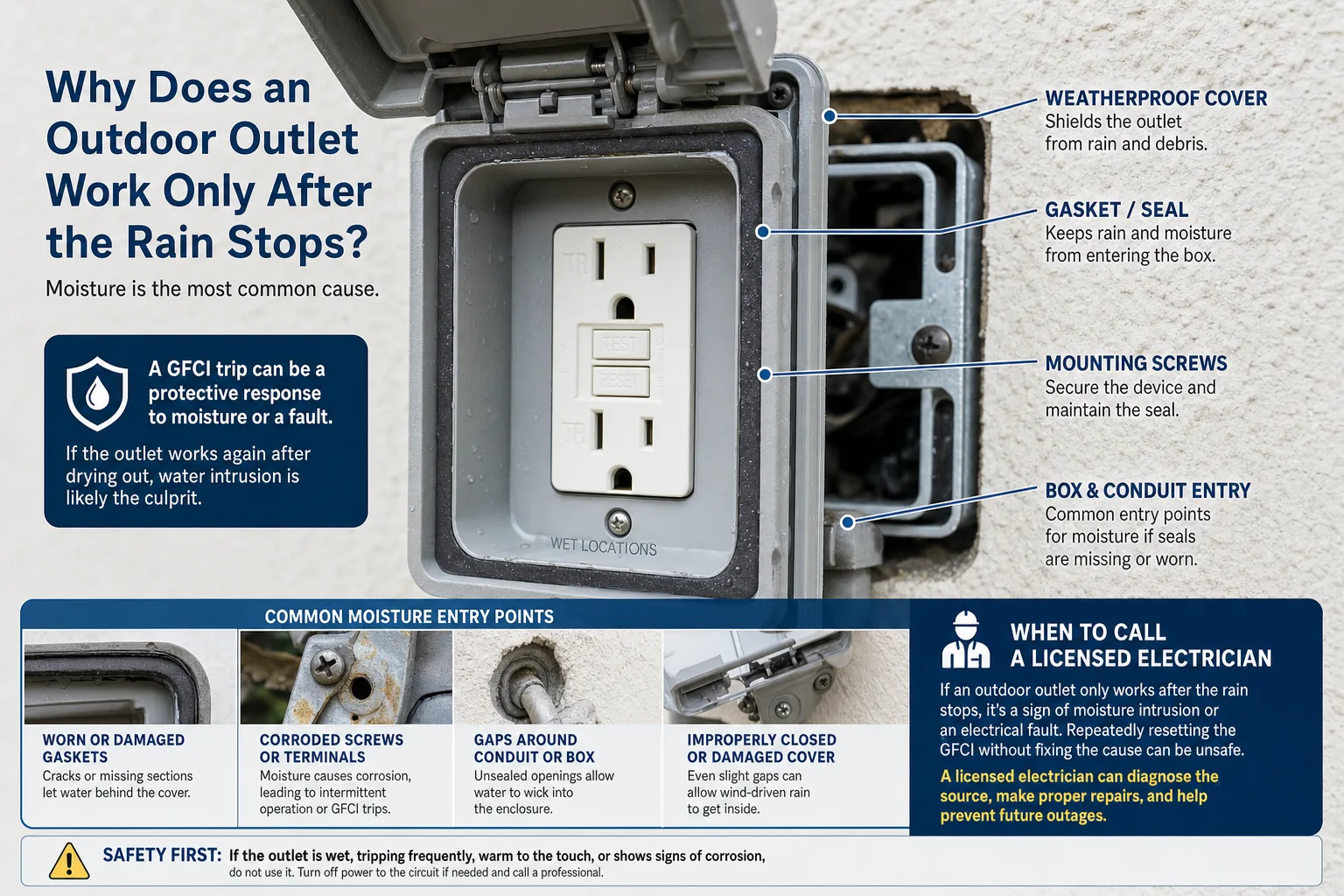
An outdoor receptacle is exposed to wind-driven rain, sprinkler overspray, condensation, and humidity. A cracked cover, missing gasket, loose mounting hardware, poor box condition, or opening around the wiring path can allow moisture to reach components that should remain protected.
Even a small amount of water can create a conductive path between energized components and grounded surfaces. The GFCI senses the resulting imbalance and opens the circuit. If the outlet starts working only after a dry period, water in the outdoor electrical outlet or box should be considered a likely possibility.
A Worn, Damaged, or Improperly Used Weatherproof Cover
A weatherproof outlet cover matters, but not every cover protects an outlet equally in every situation. A cover that is cracked, warped, missing a gasket, no longer closes securely, or does not adequately protect a plugged-in cord can allow rain exposure. Covers and enclosure components also age in Florida sun, heat, humidity, and storms.
An electrician may evaluate whether the existing cover fits properly, whether it seals when closed, and whether the outlet setup needs a more suitable weather-resistant configuration. Simply changing the cover without checking the receptacle, box, wiring, and circuit condition may leave the original cause unresolved.
Corroded Connections or Damaged Receptacle Components
Moisture and humid air can contribute to corrosion at terminal screws, wire connections, outlet contacts, and metal box components. Corrosion can interfere with reliable electrical contact and may worsen over time. A receptacle that has greenish discoloration, rust, residue, pitting, or visible deterioration should be inspected rather than treated as a routine reset issue.
A Faulty Plugged-In Device, Cord, or Extension Cord
The outlet itself may not be the only exposed component. A damaged extension cord, wet plug end, landscape transformer, patio appliance, string lights, tool, or EV accessory may trip the GFCI when rain reaches it. Water can collect around connection points that look protected at a glance.
Disconnecting equipment from the outlet can help narrow down the situation, but it does not prove the fixed wiring is safe. If the GFCI trips with nothing connected, trips whenever rain arrives, or will not reset after equipment is unplugged, professional diagnosis is appropriate.
An Upstream GFCI or Downstream Outlet Problem
One GFCI can protect multiple outlets. A fault at a downstream exterior receptacle, garage outlet, bathroom outlet, or other connected location can turn off power at several points. This is why replacing the visible outlet alone does not solve every rain-related trip.
The electrical diagnostic process includes finding which GFCI device or breaker protects the affected outlets, identifying what is connected to it, and checking where the fault is occurring.
What to Do Safely Before You Reset the Outlet
Start with safety, not convenience. Losing power to patio equipment, landscaping tools, holiday lights, or outdoor accessories is frustrating, but an outlet that trips after rain should not be handled casually.
Do not touch, open, or attempt to reset an outdoor outlet if there is standing water nearby, visible damage, heat, a burning odor, discoloration, sparking, crackling, or buzzing. Keep people away from the area and arrange professional electrical service. If there is an immediate electrical emergency or active danger, contact emergency services.
When there are no immediate danger signs, these are sensible limits for a property owner:
- Stop using the affected outlet. Do not plug in another device to “test” it.
- Move away from wet areas. Do not stand on wet ground or a wet patio while handling cords, plugs, or outlet covers.
- Disconnect portable equipment only if it can be done safely and without approaching water. Do not pull a plug from a wet connection or damaged cord.
- Look without disassembling. Note whether the cover is broken, loose, open, corroded, or visibly wet. Do not remove the outlet cover or reach into the box.
- Check for other affected receptacles. If kitchen, bath, garage, or other exterior outlets are also off, the issue may involve upstream GFCI protection.
- Document the pattern. Note whether the outlet trips only during rain, after sprinkler use, with a specific appliance, or with nothing plugged in. This information can help the electrician diagnose the fault efficiently.
A single reset after the area is dry and there are no warning signs may show whether the GFCI will hold, but repeated resets are not a repair strategy. If it immediately trips, will not reset, or trips again with the next rain, leave it off and schedule service. A protective device that will not stay reset is communicating that a problem may still be present.
Warning Signs That Call for an Electrician in Palm Bay
Some rain-related outlet issues deserve prompt attention even if the power returns after the weather clears. Schedule an electrician in Palm Bay when you notice any of the following:
- The outdoor GFCI outlet keeps tripping during rain or shortly afterward.
- The outlet works only when conditions are dry.
- The reset button will not stay engaged, or the outlet will not reset at all.
- More than one outlet stops working after a GFCI trip.
- The outlet, cover, or electrical box shows corrosion, cracking, staining, rust, or loose parts.
- There is water inside or around the outlet box, or a cover no longer closes correctly.
- The outlet feels warm, smells burnt, buzzes, crackles, or shows dark discoloration.
- A breaker also trips, especially after rain or use of outdoor equipment.
- The problem affects a receptacle used for important equipment, such as an EV charging accessory, patio appliance, landscape system, or outdoor work tools.
Interior GFCI outlets in kitchens and bathrooms need attention, too. While rain is most commonly associated with exterior electrical equipment, kitchen and bath GFCIs may trip because of appliance leakage, moisture exposure, worn devices, circuit issues, or downstream faults. If a kitchen or bathroom GFCI repeatedly trips without an obvious temporary cause, electrical diagnostics and repair are safer than repeatedly restoring power.
Older electrical concerns may overlap with the outlet problem. For example, if you have breaker issues, panel concerns, or recurring circuit trips elsewhere in the home, ask about electrical panel replacement in Palm Bay when appropriate. A panel replacement is not automatically necessary for a tripping outlet, but the broader electrical system should be evaluated when warning signs point beyond one device.
How Deltron Electric Diagnoses Outdoor Outlet Problems
A proper outdoor receptacle troubleshooting visit is designed to find the cause, not simply restore power temporarily. Deltron Electric approaches rain-related GFCI issues by evaluating the affected equipment and the circuit that serves it.
Inspection of the Receptacle, Cover, and Box
The electrician begins by inspecting the exterior GFCI receptacle or standard receptacle, the weatherproof cover, gasket condition, box, mounting, and visible signs of water entry or corrosion. The goal is to identify physical vulnerabilities that may allow moisture to reach electrical components.
Checking Connections and Circuit Protection
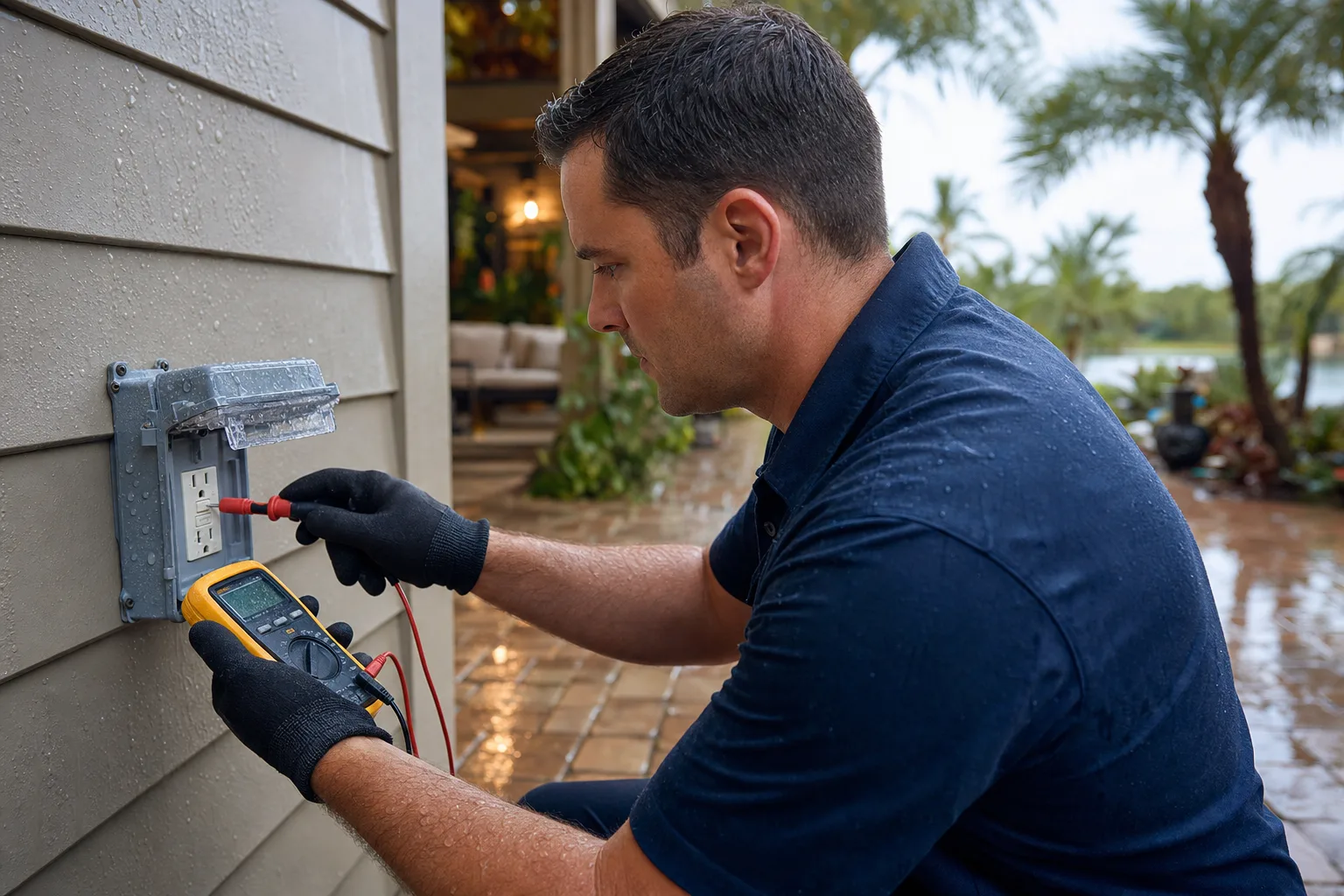
The next step can include examining wiring connections and determining how the outlet is protected. The GFCI controlling the circuit may be at the outlet, in another indoor or outdoor location, or at the electrical panel. Identifying the protective device and the outlets it serves is important because a fault can originate downstream from where the loss of power is noticed.
Testing for a Device or Circuit Fault
Testing helps distinguish a moisture-related wiring issue from a defective receptacle, failing GFCI device, faulty connected appliance, damaged cord, or other circuit concern. The electrician can also assess whether the outlet and its protective components are functioning correctly after the underlying issue is addressed.
This methodical approach avoids the common mistake of treating every rain-related trip as a simple outlet replacement. Sometimes the receptacle needs replacement. Other times the cover, box, connection, wiring path, or another outlet on the circuit needs repair first.
Repairs That May Prevent the Problem From Returning
The right repair depends on what the diagnosis reveals. After identifying the source of the trip, an electrician may recommend one or more targeted solutions.
- Replacing a failed or damaged GFCI receptacle: Appropriate when the device itself is worn, defective, damaged, or no longer operating reliably.
- Repairing or replacing a weatherproof cover: Useful when a cracked, loose, poorly sealing, or unsuitable cover is allowing moisture exposure.
- Addressing the outlet box or gasket: A damaged box, compromised seal, loose entry point, or deteriorated enclosure component may need correction.
- Repairing corroded or loose connections: Connections affected by moisture or age may require professional repair to restore secure, reliable operation.
- Repairing damaged wiring: If wiring insulation, splices, or connections have been affected by water or deterioration, the repair needs to address that portion of the circuit.
- Correcting protection for connected outlets: When another outlet or GFCI device is causing the trip, the repair may be located away from the exterior outlet that first appeared to fail.
- Evaluating outdoor-use equipment and connections: Damaged cords, wet connection points, and incompatible outdoor setups can contribute to tripping and should not be ignored.
Weatherproofing is more than putting a cover over an outlet. It involves making sure the cover, receptacle, box, wiring entries, mounting, and use conditions work together to limit water exposure. A reliable repair should also preserve GFCI protection rather than remove or defeat it.
Frequently Asked Questions About Rain-Related GFCI Trips
Why does my outdoor GFCI outlet trip only when it rains?
Rain-only tripping commonly points to moisture reaching the outlet, cover, box, wiring connections, a downstream receptacle, or plugged-in equipment. Once everything dries, the GFCI may reset and appear normal. Because the pattern suggests a water-related fault, arrange an inspection rather than assuming the outlet is safe just because it works in dry weather.
Is it safe to reset an outdoor outlet after it has gotten wet?
Do not reset it if there is standing water, visible damage, heat, a burning smell, buzzing, or any concern about unsafe conditions. When the area is dry and there are no warning signs, one reset may be used to observe whether the device holds, but repeated reset attempts should be avoided. If it trips again or will not reset, leave it off and have an electrician diagnose it.
Can one wet exterior outlet cause other outlets to stop working?
Yes. A GFCI device may protect multiple outlets on the same circuit. Water or a fault at one exterior receptacle can trip protection that also serves garage, bathroom, kitchen, or other outdoor outlets. Finding the correct upstream GFCI and checking all connected locations is part of a proper diagnosis.
Will I need to replace the GFCI outlet, the cover, or the wiring?
It depends on the source of the fault. A failed GFCI outlet may need replacement, but a new outlet alone will not correct water entering through a damaged cover or box, corrosion in a connection, a wiring issue, or a fault at another protected outlet. An inspection determines which repair is actually needed.
How soon should I schedule an electrician for an outdoor outlet that works only when dry?
Schedule service promptly, preferably before the next significant rain event. An outlet that functions only when dry may have an intermittent moisture-related fault that can return without warning. Prompt diagnosis is especially important if the outlet powers tools, outdoor appliances, lighting, landscape equipment, or EV charging accessories.
Schedule an Outdoor Electrical Diagnosis Before the Next Storm
A GFCI trip can be a protective response to moisture or an electrical fault. It should not be treated as an inconvenience to reset away. If your outdoor outlet trips after rain, will not reset, feels warm, shows corrosion, has a damaged cover, or affects other receptacles, Deltron Electric can identify what is causing the problem and recommend an appropriate repair.
Call (833) 335-8766 or schedule a diagnosis or service appointment before the next storm. For more practical guidance on recurring electrical concerns, visit Deltron Electric’s electrical warning signs and troubleshooting articles.